–BY Issah Olegor
The controversy surrounding the suspension of Ghana’s Chief Justice, Gertrude Araba Esaaba Sackey Torkornoo, has reignited public interest in the turbulent history of Charlotte Osei, the former Chairperson of the Electoral Commission (EC), who herself was dismissed under similar constitutional processes.
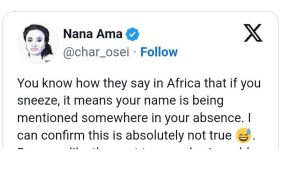
On April 26, 2025, Charlotte Osei posted on her social media platform:
“You know how they say in Africa that if you sneeze, it means your name is being mentioned somewhere in your absence? I can confirm this is absolutely not true because, like the past two weeks, I would have died from sneezing! Ebeiiiii.”
Charlotte Osei humorously remarked that if the African superstition—that frequent sneezing means your name is being mentioned—were true, she would have “died from sneezing” over the past two weeks.
Her comments, while lighthearted, underscore the deepening comparisons between her own dismissal and the current predicament facing Chief Justice Torkornoo.
Although she refrained from directly referencing the Chief Justice’s situation, social media discourse has been rife with parallels.
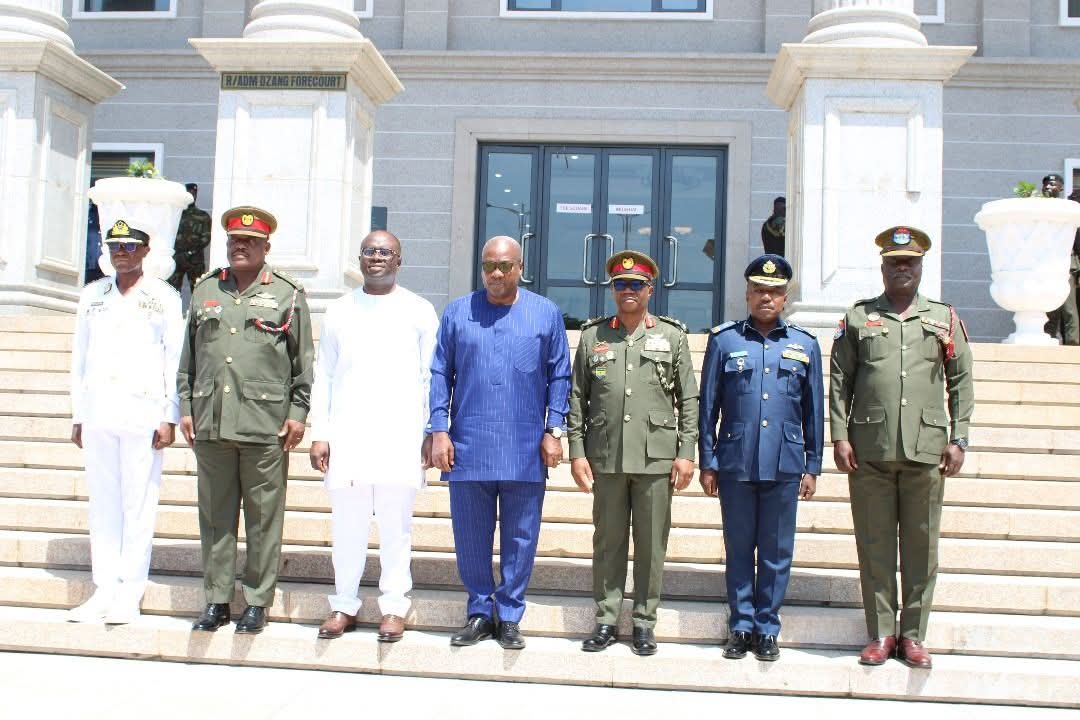
Many Ghanaians have cited a pattern: just as Charlotte Osei was removed after petitions led to an inquiry and a prima facie finding, so too has Chief Justice Torkornoo been suspended after President John Dramani Mahama acted on three petitions, invoking Article 146(6) of the Constitution.
President Mahama’s office announced on April 22, 2025, that a prima facie case had been established against the Chief Justice.
Acting upon the Council of State’s advice, he subsequently suspended Justice Torkornoo and appointed a five-member committee to investigate the matter.
The committee is chaired by Justice Gabriel Scott Pwamang of the Supreme Court and includes Justice Samuel Kwame Adibu-Asiedu, former Auditor-General Daniel Yaw Domelevo, Major Flora Bazwaanura Dalugo from the Ghana Armed Forces, and Professor James Sefah Dzisah of the University of Ghana.
Chief Justice Torkornoo, who was sworn into office on June 12, 2023, had been credited with championing significant judicial reforms, particularly the E-Justice system.
She was the third woman to serve as Chief Justice since Ghana’s independence.
A Turbulent Past Revisited
Charlotte Osei’s own path through public service has been both historic and fraught with controversy.
Appointed in 2015 by the National Democratic Congress (NDC) government under John Mahama, she was the first woman to head Ghana’s Electoral Commission, having previously chaired the National Commission for Civic Education (NCCE) and served on the board of Ghana Commercial Bank.
However, her tenure at the EC was characterized by a highly centralized leadership style, which drew both commendations and fierce criticisms.
Her deteriorating relationship with her deputies, Sulley Amadu and Georgina Opoku-Amankwa, culminated in formal petitions to the presidency alleging procurement irregularities.
Following constitutional procedures under Article 146, President Nana Akufo-Addo, acting on the recommendations of a committee chaired by Justice Anthony Alfred Benin, dismissed Charlotte Osei in June 2018.
Her deputies were also removed in a similar fashion.
Despite her dismissal, Osei remained a visible figure in Ghana’s legal and civic spaces.
Her recent nomination to the Supreme Court by President Mahama, yet to be officially announced, has further stirred public debate, with critics questioning the motives behind her potential appointment.
Sources indicate that Charlotte Osei’s elevation is part of a broader list of nominations, including Court of Appeal Justice Senyo Dzamefe and legal scholar Dr. Abdul Basit Aziz Bamba. Some political observers interpret these moves as part of Mahama’s strategic effort to reshape key state institutions ahead of the 2028 elections.
A Divisive Legacy
Charlotte Osei continues to be a polarizing figure.
Admirers hail her as a trailblazer who confronted institutional resistance, while detractors point to her alleged autocratic management style and procurement breaches as disqualifying factors for judicial elevation.
She allegedly grabbed state land doled out to her by the Mahama administration at the prime Cantonments area of the capital where she lives now.