
–BY Issah Olegor
In what is being described as a bold and symbolic intervention, the Parliament of Ghana has officially launched the National Integrity Awards Scheme, an initiative designed to confront corruption, rebuild public trust, and re-center ethical conduct at the heart of national leadership.
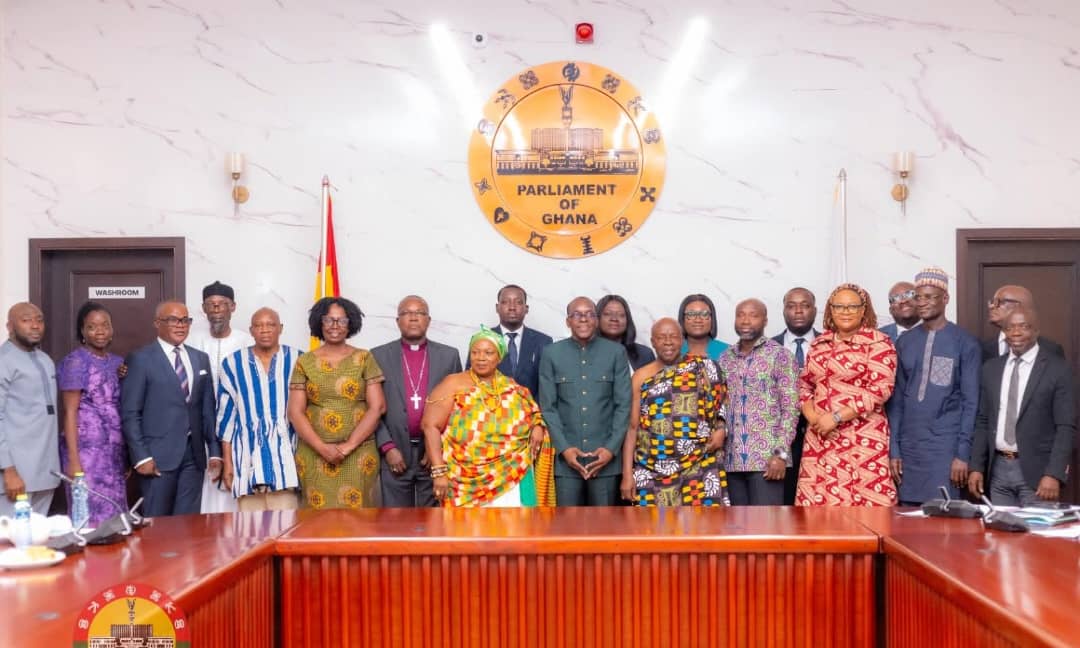
The launch, which took place on June 12 in the Speaker’s Conference Room, marked the inauguration of the National Integrity Awards Committee, a body tasked with implementing the scheme.
The ceremony was led by the Speaker of Parliament, Alban Sumana Kingsford Bagbin, who made clear that this initiative was not a ceremonial addition to Parliament’s functions, but a deliberate institutional statement: that integrity in public service must no longer be negotiable.
Bagbin noted that Ghana is at a moral crossroads, with public confidence in leadership eroded by a string of unresolved corruption cases and declining accountability across institutions.
He stated that Parliament, as the representative of the people and the watchdog of the public purse, is duty-bound to lead a national revival grounded in ethics, discipline, and accountability.
“The Integrity Awards are not just about praise,” Bagbin said. “They are about confronting a broken system with a new standard. We cannot afford to allow unethical behaviour to remain unchecked while the public loses faith in democracy.”
The awards scheme, which is set to become an annual national event, will recognize individuals and institutions that have demonstrated exemplary integrity across key sectors — the executive, judiciary, legislature, civil society, and private sector. Importantly, the initiative also includes a unique and controversial category: the Vulture Award, meant to publicly shame those found guilty of dishonesty, corruption, or abuse of office.
The inclusion of such a category, while unconventional, is meant to highlight the costs of unethical conduct and serve as a deterrent in a political culture where consequences for corruption are often minimal or absent.
The Integrity Awards Scheme also aims to amplify the voices and efforts of whistle-blowers, reformers, and community leaders who often work without recognition.
According to the committee’s mandate, the nomination and selection process will be transparent, impartial, and inclusive, with strong partnerships being sought from both state and non-state actors to ensure the credibility and sustainability of the awards.
The Speaker will chair the Committee himself — a move that underscores the importance Parliament places on the project.
Other committee members will be drawn from key accountability institutions, academia, the media, and civil society, reinforcing the message that integrity must cut across politics, religion, business, and public life.
This is not the first time Parliament has tried to lead by example in governance reform, but this is arguably its most symbolic step yet — one that directly challenges the culture of impunity that has plagued Ghana’s public sector.
Bagbin concluded by urging Ghanaians to support the initiative, reminding the public that democracy cannot thrive without trust, and trust cannot exist without integrity.


