By: Daniel Bampoe
President John Dramani Mahama’s flagship initiative, the 24-Hour Economy and Accelerated Export Development Programme (24H+), is gearing up for a grand unveiling on July 2, 2025, with a projected cost of $4 billion.
The announcement has sparked both anticipation and intense public debate, especially around the programme’s funding model and its ambitious job creation targets.
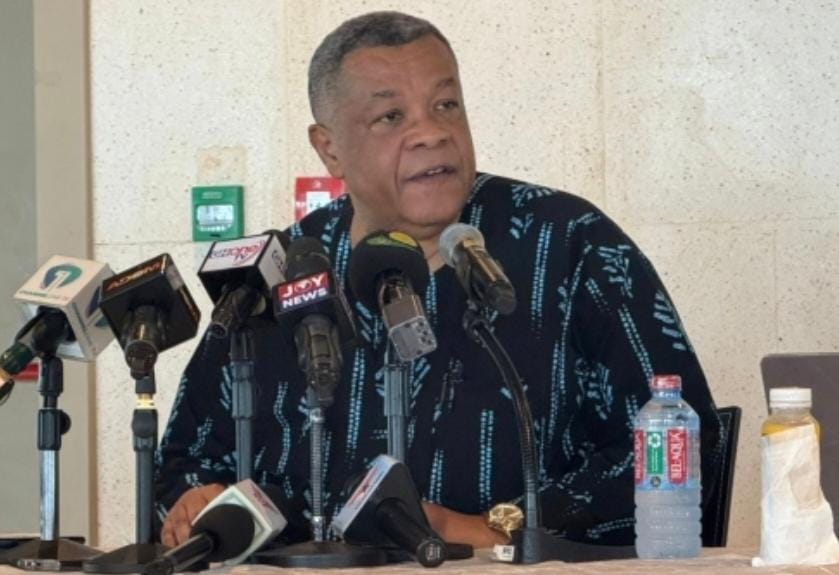
The details were disclosed on Monday by Presidential Advisor on the 24-Hour Economy, Augustus Goosie Obuodum Tanoh, during a press briefing ahead of the programme’s launch.
According to Tanoh, the government is prepared to inject between $300 million and $400 million as seed capital to attract private sector investment and cover what he termed a “viability gap.”
“This initial investment is crucial to make the bulk infrastructure commercially sound and bankable to investors,” he noted, adding that private sector interest has already yielded near $2 billion in preliminary pledges.
Background to the 24H+ Vision
The 24H+ programme is a cornerstone of President Mahama’s economic agenda following his return to power.
It seeks to overhaul the traditional economic structure by enabling round-the-clock productivity across key sectors — agriculture, manufacturing, infrastructure, and finance.
The aim is to drive export-oriented growth, stimulate local industry, and drastically reduce the country’s dependence on imports.
More than just an economic framework, the policy represents a political statement.
It underscores the Mahama administration’s attempt to redefine Ghana’s developmental narrative with bold, system-wide transformation.
The government has framed it as a direct response to rising unemployment, weak industrial output, and a persistent trade deficit.
Employment Target and Sectoral Strategy
The programme is expected to create approximately 1.7 million jobs over four years.
These would span value chains in agro-processing, pharmaceuticals, logistics, textiles, and other export-driven sectors.
Tanoh stressed the inclusive nature of the initiative, stating, “This policy reflects the aspirations of Ghanaians beyond partisan lines. It is time to reject poverty and activate our full economic potential.”
His remarks were echoed by Abdul-Nasser Alidu, Head of Strategy and Programmes at the 24-Hour Economy Secretariat, who cited worrying employment data.
“A 10% GDP growth in the 1990s increased employment by 7%, but today, the same growth yields just 2% in job creation. That must change.”
Key Components of the 24H+ Framework
The 24H+ initiative is built around eight integrated sub-programmes:
Grow24 – Agriculture and food systems
Make24 – Industrial and manufacturing transformation
Build24 – Infrastructure and urban development
Fund24 – Finance and credit support
Other sub-components will tackle technology integration, skills development, logistics, and international trade competitiveness.
Businesses that participate in the 24-hour operational model will enjoy tax rebates of up to 50%, import duty waivers, and performance-based export bonuses.
Financial Concerns and Public Debate
Despite its transformative promise, the proposed $4 billion price tag has raised eyebrows.
Critics question the government’s ability to responsibly manage such a vast investment, particularly when Ghana is still navigating fiscal consolidation measures under IMF supervision.
Opposition figures have characterized the plan as “grandiose” and lacking clarity on how the private sector funds will be secured.
Others have asked for guarantees that the programme will not become another underperforming national strategy, citing past initiatives such as the SADA, GYEEDA, and Komenda Sugar Factory.