BY Daniel Bampoe
The Article 146 Committee of Inquiry has submitted its first report to President John Dramani Mahama on petitions seeking the removal of Chief Justice Gertrude Araba Esaaba Sackey Torkornoo, marking a major step in the unfolding legal and political controversy that has gripped the nation.
At a brief but significant ceremony at the Jubilee House this morning, the Chair of the Committee, Supreme Court Justice Gabriel Pwamang, presented the findings in a sealed envelope to the President.
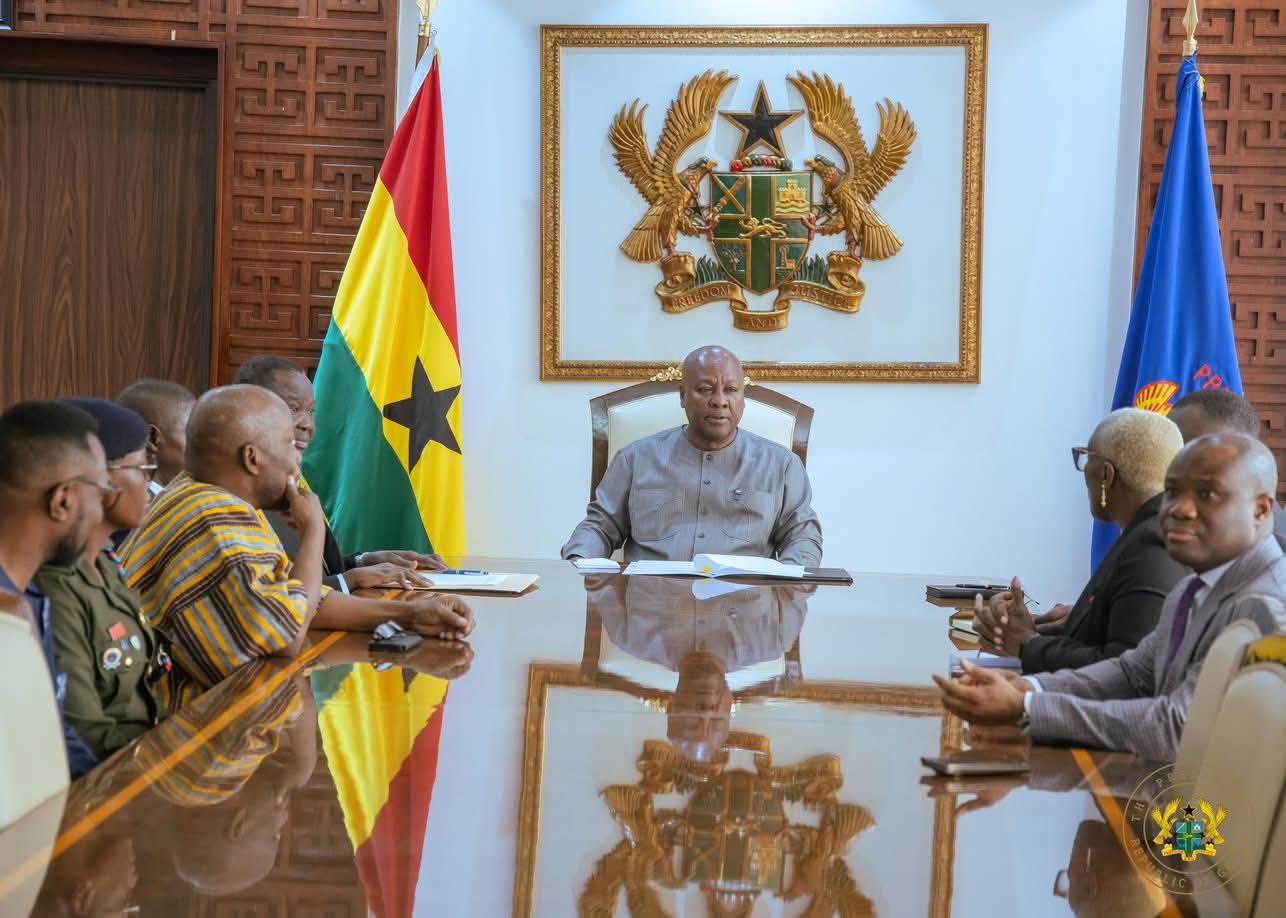
The report relates specifically to the first of three petitions filed against the Chief Justice since her suspension in April 2025.
A Contentious Probe Conducted in Camera
Justice Pwamang used the occasion to clarify public misconceptions about the Committee’s operations.
He emphasized that proceedings were conducted in camera—as required by Article 146(7) and (8) of the Constitution—but insisted this was not synonymous with secrecy.
Instead, he explained, it was a constitutional safeguard to protect the integrity of the process, even as “blatant false statements” about the panel’s work and its members circulated in the media.
“We refrained from responding publicly to such misrepresentations because of the law governing our work,” he stated. “But let it be clear: in camera proceedings are not the same as in secret.”
Details of the First Petition
The first petition was lodged by businessman Daniel Ofori, who alleged misconduct on the part of the Chief Justice.
According to the Committee Chair, the inquiry was rigorous:
Thirteen witnesses testified for the petitioner.
The Chief Justice herself appeared before the panel, gave testimony, and was cross-examined.
She called 12 witnesses, including expert witnesses, to defend her position.
Both sides were represented by four lawyers each.
The committee examined close to 10,000 pages of documentary evidence.
Justice Pwamang noted that after a “critical and dispassionate assessment” of all the evidence against constitutional provisions and relevant laws, the Committee had reached its recommendation “without fear or favour.”
However, the substance of that recommendation remains sealed, awaiting President Mahama’s review.
The Other Petitions Still Pending
Beyond Ofori’s petition, two additional petitions are pending against Chief Justice Torkornoo. Justice Pwamang disclosed that proceedings on the second petition had been adjourned at the request of both the petitioner and the Chief Justice herself.
As a result, the Committee will present its findings on the second and third petitions in due course.
Background to the Controversy
The Chief Justice was suspended by President Mahama earlier this year, sparking heated debates across political and legal circles.
While some civil society groups and sections of the legal fraternity questioned the constitutional propriety of the suspension, others insisted the President acted within his mandate to ensure accountability at the highest level of the judiciary.
The petitions, filed by private individuals and groups, allege various forms of misconduct, though the details remain shielded from public disclosure under constitutional provisions governing Article 146 inquiries.
The outcome of these proceedings carries immense implications for the independence of the judiciary, the balance of power under the Fourth Republic, and the credibility of Ghana’s democratic institutions.
With today’s submission, all eyes now turn to President Mahama for his next move on the first petition, while the legal community awaits the Committee’s eventual reports on the two remaining petitions.