BY Grace Zigah
Fresh controversy has emerged following the arrest of Ghanaian social media personality Frederick Kumi, popularly known as Abu Trica, after a video surfaced showing him being interrogated by law enforcement officers moments after his arrest while still in handcuffs.
The footage, which has since gone viral, has reignited public discussion about unexplained wealth, due process and the rights of suspects during arrest.
In the video, Abu Trica is heard being asked a basic question by officers: what work he does for a living. The question, though seemingly straightforward, appeared to unsettle the suspect. Rather than providing an immediate response, he hesitated and repeatedly asked to speak to his lawyers before answering.
His visible confusion during the exchange quickly became a focal point of public commentary online.
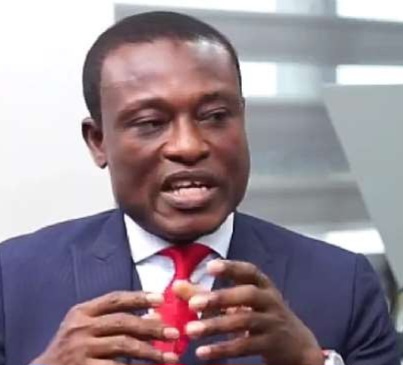
Also audible in the background of the video is Lawyer Twum Barima, a Deputy Director at the Narcotics Control Commission (NACOC), who insists that the suspect answer the question.
He is heard telling Abu Trica that the question was a simple one and did not require the presence of a lawyer before it could be answered.
This interaction has since raised legal and ethical questions among sections of the public, particularly regarding a suspect’s constitutional right to remain silent and to legal representation during interrogation.
The arrest itself follows months of scrutiny surrounding Abu Trica’s lifestyle. For years, the Swedru-born Snapchat figure built a large following by regularly flaunting luxury cars, designer clothing, bundles of cash and expensive properties.
While admirers celebrated him as a symbol of sudden wealth and success, critics repeatedly questioned the source of his income, especially in the absence of any clearly identifiable business or professional background.
That long-running public curiosity has now merged with official investigations, as Abu Trica faces serious allegations linked to international fraud.
The viral interrogation clip has further intensified perceptions that the suspect may have struggled to immediately justify the financial means behind his extravagant lifestyle—an issue that has dominated online discussions since the footage surfaced.
Legal analysts caution, however, that hesitation or confusion during arrest does not amount to guilt.
They note that suspects may lawfully choose to remain silent until legal counsel is present, and that any determination of wrongdoing must be made in court, not on social media. Still, the optics of the encounter have left a lasting impression on many Ghanaians, particularly younger social media users who once viewed Abu Trica as a symbol of success.
Beyond the legal arguments, the incident has sparked a broader societal conversation about wealth, accountability and documentation.
Commentators have pointed out that in an era of heightened financial surveillance and international cooperation against money laundering and fraud, individuals living visibly above their declared means are increasingly likely to attract attention from authorities.
Behind The Glamour
Meanwhile, Ghanaians have long celebrated stories of rapid success, especially when they involve young people breaking through global barriers and attaining wealth, influence and international recognition.
Social media has amplified this admiration, often turning luxury lifestyles into symbols of achievement and motivation.
Yet, in recent years, a series of high-profile criminal cases linked to romance scams, money laundering and wire fraud have exposed a troubling underside to some of these success stories, serving as a stark reminder that the source of wealth matters as much as its display.
One of the most prominent cases is that of Mona Faiz Montrage, popularly known as Hajia4Real, a social media influencer and musician whose lavish lifestyle once made her a symbol of aspiration for many young Ghanaians.
Her fortunes took a dramatic turn in November 2022 when she was arrested in the United Kingdom at the request of United States authorities.
Investigations revealed her alleged involvement in a transnational romance fraud scheme that targeted elderly and vulnerable Americans. Prosecutors said she controlled and received funds from bank accounts that held more than two million dollars generated from the fraud.
In February 2024, Hajia4Real pleaded guilty in a U.S. federal court to receiving stolen money, and in June 2024, she was sentenced to one year and one day in prison, in addition to forfeiture and restitution orders.
After serving her sentence, she was released and returned to Ghana in 2025, publicly announcing plans to revive her music and online brand, a move that sparked mixed reactions ranging from sympathy to renewed debate about accountability and deterrence.
Another case that has captured national attention is that of Frederick Kumi, also known as Abu Trica, whose flamboyant displays of wealth on social media made him popular, particularly among younger audiences.
In December 2025, he was arrested in Ghana following an indictment by U.S. authorities over his alleged role in an eight-million-dollar romance fraud and money laundering operation.
According to court documents, the scheme involved manipulating victims through fake romantic relationships and laundering proceeds through multiple financial channels.
The U.S. government is seeking his extradition to face trial at the U.S. District Court for the Northern District of Ohio. If convicted, Abu Trica faces a possible sentence of up to 20 years in federal prison, underscoring the severe legal risks associated with cross-border cyber and financial crimes.
Similarly, Joseph Kwadwo Badu Boateng, widely known as Dada Joe Remix, has become a central figure in discussions about international fraud networks involving Ghanaian nationals.
In May 2025, he was arrested in Ghana following a formal extradition request from the United States. Prosecutors allege that over a ten-year period, he was involved in a sophisticated international romance and inheritance scam that targeted elderly victims, leading to significant financial losses.
He has since been extradited to the United States and is currently awaiting trial on charges including conspiracy to commit wire fraud and money laundering.
His case highlights the long reach of U.S. law enforcement and the increasing cooperation between Ghanaian and international authorities in tackling transnational financial crimes.