By Daniel Bampoe
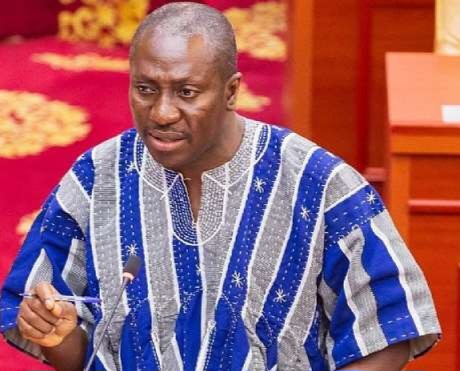
The claim by President John Mahama that his administration created one million jobs in 2025 has come under scrutiny from Dr. Kingsley Agyemang, Member of Parliament for Abuakwa South, who argues that the reported opportunities are yet to yield visible results for Ghana’s unemployed youth.
In his 2026 State of the Nation Address (SONA), President Mahama highlighted job creation as a major achievement of his first year in office, citing data from the Ghana Statistical Service to show reductions in national unemployment.
The President attributed these gains to industrial growth, support for small and medium enterprises, and the rollout of his 24-hour economy policy.
However, speaking to party executives in Kyebi, Dr. Agyemang challenged the government to provide more concrete evidence, insisting that the national statistics must translate into tangible jobs that are observable at the constituency level.
He noted that the 275 constituencies would each have to record approximately 3,600 new jobs for the one million figure to be meaningful.
“The President says one million jobs were created in 2025. If so, unemployed youth should be able to point to them. Each constituency should have more than 3,600 jobs.
Where are they?” Dr. Agyemang questioned. He emphasized that the real test of job creation is whether graduates are entering the workforce, businesses are expanding staff, and communities are experiencing improved household incomes.
The Abuakwa South MP stressed that headline figures alone are insufficient to address the unemployment challenges.
He highlighted ongoing struggles among young people to find stable employment, pointing out that the effects of the claimed job creation are not being felt in his constituency.
Dr. Agyemang therefore called for detailed sector-by-sector data, including the nature of the jobs, their permanence, and geographic distribution.
“This is not about doubting the government’s intentions,” he clarified, “but Ghanaians want more than statistics. They want evidence in their daily lives. Until such proof is provided across all constituencies, the claim remains questionable.”
His remarks come amid broader debates on accountability and transparency in national economic planning, following the government’s aggressive push for job creation as part of its first-year achievements.