By Grace Zigah
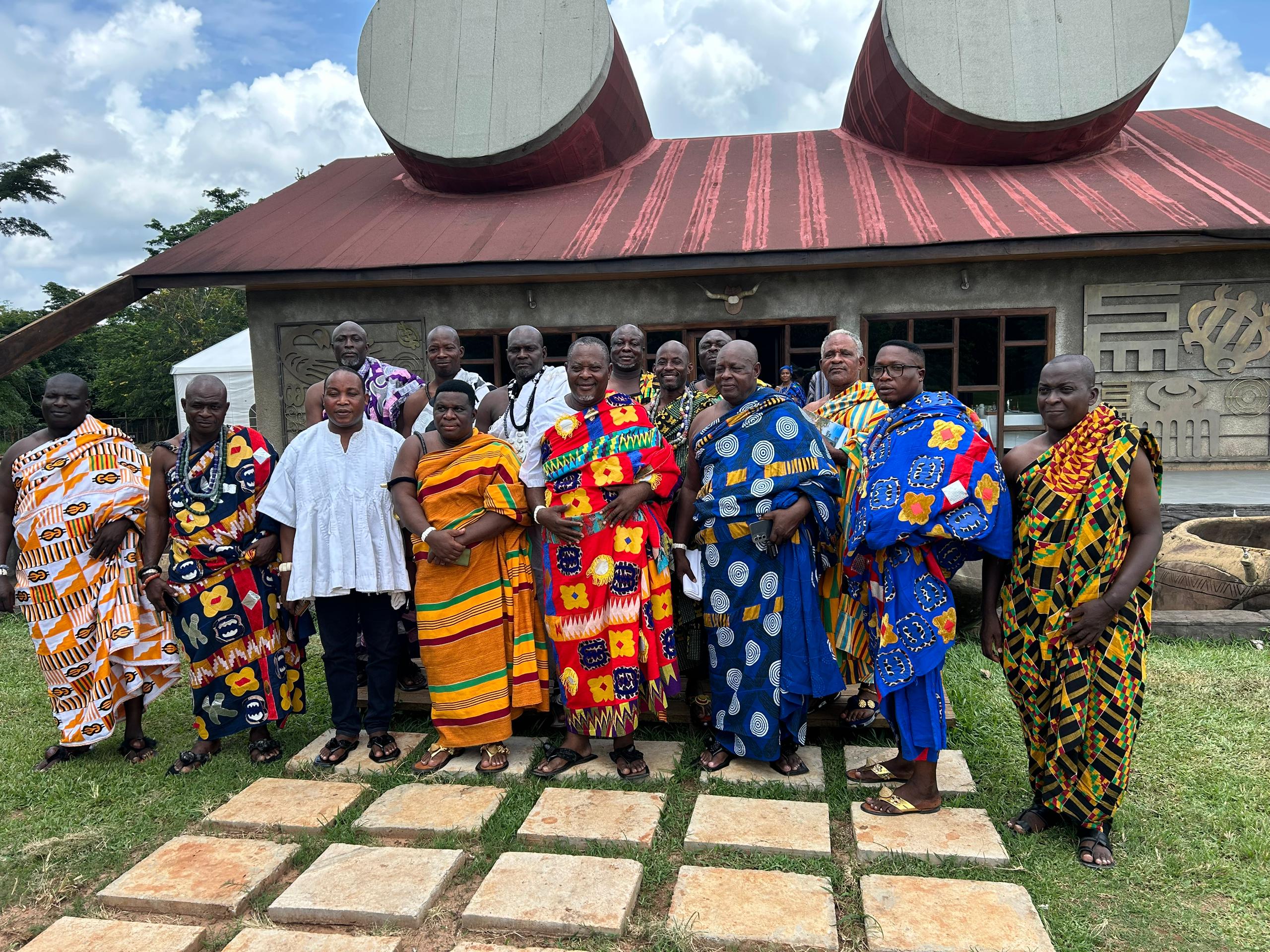
The Ada Traditional Council has reaffirmed its support for Electrochem Ghana Limited’s stewardship of the Songor Lagoon, describing the company as a “reliable partner” in efforts to restore the long-neglected salt resource.
This endorsement comes amidst ongoing controversies, political undercurrents, and calls for national unity over the future of the lagoon, which could become one of the most valuable natural assets.
Decades of Stalled Dreams
Songor Lagoon, located in the Ada West District of the Greater Accra Region, was once seen as Ghana’s sleeping giant in the salt industry.
With an estimated potential to produce up to five million metric tonnes of salt annually, the lagoon could contribute up to $1 billion in revenue annually if fully optimized and value-added products are developed.
However, that potential was left untapped for decades.
A detailed development plan — the Songor Master Plan — was introduced in 1991 with an ambitious vision: use the entire lagoon as a year-round reservoir, develop salt crystallizing pans on land, and promote inclusive ownership through a Joint Venture Company made up of concessionaires and local communities.
This plan was disrupted in 1992 when the government passed PNDCL 287, revoking all existing leases and placing the lagoon under state control.
The result was 27 years of stagnation, with salt production averaging just 250,000 tonnes annually, far below the lagoon’s potential.
Electrochem’s Arrival and Mixed Reception
In 2019, the government leased the 41,000-acre lagoon to Electrochem Ghana Limited owned by the McDan Group for 15 years under a public-private partnership arrangement.
The move was intended to bring clarity to decades of fragmented efforts and to finally operationalize the long-standing Master Plan.
The Ada Traditional Council and many landowners welcomed this decision.
Through the Office of the Administrator of Stool Lands, local stakeholders began receiving ground rent, and many saw new opportunities in formalized employment, infrastructure development, and community investment.
But not everyone was convinced. Critics — including some community members and activists — argue that Electrochem’s exclusive control over the concession contradicts the original Master Plan’s intent of shared ownership.
These concerns have sparked protests, community resistance, and even sabotage.
The Ada Traditional Council insists many of the concerns stem from misinterpretations or deliberate misinformation.
According to the chiefs, Electrochem’s interventions actually go beyond the original Master Plan.
The company has, for instance, tripled the land allocated to communities for salt production and introduced a “Community Pan” initiative to support small-scale producers.
One of the most divisive issues remains the practice of Atsiakpo — digging unauthorized shallow pans directly into the lagoon.
Chiefs and Christopher experts compare it to illegal small-scale mining (galamsey), warning that it has caused severe ecological damage, particularly to tributaries like the sacred Yomo stream.
For over 30 years, Yomo yielded no salt due to over-extraction and degradation — until Electrochem’s rehabilitation efforts restored salt crystallization in the area.
Parliamentary Probe Clears Allegations
Tensions reached a head when accusations emerged of cultural desecration, harassment of locals, and shrine destruction.
These claims were investigated by a Parliamentary Select Committee, chaired by Samuel Atta Akyea.
The committee’s report found no evidence of shrine desecration or community abuse.
Instead, the report highlighted tangible community benefits including employment, potable water supply, youth training programs, and interest-free loans for women.
The committee described Electrochem’s involvement as a major turnaround in Songor’s history.
Strategic Economic Asset
Beyond community-level impact, the broader economic implications of Songor’s full development are significant.
With consistent investment and proper management, Ghana could become West Africa’s leading salt producer — a key input for industries like petrochemicals, food processing, and pharmaceuticals.
The Ada Traditional Council emphasizes the need for scientific, sustainable salt harvesting that departs from seasonal, unregulated practices. Chiefs argue that continuous production under expert supervision will offer higher yields and greater economic stability.
National Dialogue and Civic Education Proposed
Despite the strides made, some stakeholders remain wary of centralized control and advocate for stronger community oversight and government monitoring.
To bridge this divide, chiefs, policymakers, and development advocates are proposing a nationwide civic education campaign led by the National Commission for Civic Education (NCCE).
This initiative would educate Ghanaians about sustainable salt production, the legal framework around mineral resources, and the economic value of Songor to the nation’s development.