At the heart of Ghana’s long-standing struggle to empower its youth lies a critical concern: partisan bias in opportunity distribution.
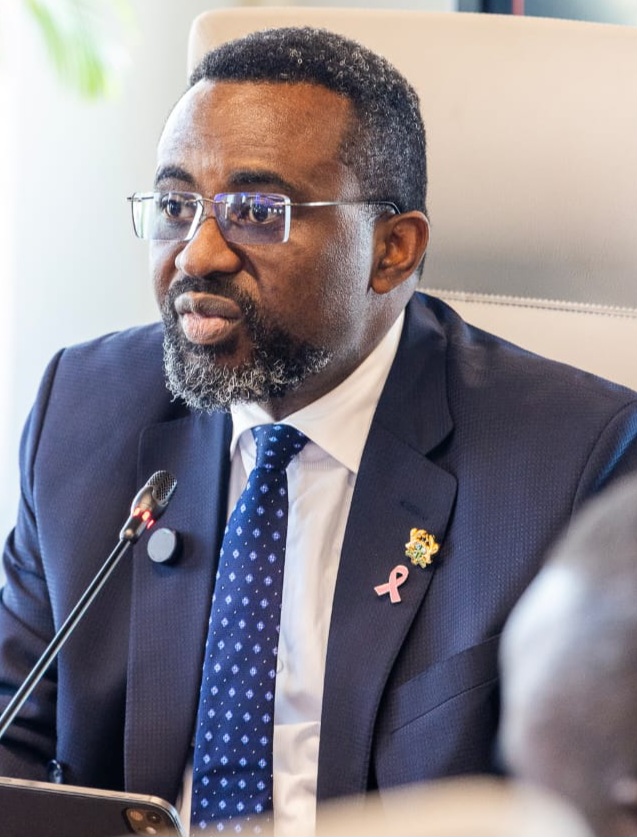
This was the central theme of a bold call made by the Minority Leader in Parliament and Member of Parliament for Effutu, Alexander Afenyo-Markin, during his address at the Kwahu Business Forum on Saturday, April 19, 2025.
Speaking to a diverse audience of entrepreneurs, policymakers, and investors, Afenyo-Markin emphasized the urgent need for Ghana to shift from political favouritism to meritocracy in driving youth development.
“We must take a hard look at how we extend opportunity, particularly to the youth,” he said.
“They must not be supported only when they wear party colours; they must be supported when they demonstrate potential, creativity, and drive.”
The Kwahu Business Forum, an annual event that has grown into a premier platform for economic dialogue, served as a fitting backdrop for Afenyo-Markin’s remarks.
The forum draws attention to private sector growth and policy innovation, both of which are seen as key to solving youth unemployment — one of Ghana’s most pressing challenges.
Historical Context: The Youth and Partisan Politics
Ghana has grappled for years with criticisms of partisan interference in national development programs, particularly those aimed at youth.
From public sector job placements to entrepreneurship grants and government-backed initiatives, there has been growing concern that loyalty to the ruling party often determines who gets access to opportunities.
Youth wings of political parties have historically played dual roles — as platforms for leadership grooming and as vehicles for political patronage.
While some young Ghanaians have risen through the ranks based on merit, others have lamented exclusion due to their lack of affiliation with dominant parties, regardless of their skills or entrepreneurial potential.
Afenyo-Markin’s statement confronts this systemic flaw head-on.
In his address, he argued that continued dependence on partisan considerations would stifle innovation, suppress competition, and ultimately hinder national progress.
“Ghana’s future cannot be built on partisan loyalty; it must be built on merit,” he declared.
“Those who deserve opportunity must be given the opportunity regardless of political affiliation. That is how we build a nation, that is how we create competition, and that is how we create progress in a nation.”
A Broader Call for Policy Reform
The Minority Leader’s remarks align with a growing chorus of civil society organizations, academics, and business leaders calling for institutional reforms that place competence and innovation at the center of national development.
Critics argue that the politicisation of youth programs has not only bred mediocrity but also disillusioned a generation that is eager to contribute to Ghana’s progress.
While he did not propose specific policy changes during the forum, Afenyo-Markin’s comments may influence ongoing national debates around youth employment strategies, the review of state-run entrepreneurship programs, and reforms in public service recruitment.
The Kwahu Business Forum itself has become a major avenue for such transformative conversations.
With topics ranging from industrial policy to access to capital and youth innovation hubs, the forum continues to draw influential voices from across Ghana and the African continent.
–BY Issah Olegor