By Issah Olegor
The Government has announced plans to roll out the second phase of its flagship Nkoko Nkitinkiti Programme, with the focus shifting from household poultry production to large-scale commercial farming following what the Minister for Food and Agriculture, Eric Opoku, has described as the successful implementation of the initiative’s first phase.
The announcement marks a significant milestone in the government’s broader agricultural transformation agenda aimed at reducing the heavy dependence on imported frozen chicken, strengthening food security, creating employment opportunities and revitalising the country’s poultry industry.
Speaking to journalists after briefing Parliament on the progress of the programme, Opoku said the overwhelming response from beneficiaries and the encouraging outcomes recorded under the household poultry production initiative have convinced government that the time is right to expand the project into full-scale commercial production.
According to the Minister, the first phase has demonstrated that Ghanaian households are willing and capable of participating in poultry production when provided with the necessary support, making the programme more than just a social intervention but a practical strategy for rebuilding the country’s poultry sector from the grassroots.
He explained that the domestic production phase has laid a strong foundation for a self-sustaining poultry industry capable of creating thousands of jobs, improving household nutrition, increasing local poultry production and reducing the reliance on imported poultry products.
Opoku noted that the transition into commercial production represents the next logical step in government’s long-term vision of transforming the poultry industry into a major contributor to national economic growth.
He stressed that the commercialisation agenda is expected to stimulate investment across the entire poultry value chain, including hatcheries, feed production, commercial poultry farms, processing plants, cold storage facilities, transportation, packaging and retail distribution.
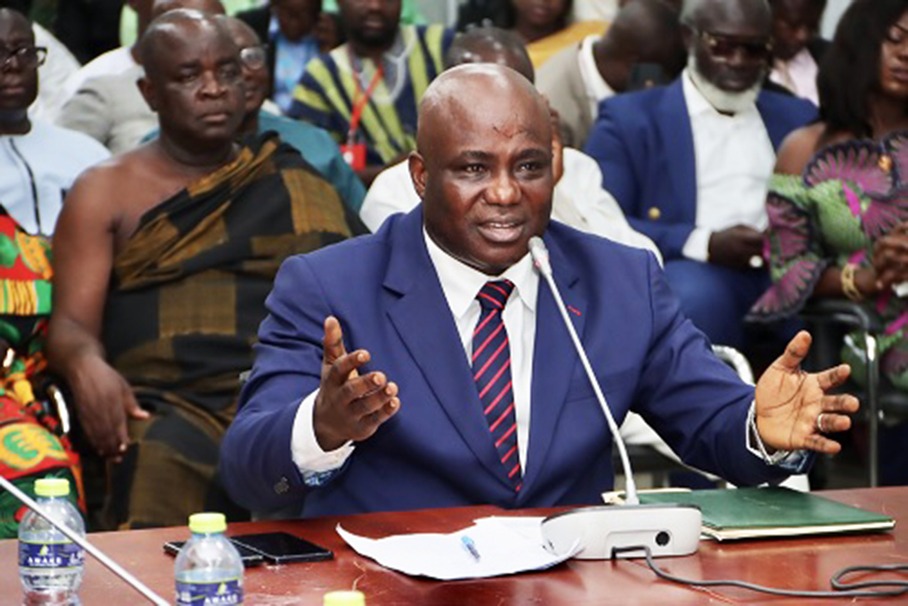
The Minister’s latest remarks come just after he revealed before Parliament’s Assurance Committee that some beneficiaries of the Nkoko Nkitinkiti Programme had slaughtered and consumed birds distributed under the initiative instead of rearing them for breeding purposes.
He expressed concern that such actions undermine the core objective of the programme, which is to establish sustainable poultry production at the household level before expanding into commercial operations.
Government has consistently maintained that the initiative is designed to empower households to breed poultry for long-term income generation rather than immediate consumption.
The commercialisation phase is expected to address one of the long-standing economic challenges.
For decades, the country spends an estimated US$350 million annually importing frozen chicken, resulting in substantial foreign exchange losses while creating employment opportunities and economic value in exporting countries instead of within Ghana.
Officials believe increasing domestic poultry production will significantly reduce these imports, conserve foreign exchange reserves and strengthen the food security.
Beyond reducing imports, the programme is also expected to stimulate agribusiness development, create sustainable employment opportunities for young people and women, strengthen rural economies and increase incomes for poultry farmers across the country.