BY Grace Zigah
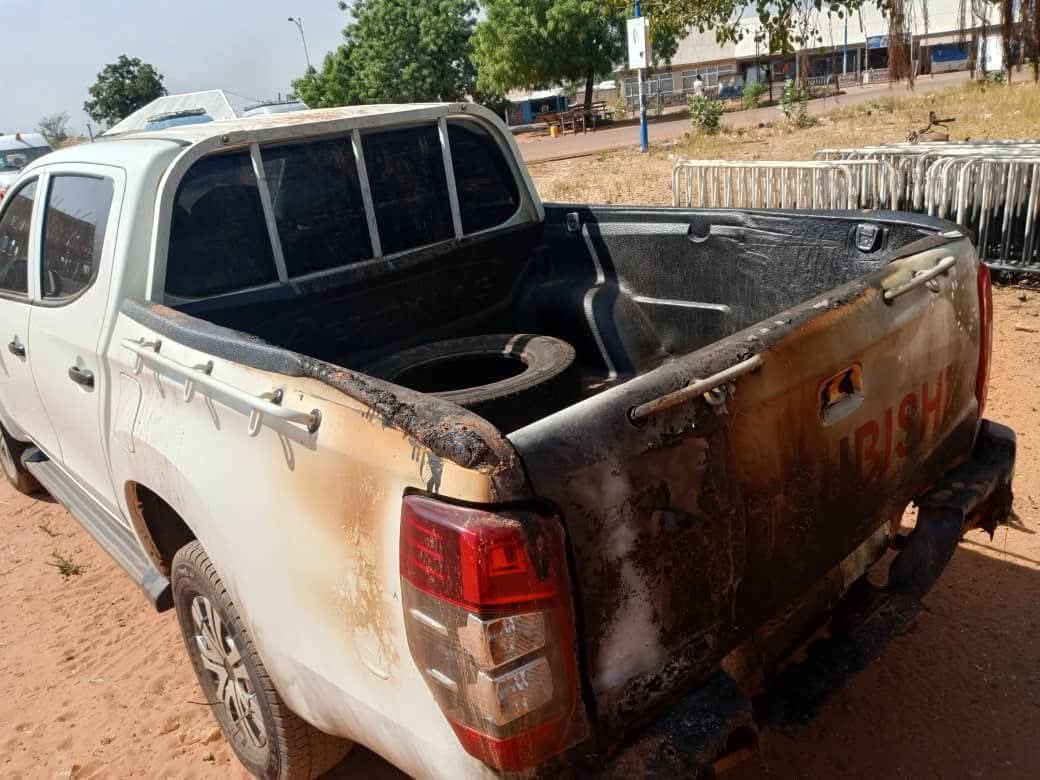
Tensions surrounding the protracted Bawku conflict took a dangerous new turn on the night of Thursday, December 26, 2025, when unknown assailants set ablaze a vehicle belonging to Godfred Mayeem, the North East Regional Organizer of the ruling National Democratic Congress (NDC) and a staff member at the Office of the President.
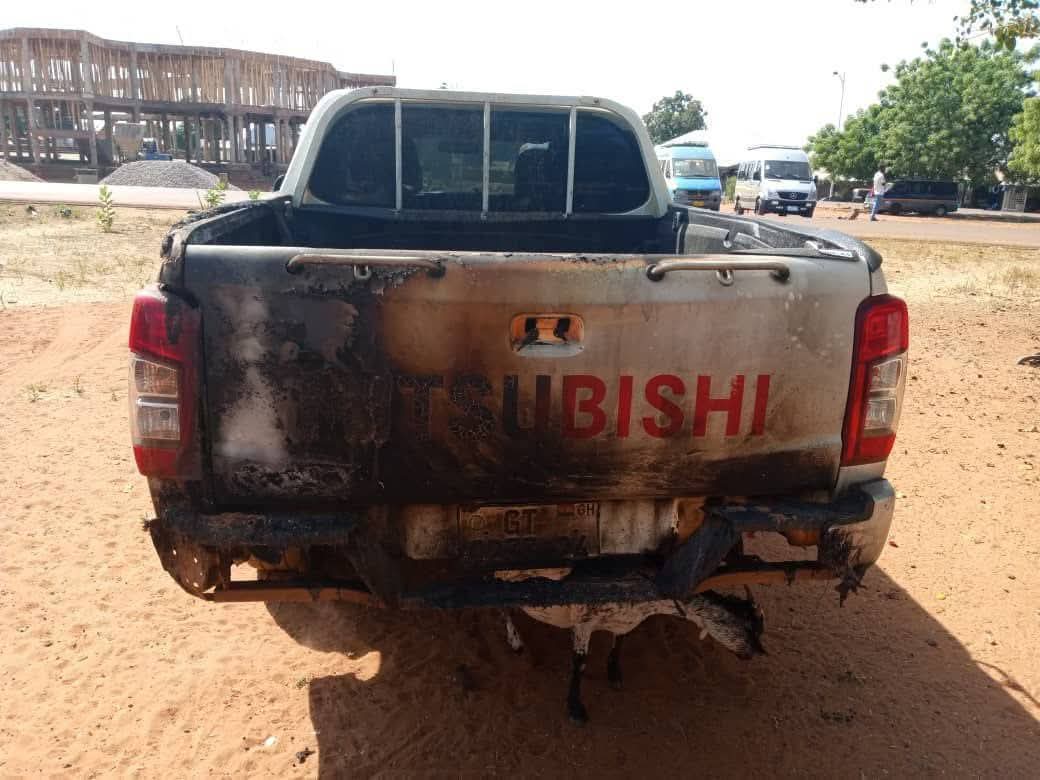
The incident occurred in Nalerigu during curfew hours, intensifying fears that the long-running conflict is spilling beyond Bawku and threatening broader regional stability.
According to security sources, the attackers targeted Mayeem’s Mitsubishi pickup van, which was parked at the time of the incident.
A military patrol on routine night duty responded swiftly, managing to contain the fire before it completely consumed the vehicle. No casualties were reported, but the attack has heightened anxiety in an already volatile security environment.
Authorities say investigations are ongoing, and no arrests have yet been made.
While the motive remains officially unconfirmed, the incident has been widely linked to the lingering tensions surrounding the Bawku chieftaincy dispute, which has seen intermittent violence for decades.
The timing of the attack—coming on the heels of heightened military deployments and enforcement of the Otumfuo-led mediation outcomes—has fueled speculation that it may be connected to the broader unrest.
Sources close to Mayeem say he now fears for his personal safety, believing he may have been deliberately targeted.
The situation has raised serious concerns, particularly as he is not a principal actor in the Bawku chieftaincy dispute.
Observers note that his ethnic background and political affiliation have placed him in a vulnerable position at a time when tensions remain highly charged.
Security personnel have increasingly been deployed to escort individuals perceived to be at risk, especially Mamprusi residents, some of whom have reportedly been targeted while traveling through volatile zones.
In recent months, several soldiers have lost their lives during such escort operations, underscoring the dangerous complexity of maintaining order in the region.
Critics argue that the continued deployment of troops and the recurring need for armed escorts highlight the unsustainable nature of the current security situation.
They contend that public resources are being stretched to manage a conflict that has defied resolution for decades, largely due to deep-seated mistrust and repeated breakdowns in dialogue.
The renewed tensions also revive longstanding debates surrounding the origins of the Bawku conflict.
Observers note that successive governments and traditional authorities have attempted various mediation efforts, including the recent intervention led by Asantehene Otumfuo Osei Tutu II at the request of President Nana Addo Dankwa Akufo-Addo.
That process, which culminated in a formal mediation report, sought to reaffirm existing legal and traditional rulings on the chieftaincy dispute.
While the Kusasi leadership accepted the process and its outcomes, elements within the Mamprusi traditional hierarchy rejected the recommendations, arguing that they were unfair and historically flawed.