By Issah Olegor
The debate over a possible third presidential term for President John Dramani Mahama is gradually dying down.
The issue was exposing an increasingly sensitive question within the governing National Democratic Congress (NDC): whether the party is prepared to defend constitutional term limits even as prominent figures begin positioning themselves for the political succession after Mahama.
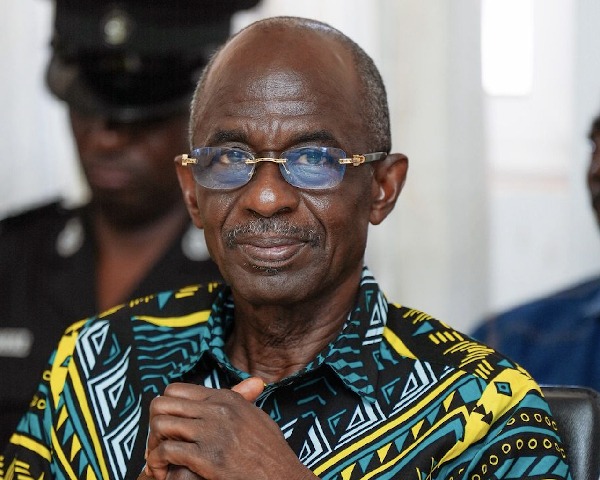
At the centre of the unfolding discussion is National Chairman Johnson Asiedu Nketiah, popularly known as General Mosquito, whose repeated warnings against attempts to weaken presidential term limits have made him one of the NDC’s most outspoken figures on the issue.
His comments have attracted renewed attention following reports that he will not seek re-election as National Chairman, speculation about his possible presidential ambition and the recent intervention by NDC General Secretary Fifi Fiavi Kwetey, who has openly acknowledged that Asiedu Nketiah has earned the right to contest the presidency.
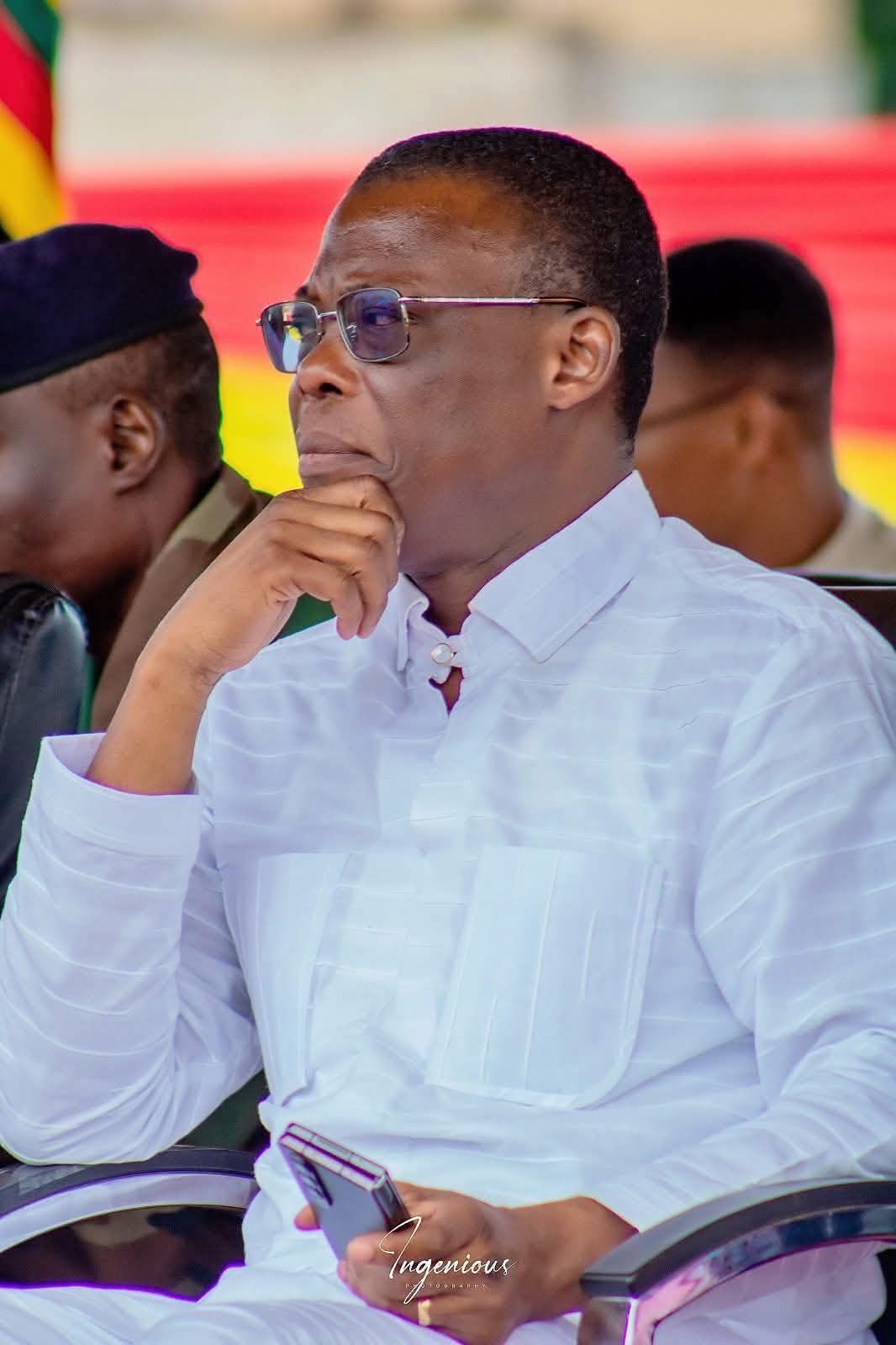
The development has created an interesting political situation in which the NDC chairman is being discussed as a possible successor to Mahama while simultaneously warning against attempts to extend the President’s tenure beyond the constitutional arrangement of two terms.
Although Asiedu Nketiah has not formally declared a presidential bid, his public position on the third-term debate has raised questions about whether he would support any attempt to keep Mahama in office beyond his current mandate.
He said the constitution two term-limit is explicit with no ambiguity with the cases in court on the subject gradually dying down as the Attorney General refuses to file defence.
Strong Warning Over Mahama’s Third-Term Calls
In August 2026, Asiedu Nketiah made a strong intervention on the third-term debate, describing the issue as dangerous and warning against reducing the constitutional question to a contest between supporters and opponents of President Mahama.
Speaking on Ambassadors TV on August 1, he argued that the discussion had become unnecessarily personalised, with some people portraying those who support a third term as Mahama loyalists and those who oppose it as enemies of the President.
He maintained that the debate should instead focus on the constitutional safeguards introduced to protect Ghana’s democratic system and ensure peaceful transfers of political power.
According to him, the presidential term-limit provision was deliberately included in the 1992 Constitution because Ghana’s previous political arrangements had failed to guarantee stable democratic succession.
He warned that removing or weakening the restrictions could expose the country to the same political instability experienced in some African countries where leaders altered constitutional arrangements to prolong their stay in office.
Asiedu Nketiah also questioned why people were pursuing court action over a third-term possibility when Mahama himself had publicly indicated that he was not interested in another term.
His most politically significant remarks concerned the possible contradiction between Mahama’s public assurances and any future attempt to seek another mandate.
He questioned whether the President could maintain public credibility if he eventually sought a third term after repeatedly communicating that he had no such intention.
In remarks reported by GHnow, Asiedu Nketiah said the situation could create the impression that Mahama had not been truthful with Ghanaians if he eventually pursued another term after publicly ruling it out.
He questioned why he was allegedly being cautioned against discussing the issue because of a prophecy suggesting that Mahama could become angry and support another presidential aspirant if he spoke about the matter.
The NDC chairman challenged the logic of the alleged prophecy, arguing that it effectively suggested the President could act contrary to his public statements.
His comments were not an announcement that he would contest against Mahama, but they reinforced his position that the constitutional term-limit debate should not be manipulated for the benefit of any individual.
‘It Is Not About Mahama’ – Nketiah’s Earlier Constitutional Position
The chairman had earlier made a similar argument during an interview on JoyNews’ PM Express on August 5, 2026.
He insisted that the debate should not be reduced to whether Mahama personally deserved another term, but should focus on whether Ghana should maintain or remove the constitutional restrictions on presidential tenure.
“The underlying principle is about whether the nation should remove term limits or hold on to our constitutional term limits for presidents. It’s not about President Mahama,” he stated.
He explained that presidential term limits were introduced to guarantee political alternation and prevent the concentration of executive power in one individual.
Asiedu Nketiah recalled that former Presidents Jerry John Rawlings and John Agyekum Kufuor eventually left office because of the constitutional restrictions, despite their political influence and popularity at the time.
He used a construction analogy to explain why he believed Ghana should not remove democratic safeguards prematurely.
He argued that the country’s democratic institutions were like a structure that required temporary support until they became strong enough to stand independently.
Removing those safeguards too early, he warned, could undermine the stability of the democratic system.
His position was that Ghana should protect the constitutional arrangements that have helped sustain peaceful transfers of power rather than allow political considerations to weaken them.
Fifi Kwetey’s Remarks Put Asiedu Nketiah’s Presidential Ambition in the Spotlight
The third-term controversy has become even more politically interesting following comments by NDC General Secretary Fifi Fiavi Kwetey about Asiedu Nketiah’s possible presidential ambition.
During an interview on JoyNews’ PM Express on November 3, Kwetey was asked whether the NDC National Chairman could contest the party’s presidential primaries ahead of the 2028 general election.
Rather than dismissing the possibility, the General Secretary openly stated that Asiedu Nketiah qualified to contest and had earned the opportunity through his years of service to the party.
“It shouldn’t be a problem at all. I mean, he qualifies to run for president,” Kwetey said.
He further explained that the chairman had served the NDC diligently at the highest levels and should be allowed to pursue the presidency if he wished.
“Of course. I mean, he has served the party diligently. I mean, at the highest level, if he wants to go for it, should I call it the highest position of the party, why not?” he added.
However, Kwetey was careful not to turn his comments into an endorsement.
He stressed that his responsibility as General Secretary was to protect the party’s organisational strength and ensure that all prospective aspirants had a fair opportunity to compete.
He maintained that the eventual decision on who should lead the NDC into the 2028 election must be made by the party’s members rather than imposed by individual leaders.
When pressed directly on whether Asiedu Nketiah intended to contest, Kwetey responded: “When you meet Asiedu Nketiah, you can ask him that.”
The choice of words has attracted attention because Kwetey acknowledged the chairman’s eligibility and political credentials without confirming that he had decided to enter the race.
Asiedu Nketiah Abandons Chairmanship Race
The speculation surrounding the chairman’s presidential ambitions intensified after the NDC’s Director of Elections and IT, Mahdi Gibril, disclosed on TV3’s Ghana Tonight programme on October 21, 2026, that Asiedu Nketiah would not seek re-election as National Chairman.
The announcement came as the party prepared for its internal executive elections and reorganisation.
Asiedu Nketiah did not file to contest the chairmanship again, creating an opening for other senior party figures to compete for the position.
His decision marked a potentially significant change in the political direction of a man who has spent decades occupying some of the NDC’s most influential organisational positions.
He previously served as National Organiser and General Secretary before becoming National Chairman in December 2022, when he defeated incumbent Samuel Ofosu-Ampofo.
His decision not to seek another term has consequently fuelled speculation that he could be preparing to move from party administration into a direct contest for the NDC’s presidential nomination.