
By Daniel Bampoe
With less than two weeks to the crucial Ayawaso East by-election, political tension in the constituency is rising sharply — not only because of the fierce three-way contest on the ground, but also because of an unusual silence from the most visible pollster, Mussa Dankwa, whose absence from the race has become a political story in itself.
Unlike previous high-profile elections, where Mussa Dankwa and his team regularly released weekly or even daily tracking polls, no public survey has been published so far projecting likely outcomes in the Ayawaso East contest.
This has triggered intense speculation within political circles, with party insiders and analysts openly questioning whether internal data may be signaling an uncomfortable truth — particularly for the opposition National Democratic Congress (NDC).
A Three-Horse Race With No Clear Favourite
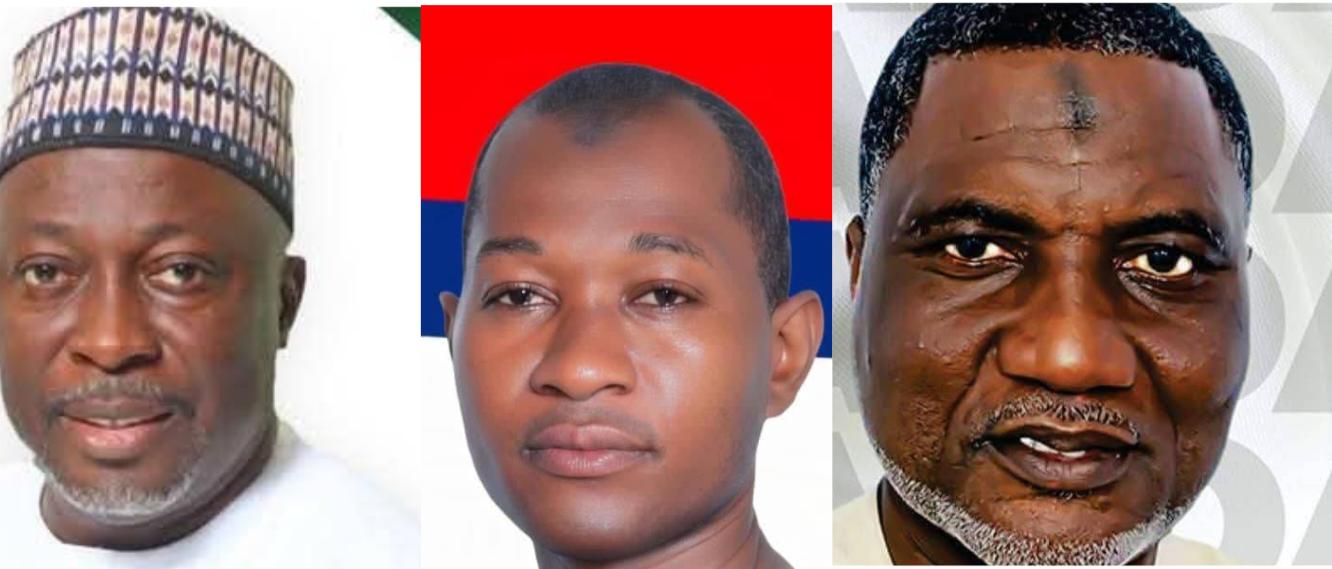
On the ground, Ayawaso East has effectively become a three-horse race involving the New Patriotic Party (NPP) candidate Baba Ali, the NDC’s official candidate Baba Jamal Mohammed Ahmed, and independent contender Umar Sanda — making the contest one of the most unpredictable by-elections in recent memory.
Each candidate commands a distinct political base. Baba Jamal represents the institutional backing of the NDC after emerging from a contentious party primary, Baba Ali anchors his campaign on deep community roots and long-standing local. At the same time, Umar Sanda runs as an independent with a strong grassroots network built over decades of local government service.
Internal NDC Crisis And Party Sanctions
The current dynamics cannot be separated from the internal crisis that erupted within the NDC after its February 7, 2026, parliamentary primaries. Baba Jamal’s victory was immediately followed by allegations of vote-buying, protests, and factional tensions that fractured party unity in the constituency.
Efforts by party leadership to persuade Umar Sanda to step down and support the official candidate failed. As a result, the NDC’s General Secretary, Fifi Fiavi Kwetey, formally issued a letter expelling Umar Sanda from the party, invoking constitutional provisions that prohibit members from contesting against duly endorsed party candidates.
The expulsion barred him from using any NDC symbols, colours, or branding in his campaign.
However, rather than neutralising his influence, the decision has arguably strengthened Sanda’s independent appeal.
Umar Sanda’s Local Power Base
Umar Sanda is not an ordinary breakaway candidate. He is widely regarded as the longest-serving assemblyman in the constituency, with service dating back to the period when the area was under the Accra Metropolitan Assembly (AMA).
His political identity is rooted in local governance, community mobilisation, and longstanding grassroots structures.
His campaign message is emotionally powerful and identity-driven: that the NDC risks losing the seat to the NPP because it selected a candidate perceived as an outsider. His core slogan — “Nima is for Nimians” — frames the contest as a struggle for local representation, arguing that leadership of the constituency should remain in the hands of people born, raised, and socially embedded in the community.
This narrative has resonated strongly among sections of the electorate who view the by-election not just as a party contest, but as a battle over local ownership of political power. 
Baba Ali’s Community Credibility
On the NPP side, Baba Ali’s campaign is equally rooted in community legitimacy. Born and raised in the constituency, he is a teacher, an Imam in one of the local mosques, and the son of a respected Malama — an Islamic teacher known for educating women in the community. His campaign is built on social trust, religious respect, and long-standing community service.
His political message is simple: he belongs to the community, has nowhere else to go, and represents continuity, stability, and local identity — a message that cuts across party lines in a constituency where identity politics often intersects with electoral behaviour.

Baba Jamal And The Outsider Narrative
Baba Jamal, despite being the officially endorsed NDC candidate, faces a more complex challenge. While he enjoys national party backing and strong institutional support, sections of the constituency perceive him as disconnected from local identity politics. This perception has been amplified by rival narratives framing him as an “outsider” whose political roots are not deeply embedded in the social fabric of Nima and the surrounding communities.
Although he has engaged extensively with residents and publicly denied all allegations of electoral malpractice, the internal divisions within the NDC have weakened the party’s traditional advantage in the constituency.

The Polling Silence And Political Speculation
Against this backdrop, the absence of polling data from Mussa Dankwa has become a political talking point. In previous contests, including primaries and parliamentary races, Mussa Dankwa’s team published frequent tracking polls, shaping public discourse and campaign strategies.
In Ayawaso East, however, there has been no single publicly released poll.
This has fueled speculation that internal data may be projecting an unfavourable outcome for the NDC candidate — or at least a race too close to call — prompting silence rather than publication.
For political observers, the silence itself has become data.
A Symbolic National Contest
What began as a constituency by-election has evolved into a symbolic national political test case — about party unity, grassroots power, identity politics, institutional authority, and the limits of party discipline.
With three strong candidates, fractured party loyalties, and shifting voter sentiment, Ayawaso East is no longer just a local race. It has become a national political thermometer, measuring the strength of party structures versus community identity — and testing whether party endorsement still guarantees electoral victory in Ghana’s urban constituencies.


