–By Daniel Bampoe
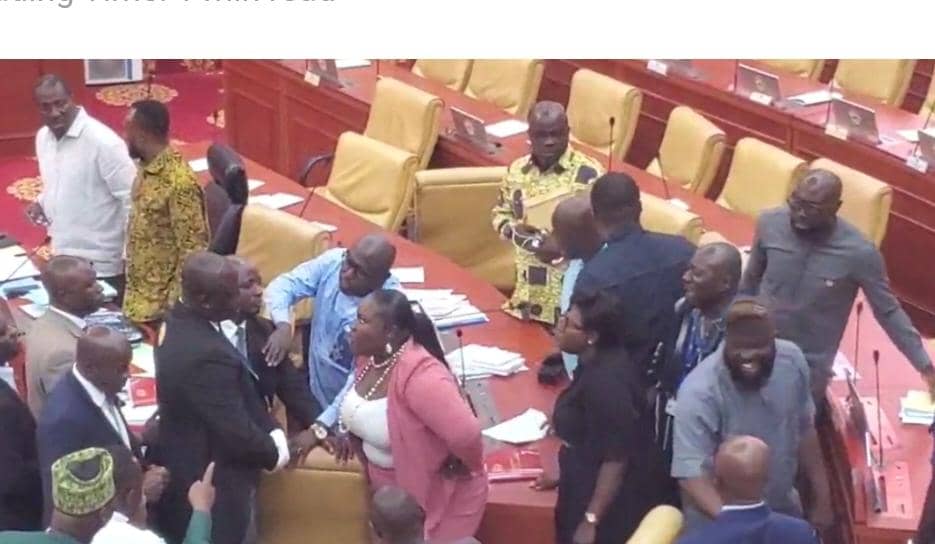
Tensions in Parliament reached a boiling point on Tuesday, June 10, as proceedings were brought to a dramatic halt following a standoff between the Minority and the First Deputy Speaker over the ongoing strike by the Ghana Registered Nurses and Midwives Association (GRNMA).
The confrontation led to a near-physical ejection of a Member of Parliament and the abrupt walkout of the Deputy Speaker himself.
The uproar began when the Ranking Member on the Health Committee, Dr. Nana Ayew Afriyie, attempted to draw attention to the crippling nationwide strike by nurses and midwives.
Dr. Afriyie sought to make a statement on the floor of Parliament urging immediate government intervention, a move that was flatly rejected by the First Deputy Speaker, Bernard Ahiafor, who ruled him out of order.
The Minority, having earlier addressed the media on the seriousness of the strike, returned to the chamber determined to push the issue during the day’s session.
The GRNMA strike, which began on June 4, has paralyzed public health facilities across the country, heightening public anxiety and drawing calls for urgent political response.
Despite repeated pleas from the Minority Leader, Alexander Afenyo-Markin, for the Speaker to exercise discretion in light of the moral and national implications of the industrial action, Ahiafor remained unyielding.
Citing procedural impropriety, he refused to grant permission for the statement to be delivered, warning that it would set a bad precedent.
“I intend not to grant any leave,” he firmly stated.
The standoff intensified when Dr. Afriyie continued to press his demand, prompting the Speaker to summon the Parliamentary Marshal to remove him from the chamber.
“Honourable Marshal, you’re hereby directed to walk Afriyie out of the House,” Ahiafor ordered.
This move incensed the Minority MPs, who erupted into loud protests and hooted at the Deputy Speaker.
In the face of mounting disorder and heckling, Ahiafor stormed out of the chamber, effectively adjourning proceedings until Wednesday, June 11.
The fracas was not merely about parliamentary rules—it reflected growing frustration among Minority MPs over what they describe as the government’s indifference to the plight of health professionals.
In an earlier press engagement, Dr. Afriyie had slammed the NDC-led government for failing to engage with GRNMA since January 2025, despite a series of escalating warnings from the union.
He stated that nurses and midwives had followed due process, beginning with symbolic protests such as wearing red bands, before withdrawing both outpatient and inpatient services.
“All the expectations in the CBA call for appellate speed are justified and not far-fetched. The nurses’ patience had worn thin due to government inaction,” Dr. Afriyie argued.
He criticized the government’s decision to seek legal action against the striking workers, describing it as a “draconian” measure that further alienated health professionals.
“To have taken them to court — even that is an extreme act. You cannot use the law to shackle them. That’s not right,” he said.
He also defended various components of the GRNMA’s Collective Bargaining Agreement (CBA), including the 30-month allowance, rural incentives, fuel, and uniform allowances, stressing that many of these have historical precedence dating back decades.
According to the Minority, the government’s failure to acknowledge and engage with these legitimate concerns has plunged the health sector into a crisis with dire consequences for ordinary Ghanaians.