
By Daniel Bampoe
A looming confrontation between the Bank of Ghana and the Ghana Association of Banks is intensifying concerns across the financial sector following controversial revisions to the country’s Cash Reserve Ratio (CRR) policy, a move critics say could trigger higher banking charges, tighter access to foreign exchange, and reduced credit to businesses and households.
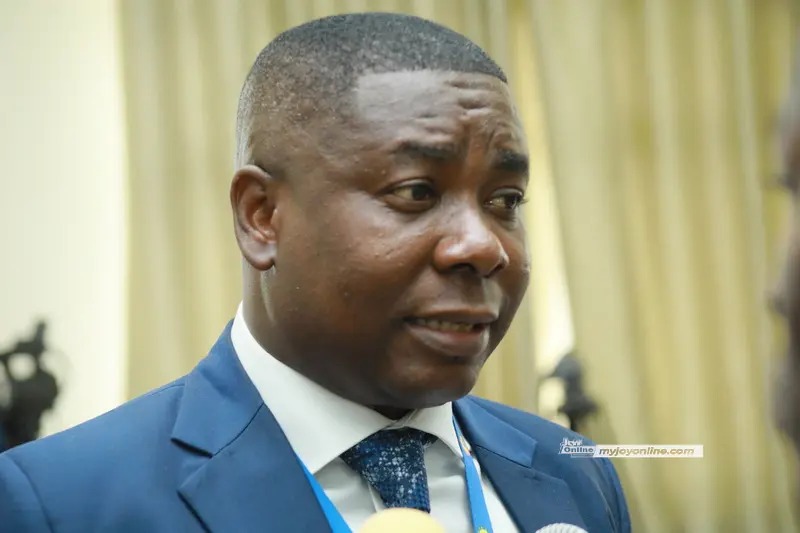
The debate was reignited after the Member of Parliament for Tano North, Gideon Boako, publicly raised alarm over what he described as the growing strain the new policy is placing on commercial banks and ordinary customers.
According to the MP, the decision by the Ghana Association of Banks to request what he termed a “crisis meeting” with the Governor of the Bank of Ghana signals deep unease within the banking industry over the implementation of the revised reserve requirements, particularly the application of a uniform 20 percent Cash Reserve Ratio and the extension of reserve requirements to foreign exchange deposits.
The Cash Reserve Ratio is the portion of customer deposits that banks are required to hold with the central bank, rather than lending out or investing. Central banks often use the policy as a monetary tool to control liquidity, manage inflation, and stabilize the local currency.
However, banking analysts say the latest revision by the Bank of Ghana is among the most aggressive tightening measures introduced in recent years.
Under the previous Dynamic Cash Reserve Ratio regime, banks operated under varying reserve requirements depending on their liquidity and lending profiles.
The new policy, however, imposes a blanket 20 percent reserve requirement on all banks regardless of their loan-to-deposit ratios.
Dr. Boako argued that the policy effectively locks away a larger portion of commercial banks’ domestic deposits at the central bank without compensation, thereby increasing operational costs for financial institutions.
For banks with high loan-to-deposit ratios, he explained, the policy represents a significant liquidity squeeze because more of their cedi deposits are now tied up at the Bank of Ghana and cannot be used for lending or investments.
At the same time, banks continue paying interest to depositors despite earning little or no returns on the reserves held at the central bank.
The Tano North MP further warned that the extension of reserve requirements to foreign exchange deposits could worsen pressure on the banking sector and foreign exchange market.
Under the revised framework, banks are now required to hold 20 percent of the cedi equivalent of their foreign currency deposits with the central bank as reserves.
According to critics of the policy, this means banks will have less usable liquidity for trade finance and other commercial activities.
Dr. Boako noted that the immediate consequence could be a growing reluctance among banks to accept new dollar deposits because of the cost implications associated with maintaining such reserves.
He warned that the development could reduce the availability of foreign exchange for businesses engaged in international trade while also increasing the cost of maintaining foreign currency accounts.
His concerns come amid growing reports that some banks have already begun notifying customers of upward reviews in service charges expected to take effect in June.
Though no official industry-wide announcement has yet been made, financial sector observers say banks are likely to transfer part of the additional cost burden to customers through higher fees and stricter account conditions.
The concerns raised by the MP reflect wider anxieties in the financial sector at a time when the economy is still recovering from the aftershocks of inflationary pressures, debt restructuring, and cedi volatility experienced over the past few years.
Since 2022, the Bank of Ghana has pursued a series of aggressive monetary tightening measures aimed at controlling inflation and stabilizing the local currency.
These included repeated increases in the Monetary Policy Rate, tighter liquidity controls, and interventions in the foreign exchange market.
While the central bank has defended the measures as necessary to restore macroeconomic stability, sections of the banking industry argue that excessive tightening could undermine credit growth and slow economic recovery.
Dr. Boako believes the current reserve policy risks creating what he described as a “credit and foreign exchange crunch” if implemented without flexibility.
Industry insiders expect the Ghana Association of Banks to push for several concessions during its engagement with the central bank.
Among the proposals expected to be tabled are a phased implementation of the policy, exemptions for certain foreign exchange liabilities, and the payment of interest on mandatory reserves held at the Bank of Ghana.
Banking executives are also reportedly seeking regulatory flexibility regarding fee increases, amid concerns that customers may react negatively to rising banking costs.
Several possible outcomes are being anticipated from the talks.
One scenario is that the Bank of Ghana maintains its current policy stance without modification. Analysts say such an outcome would likely force banks either to absorb the additional cost burden or transfer it directly to customers through higher charges, reduced credit expansion, and tighter foreign exchange operations.
Another possibility is a partial concession from the central bank through measures such as a lower reserve requirement on FX deposits, phased implementation, or the payment of interest on reserves. Such a compromise, experts say, could ease pressure on banks while allowing the central bank to continue pursuing its liquidity tightening objectives.
A third, though less likely, outcome would involve the central bank reversing or significantly softening the policy.
While such a move could stabilize banking operations and restore confidence in foreign currency deposit acceptance, analysts believe it could weaken the Bank of Ghana’s broader inflation-control strategy.
There is also speculation that implementation of parts of the policy could be suspended or postponed pending further consultations with industry players.
Despite the uncertainty, Dr. Boako suggested that a complete reversal of the policy remains unlikely in the short term, arguing that the most realistic outcome may be a compromise arrangement designed to reduce the immediate impact on banks and customers.
For ordinary Ghanaians, however, the implications could be far-reaching.
The MP warned that customers holding US dollar accounts in Ghanaian banks may soon face increased account maintenance charges, lower interest earnings, stricter withdrawal conditions, and longer processing periods for transfers and cash withdrawals.
He further cautioned that banks may widen exchange rate spreads for dollar-to-cedi conversions in response to reduced FX liquidity and increased operational risk.
According to him, the overall effect for customers could be reduced access to foreign currency services, higher banking costs, and slower transaction processing.