BY DANIEL BAMPOE
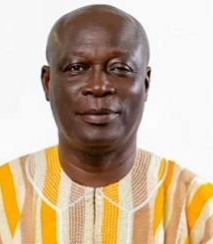
The question confronting delegates of the National Democratic Congress (NDC) as the party prepares to elect a new National Chairman is whether former Member of Parliament for Odododiodio, Edwin Nii Lantey Vanderpuye, can successfully occupy the political space being left behind by the party’s long-serving chairman, Johnson Asiedu Nketia, popularly known as General Mosquito.
The question is not simply about who will succeed Asiedu Nketia. It is about the kind of leadership the NDC needs at a time when the party has moved from opposition into government and must now manage the demands, expectations and internal tensions that come with political power.
Vanderpuye officially launched his campaign on Saturday, November 21, 2026, at the KNUST Great Hall in Kumasi, presenting himself as a candidate capable of taking the party into a new phase under the theme, “Reset, Reform, Rebuild.”
But as he seeks the support of delegates ahead of the December 19 national executive elections, one major challenge hangs over his ambition: how does he convince party members that he can provide leadership after a political heavyweight whose influence has shaped the NDC for more than two decades?
Asiedu Nketia is not an ordinary party chairman. His political shoes are arguably among the biggest in Ghanaian party politics, having spent years building the NDC’s organisational machinery, managing internal contests and leading the party through some of its most difficult electoral battles.
He served as National General Secretary from 2005 to 2022, a period of 17 years during which he became one of the most influential figures in the party. He first won the position in 2005 with nearly 80 per cent of the votes, secured an overwhelming 93 per cent victory in 2010 and retained the position in 2018 after defeating Koku Anyidoho by 6,642 votes to 1,655.
In December 2022, he made another major political move by contesting for the National Chairmanship and defeating the incumbent, Samuel Ofosu-Ampofo, with 5,569 votes against 2,892, representing 65.17 per cent of the votes.
His influence was built not merely on occupying party positions but on his ability to organise, strategise and mobilise the NDC’s grassroots structures. He became a familiar figure in the party’s electoral operations and was among the leading voices in its response to the disputed 2020 general election, including the presidential election petition at the Supreme Court.
Under his chairmanship, the NDC went on to secure victory in the 2024 general elections, returning John Dramani Mahama to the presidency and giving the party a commanding parliamentary majority.
For supporters, General Mosquito became the political commander whose organisational experience and combative approach helped the NDC withstand pressure from its opponents. His departure therefore creates a significant leadership gap, particularly at a time when the party must consolidate its position in government and prepare for another election cycle.
Asiedu Nketia has indicated that he will not seek another position on the party’s national executive. His declaration, reportedly captured in the words, “I don’t wait to be chased out, I’ve made my choice,” suggests that he intends to leave the position on his own terms. Speculation has also emerged that he could turn his attention to the NDC’s 2027 presidential flagbearership contest.
The question, therefore, is whether Vanderpuye can fill the space left by a man whose political influence was built over 20 years.
VANDERPUYE’S POLITICAL JOURNEY
Born on June 11, 1965, in Accra, Vanderpuye comes into the contest with a background in journalism, parliamentary politics and public administration.
Before entering Parliament, he worked as a sports journalist and rose to become Deputy Head of Sports at the Ghana Broadcasting Corporation, serving from 1990 to 2004. His years in broadcasting helped establish his public profile and communication skills, which have remained important elements of his political identity.
He represented the Odododiodio Constituency in Parliament from 2013 until January 2025, serving three terms. In the 2012 parliamentary elections, he won the seat with 45,967 votes, representing approximately 63 per cent of the total votes cast. He retained the constituency in 2016 with 36,606 votes, representing about 57 per cent, and won again in 2020.
His public service experience also includes appointments as Deputy Minister for Trade and Industry, Deputy Minister for Local Government and Minister for Youth and Sports between 2015 and 2017. He later served as Director of Operations at the Presidency and was appointed National Coordinator of the District Road Improvement Programme (DRIP) in January 2025.
He resigned from the DRIP position in June 2026 to pursue his ambition of becoming the NDC’s next National Chairman.
Vanderpuye filed his nomination on November 9, 2026, and has been assigned number four on the ballot paper. He is among four candidates cleared to contest the position, alongside National Vice Chairman Sofo Azorka Awudu, former Greater Accra Regional Minister Nii Armah Ashietey and Dr Akwasi Oppong-Fosu.
His campaign is now seeking to persuade delegates that his experience and proposed reforms make him suitable for the next chapter of the party’s leadership.
WHAT IS VANDERPUYE BRINGING THAT IS DIFFERENT?
The central message of his campaign is “Reset, Reform, Rebuild.” It is an attempt to present the NDC’s next phase as one that requires more than the confrontational politics and mobilisation strategies that defined its years in opposition.
Vanderpuye argues that although the party secured victory in 2024, it cannot afford to become complacent. He wants the party to examine its internal structures, strengthen its institutions and respond to the changing expectations of members.
One of his major proposals is a review of the NDC constitution within the first 100 days of assuming office. He believes the party’s governing document needs to be updated to reflect current political realities and improve the way the organisation operates.
The proposal is ambitious, particularly for a party with structures across 16 regions and 276 constituencies, as well as a large membership base. Delegates will therefore need to examine not only the promise but also the practical arrangements behind it.
How will the review be conducted? Who will be involved? How will grassroots members contribute? And what resources will be made available to complete the exercise within 100 days?
These are questions Vanderpuye must answer if he wants his reform agenda to be seen as a workable programme rather than an attractive campaign slogan.
His second major message centres on unity, inclusiveness and internal reconciliation. He has promised to build what he describes as a united, inclusive and caring political family, restoring trust among members and strengthening their sense of belonging at every level.
That approach represents a different tone from the combative political language often associated with Asiedu Nketia. General Mosquito built his reputation as a political fighter who could mobilise the party against its opponents. Vanderpuye is presenting himself as a potential unifier who can bring different interests together.
The question for delegates is whether the NDC, now in government, needs another political general or a chairman who can manage the responsibilities and tensions of governing.
THE NDC NEEDS A CHAIRMAN WHO CAN MANAGE POWER
The circumstances surrounding the December 2026 election are significantly different from those that confronted the party in 2022.
At the time Asiedu Nketia contested for the chairmanship, the NDC was in opposition and needed a leader capable of challenging the governing New Patriotic Party, mobilising frustrated supporters and preparing the party for another electoral battle.
Today, the NDC is in government. President Mahama is back at the Presidency, the party controls a substantial parliamentary majority and its members occupy ministerial, institutional and other public appointments.
That political success, however, comes with its own complications.
While opposition parties often rally around the common objective of winning power, governing parties can face internal disagreements over appointments, contracts, political influence and access to opportunities. Members who campaigned for victory may become frustrated when their expectations are not met.
The next National Chairman must therefore demonstrate the ability to manage competing interests without allowing disagreements to weaken the party.
Can Vanderpuye challenge government appointees when their actions threaten party unity? Can he caution ministers, chief executives and Members of Parliament when their conduct undermines the organisation? Can he protect the party’s independence while maintaining a constructive relationship with the government?
These questions go to the heart of the leadership challenge facing every candidate.
A chairman who merely celebrates the party’s electoral victory without addressing the concerns of the grassroots may struggle to maintain the enthusiasm that carried the NDC into power.
THE 2027 FLAGBEARERSHIP CONTEST WILL TEST THE NEXT CHAIRMAN
Another major responsibility awaiting the incoming chairman will be the management of the NDC’s 2027 presidential flagbearership contest.
The contest is expected to attract significant political interest, particularly as the party prepares for the succession question ahead of the 2028 general elections. Potential contenders and influential political figures are already part of discussions surrounding the party’s future leadership.
The next chairman will have to guarantee a transparent and credible process, ensure that all aspirants are treated fairly and prevent the contest from developing into a division that could damage the party.
The winner must be able to unite supporters of different candidates after the primaries, while those who lose must remain committed to the party.
This will require a chairman who is sufficiently independent to resist pressure from powerful political figures and government officials.
Vanderpuye’s ability to maintain neutrality, particularly amid relationships and political alliances within the party, will therefore be an important consideration for delegates.
His reported apology to GoldBod Chief Executive Officer Sammy Gyamfi in August 2026 has also formed part of the political conversations surrounding his relationships within the party. However, delegates will ultimately judge him on whether he can demonstrate fairness and independence in the management of internal affairs.
CAN HE CONNECT WITH THE GRASSROOTS ACROSS THE COUNTRY?
The NDC’s electoral strength has historically depended on its grassroots structures, from national and regional executives to constituency officers, branch executives and polling station organisers.
The next chairman cannot afford to concentrate only on the party’s national leadership. He must understand the concerns of members in every constituency, including communities far removed from the political centres of Accra and Kumasi.
Vanderpuye has reportedly visited 12 constituencies in the Greater Accra Region, including Ada, Sege, Ningo-Prampram and Kpone-Katamanso, where he engaged party executives and listened to their concerns.
Such engagements could help strengthen his appeal, but they also raise a broader question: can he extend that approach to all 276 constituencies?
His experience as a three-term MP gives him a connection to parliamentary and constituency politics. His time in government has also exposed him to public administration. However, national party leadership requires a much wider organisational reach.
He must convince delegates in the northern, middle and western parts of the country that his leadership will not be limited by regional, ethnic or personal political connections.
This is where his opponents, particularly Sofo Azorka, could pose a serious challenge.
Azorka, a National Vice Chairman, has built a political profile around party structures and grassroots mobilisation, particularly in northern Ghana and Zongo communities. His organisational experience and existing relationships within the party make him a formidable contender.
In a contest where delegates and party structures carry the final decision, political popularity alone may not be enough. The ability to mobilise support across the country could prove decisive.
THE FINANCIAL QUESTION
The next chairman will also inherit the responsibility of strengthening the party’s financial position.
Although the NDC is in government, the party must maintain its independence and develop sustainable ways of financing its political activities. It will need resources to support its structures, organise campaigns, train party officials and prepare for the 2028 general elections.
The incoming chairman must therefore demonstrate the ability to mobilise financial support from party members, businesspeople, sympathisers and the diaspora without making the party dependent on public resources.
Vanderpuye’s campaign must explain how it intends to build a financially sustainable organisation, maintain accountability and ensure that party resources are used for the benefit of the wider membership.
Delegates will want to know whether his proposed reforms will be supported by a practical financial plan.
A POLITICAL POLL IS NOT AN ELECTION
Vanderpuye appears to have generated early momentum in the race. A Global InfoAnalytics poll conducted among 5,637 NDC delegates in July 2026 reportedly placed him at 26.8 per cent, giving him an early indication of support.
However, the poll should not be mistaken for an election result. Campaign momentum, public recognition and polling figures do not automatically translate into votes at a party congress.
The final decision rests with delegates, whose individual assessments will be shaped by candidate credibility, organisational strength, personal relationships, campaign promises and their expectations of the next chairman.
His campaign launch at the KNUST Great Hall was therefore an important opportunity to move beyond the slogan and explain the substance of his proposed leadership.
Delegates will want to hear how he intends to reset the party, what specific constitutional reforms he will pursue, how he will rebuild internal trust and what mechanisms will ensure that the grassroots remain influential in party decision-making.
They will also want to know how he intends to protect the NDC from internal divisions as the party approaches the 2027 flagbearership contest and the 2028 general elections.
THE FINAL QUESTION: MUST THE NEXT CHAIRMAN BE ANOTHER GENERAL MOSQUITO?
The argument that Vanderpuye must become another Asiedu Nketia in order to succeed him may be misplaced.
General Mosquito built his political reputation through years of organisational work, electoral battles and confrontational party politics. His influence cannot simply be transferred to another individual, regardless of that person’s political experience or campaign promises.
Vanderpuye does not necessarily have to copy Asiedu Nketia. He must demonstrate that he can offer the party the kind of leadership required at this particular stage of its political journey.
Asiedu Nketia was widely regarded as a wartime general during the NDC’s years in opposition. Vanderpuye is presenting himself as a potential peacetime builder who can strengthen internal institutions, restore trust and manage the complications of political power.
But a caring chairman must also be firm. A unifying leader must be able to discipline wrongdoing. A reformer must have the courage to challenge powerful interests, including those within his own political organisation.
That is the real test.