By Issah Olegor
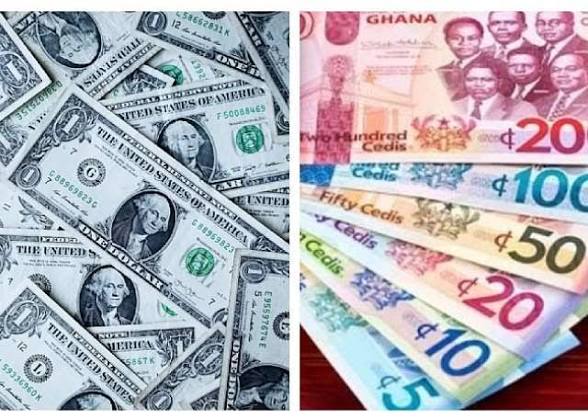
The cedi has recorded a mixed performance across the foreign exchange market, remaining relatively stable at the retail level while weakening slightly in the interbank market amid easing support from the Bank of Ghana and sustained demand for foreign exchange.
The latest market assessment shows that although the local currency came under pressure in the wholesale market over the past two weeks, it continued to post gains at forex bureaus, reflecting improved confidence and a relatively stable exchange rate environment.
According to data released by Joy Business, the US dollar is currently selling at about GH¢12.10 at retail forex bureaus, while the cedi has appreciated by 1.46 percent against the dollar since the beginning of 2026.
In the interbank market, however, the cedi weakened against all three major trading currencies during the review period.
The dollar mid-rate increased by 1.53 percent, moving from GH¢11.22 to GH¢11.39, while the cedi also depreciated against the British pound and the euro by 2.53 percent and 1.31 percent, respectively, with the pound trading at GH¢15.21 and the euro at GH¢13.03.
Despite this decline in the wholesale market, the retail segment remained comparatively resilient. At forex bureaus, the cedi appreciated 0.42 percent against the US dollar to GH¢12.00 during the review period, while recording stronger gains of 2.24 percent against the pound to GH¢15.65 and 2.58 percent against the euro to GH¢13.55.
Market analysts attribute the mixed performance to changing conditions in the foreign exchange market after earlier interventions by the Bank of Ghana helped stabilize the currency during the first half of the year.
According to Databank Research, although the central bank’s interventions significantly strengthened the cedi, the local currency was unable to appreciate beyond the GH¢11.00 per dollar mark in the interbank market, slightly missing the research firm’s earlier forecast of GH¢10.90.
The analysts believe this suggests the emergence of a relatively stable exchange rate floor that balances currency stability with the competitiveness of the exports.
They also observed that as the Bank of Ghana gradually reduced its direct interventions while demand for foreign exchange remained steady, the cedi naturally drifted back toward the GH¢11.39 per dollar range in the interbank market.
Looking ahead, Databank Research maintains a positive short-term outlook for the Ghanaian currency, particularly ahead of the government’s Mid-Year Budget Review.
However, the research firm warned that the expected increase in imports between August and September, especially containerized cargo, could place additional pressure on the demand for foreign exchange and consequently affect the cedi.
The report further noted that under the Ghana Accelerated National Reserve Accumulation Policy (GANRAP), the Bank of Ghana is expected to continue prioritizing the accumulation of international reserves while intervening strategically to smooth seasonal exchange rate volatility rather than aggressively defending a specific exchange rate.
Economists believe this approach will help preserve long-term macroeconomic stability while allowing the foreign exchange market to adjust gradually to changing demand and supply conditions.