By Grace Zigah
Barely weeks after igniting national debate with a viral gunshot incident at a high-profile music event in Accra, Alhaji Sarki Abubakar Saddick—popularly known as Paa Nii Cyborg—has been handed an unexpected public role, this time on the side of firearm control and public safety.
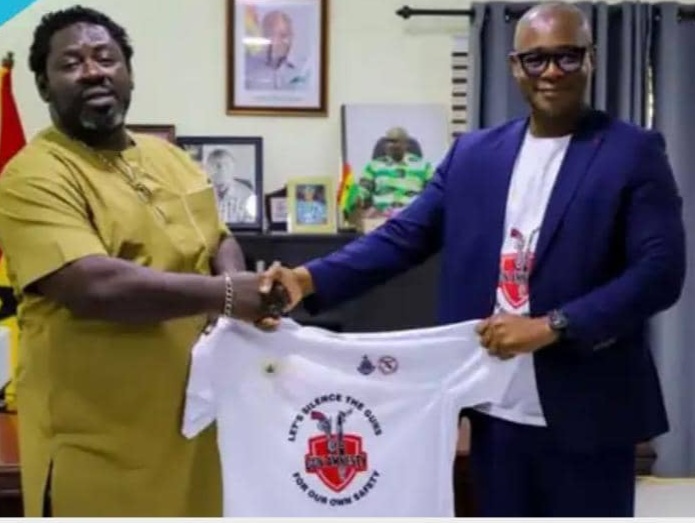
The National Commission on Small Arms and Light Weapons (NACSA) has appointed the controversial figure as an Ambassador for the ongoing Gun Amnesty Programme.
Saddick shot into the public spotlight in late December 2025 during the annual “Detty December” festivities, when he fired celebratory gunshots at AfroFuture Ghana in honour of Nigerian Afrobeats star Asake.
Videos of the incident, recorded at the El-Wak Stadium in Accra, spread rapidly across social media, triggering outrage and concern, particularly because the act occurred during a nationwide ban on celebratory gunfire under the Gun Amnesty Programme.
At the time, security agencies reiterated that the amnesty—introduced to reduce the circulation of illicit firearms and curb gun-related violence—prohibited all forms of celebratory gunshots, regardless of intent or status.
Against this backdrop, NACSA’s decision to appoint Saddick as a Gun Amnesty Ambassador has drawn both surprise and scrutiny.
The Commission announced that Saddick visited its offices on Thursday, January 15, 2026, where officials took him through the objectives of the Gun Amnesty Programme and the broader national strategy to promote peace, lawful conduct, and voluntary surrender of illicit weapons.
In a statement shared on social media, NACSA said Saddick was “moved by the mission of the Commission” and voluntarily committed himself to advancing the goals of the programme. According to the Commission, he will leverage his influence, voice, and digital platforms to educate and mobilise young people across the country to support gun control efforts.
Speaking after the engagement, Saddick acknowledged the controversy surrounding his earlier actions and said the experience had changed his outlook.
He urged the youth to take responsibility for their choices and to actively contribute to building safer communities.
“Peace and freedom begin with responsible choices and actions. I have learnt my lessons because now I know that the law is the law,” he said.
NACSA welcomed him into what it described as the “Gun Amnesty Train,” expressing optimism that the partnership could help reach segments of society often untouched by conventional public education campaigns.
The Commission said it looks forward to working closely with him to promote a peaceful, safe, and gun-violence-free Ghana.
However, the appointment has sharply divided public opinion. While some social media users praised the move as reformative and pragmatic—arguing that using influential street figures could strengthen the amnesty programme—others questioned the moral and legal implications of rewarding someone whose actions had earlier endangered public safety.
Supporters have framed the appointment as a strategic attempt to “use the street to control the street,” suggesting Saddick’s influence among youth and informal networks could help curb the spread of small arms.
Critics, on the other hand, view the move as inconsistent with the rule of law and unfair to others who have faced stricter consequences for lesser offences.