BY Issah Olegor
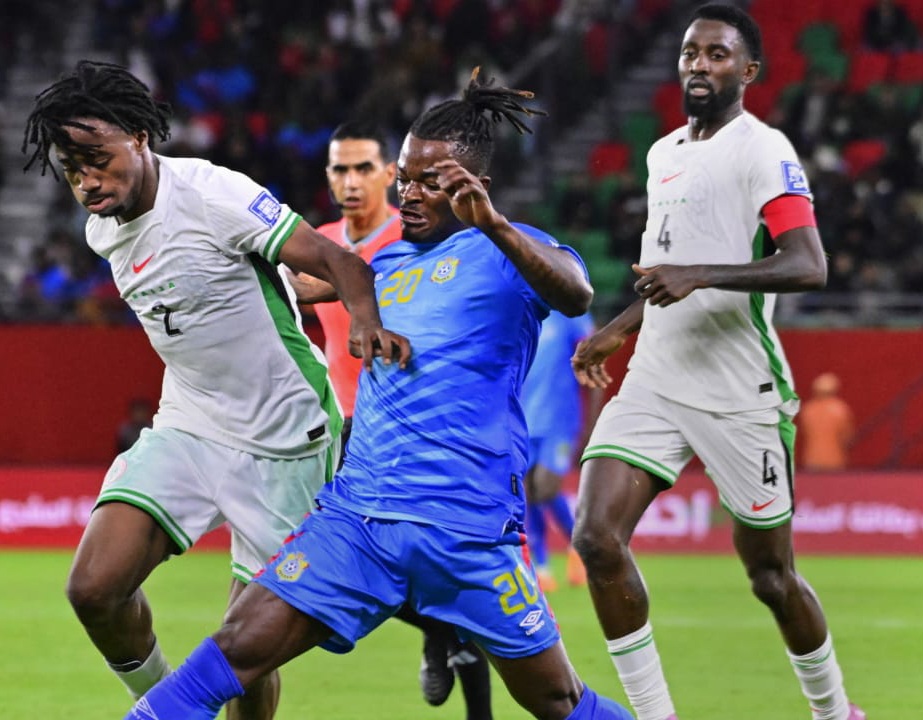
The Democratic Republic of the Congo delivered one of the biggest shocks of the African 2026 World Cup qualifying campaign after stunning Nigeria 4–3 on penalties in Rabat, Morocco, to reach the inter-confederation playoffs.
The tense encounter, which ended 1–1 after extra time, not only sent DR Congo a step closer to their first World Cup since 1974 but also ignited controversy following allegations of “voodoo” rituals raised by Nigeria coach Eric Chelle.

A High-Stakes Showdown With History At Play
The Rabat mini-tournament, organized for the best runners-up across Africa’s nine qualifying groups, offered a second chance to nations whose group campaigns fell short of automatic qualification.
While Egypt, Senegal, Ghana, Morocco, and others had already secured direct tickets to the expanded 48-team World Cup, Nigeria and DR Congo were among those forced into the playoff gauntlet—one that would ultimately prove unforgiving for the Super Eagles.
Nigeria, six-time World Cup participants, entered the match widely considered favourites despite a turbulent two-year qualifying journey under three different managers.
DR Congo, meanwhile, were chasing a return to football’s biggest stage for the first time in over five decades, when they first appeared as Zaire in 1974.
Missed Chances
Nigeria could not have asked for a better start. In the 3rd minute, Frank Onyeka pounced on a loose clearance at the edge of the box, unleashing a strike that deflected off Axel Tuanzebe into the net. The early goal seemed to justify Nigeria’s status as favourites.
But DR Congo responded with resilience. Only minutes after conceding, Ngal’ayel Mukau squandered a golden opportunity, blasting over from close range following a misjudged punch from Nigerian goalkeeper Stanley Nwabali.
The Congolese equaliser finally came in the 32nd minute. After Alex Iwobi lost possession deep inside DR Congo’s half, a rapid counterattack saw Cedric Bakambu square the ball for Meschack Elia, who slotted home under pressure despite a last-ditch attempt from Wilfred Ndidi.
The goal energised the Leopards, who began dominating midfield battles and exploiting Nigeria’s fading intensity—especially after star striker Victor Osimhen was substituted at halftime due to injury concerns.
DR Congo Take Control As Nigeria Fade
The second half saw DR Congo push more aggressively as the Super Eagles struggled creatively. A clever back-heel from Bakambu nearly yielded a goal, and a strong penalty shout for the Congolese in the 55th minute—after Noah Sadiki was brought down by Benjamin Fredrick—was waved away without VAR intervention.
Nigeria, who needed extra time to defeat Gabon in the semifinals, appeared fatigued. DR Congo, who dismissed Cameroon within regulation time, capitalised on their superior energy levels.
Chancel Mbemba came closest to a winner in the dying moments of extra time, forcing Nwabali into a stretching save. Tolu Arokodare’s header missed the target for Nigeria, marking their last real chance.
Penalty Shootout: A Night of Nerves, Rain, and Controversy
With the match locked at 1–1, the contest moved into a dramatic penalty shootout under heavy rain. DR Congo made a strategic substitution seconds before the kicks began, bringing on goalkeeper Timothy Fayulu—who would later become the hero of the night.
Fayulu saved two Nigerian penalties, including a crucial stop from Semi Ajayi in the sixth round. Captain Chancel Mbemba, who had scored a decisive goal against Cameroon only days before, stepped up to rifle home the winning kick, sparking wild celebrations from Congolese players and supporters.
Yet the drama did not end on the pitch.
Nigeria Coach Accuses DR Congo of ‘Voodoo’ Rituals
In a stunning post-match moment, Nigeria coach Eric Chelle accused DR Congo players of engaging in “maraboutage”—a term referring to spiritual or mystical rituals—during the penalties. Chelle, 48, reiterated the claim in both French and English, stating, “During all of the penalties, the players of Congo were doing some voodoo.”
DR Congo officials swiftly dismissed the allegations as baseless. Witnesses observed no unusual activity beyond traditional pre-kick routines, and football analysts have criticised Chelle for deflecting from Nigeria’s technical shortcomings.
Nigeria’s World Cup Hopes Shattered for Second Time
For the second consecutive World Cup cycle, Nigeria will miss out on the global tournament—a devastating outcome for a team ranked significantly higher than DR Congo. A fractured campaign, reliance on Victor Osimhen, and inconsistency in key matches proved costly.
Despite an early lead, Nigeria rarely threatened after the first half and appeared content to settle for penalties—an approach that ultimately backfired.
DR Congo March On With 1974 Spirits Behind Them
The Leopards now join Bolivia and New Caledonia in the six-team inter-confederation playoffs set for March 2026, where only two spots remain for the World Cup in the United States, Canada, and Mexico.
Their resurgence, built on tactical discipline, physical power, and emotional momentum, rekindles memories of the nation’s historic 1974 appearance—their last on football’s grandest stage.