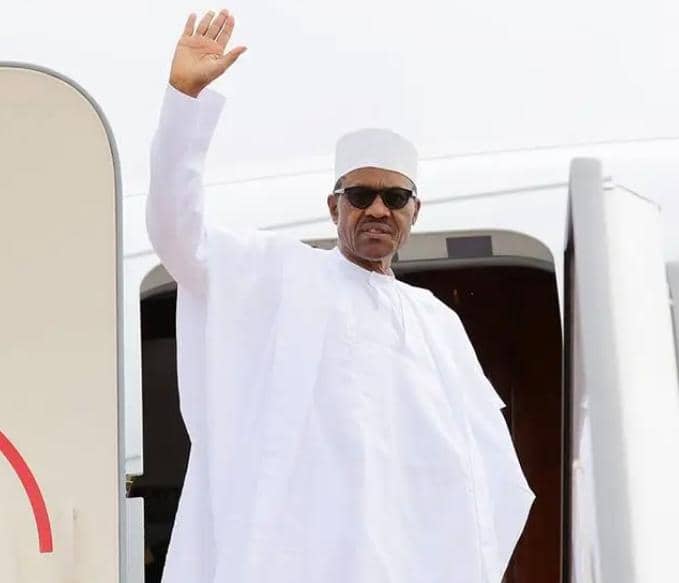
By Issah Olegor
Nigeria and the wider African continent are mourning the passing of one of its most consequential leaders, General Muhammadu Buhari, who served both as a military ruler and a democratically elected president.
The former Nigerian leader died on Sunday, July 13, 2025, in London at the age of 82
The news of his death was confirmed by his former aide, Bashir Ahmad, via social media platform X (formerly Twitter), who wrote: “The family of the former president has announced the passing on of the former president, Muhammadu Buhari, GCFR, this afternoon in a clinic in London. May Allah accept him in Aljannatul Firdaus. Amin.”
Buhari’s death brings an end to a political career that spanned over four decades and significantly shaped Nigeria’s post-independence governance.
He had reportedly been receiving medical care in the United Kingdom for some time, although details of his illness remain undisclosed. Funeral arrangements are expected to be made in accordance with Islamic customs.
A Life Steeped in Military and Political Leadership
Born on December 17, 1942, in Daura, Katsina State, Muhammadu Buhari first rose to national prominence in 1983 when he overthrew the civilian government of President Shehu Shagari in a military coup, becoming Nigeria’s military head of state from 1983 to 1985. His regime was known for its strict anti-corruption measures and a crackdown on indiscipline and mismanagement in public service.
Buhari was ousted from power in another military coup led by General Ibrahim Babangida, who was Chief of Army Staff.
However, his image as a disciplined and incorruptible leader endured, and he remained a central figure in Nigeria’s political discourse.
Return as a Civilian President
After multiple unsuccessful attempts, Buhari returned to power in 2015 through the ballot box under the platform of the All Progressives Congress (APC), defeating incumbent President Goodluck Jonathan.
His election marked the first time in Nigeria’s history that an opposition candidate had defeated a sitting president in a democratic election.
Buhari’s presidency from 2015 to 2023 was defined by efforts to combat corruption, reduce Boko Haram insurgency in the northeast, and stabilize the Nigerian economy which had been severely affected by fluctuating global oil prices.
His administration launched large-scale infrastructure projects, restructured key sectors, and implemented a Treasury Single Account (TSA) to curb public sector corruption.
However, Buhari’s tenure was also marred by criticism over rising insecurity in other parts of the country, economic stagnation, worsening inflation, and widespread youth unemployment.
Despite mixed reviews on his performance, he remained a towering figure in Nigeria’s post-democratic evolution.
Global and National Tributes Pour In
As news of his passing spread, tributes began to pour in from world leaders, regional organizations, and Nigerian citizens across the political spectrum.
President Bola Ahmed Tinubu, who succeeded Buhari in 2023, is expected to issue an official statement with the Nigerian government likely to declare a national mourning period.
The African Union and ECOWAS, organizations with which Buhari closely engaged during his time in office, are also expected to pay formal tribute in the coming days.