BY Daniel Bampoe
For decades, flooding in the major cities has been treated largely as a seasonal inconvenience or a disaster triggered by heavy rainfall.
However, the recurring devastation witnessed in Accra, Sekondi-Takoradi and other urban centres increasingly points to a deeper challenge: the cities remain ill-prepared for the realities of a changing climate, rapid urbanisation and growing environmental degradation.
While extreme weather events continue to intensify, experts argue that the real crisis lies in weak urban planning, poor enforcement of regulations and the slow pace of climate adaptation.
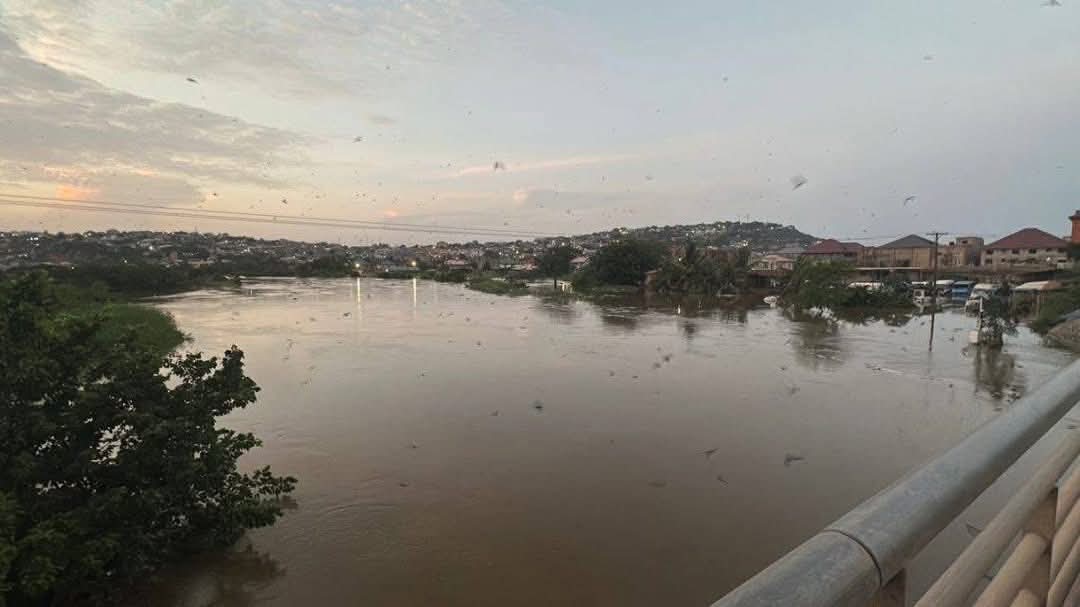
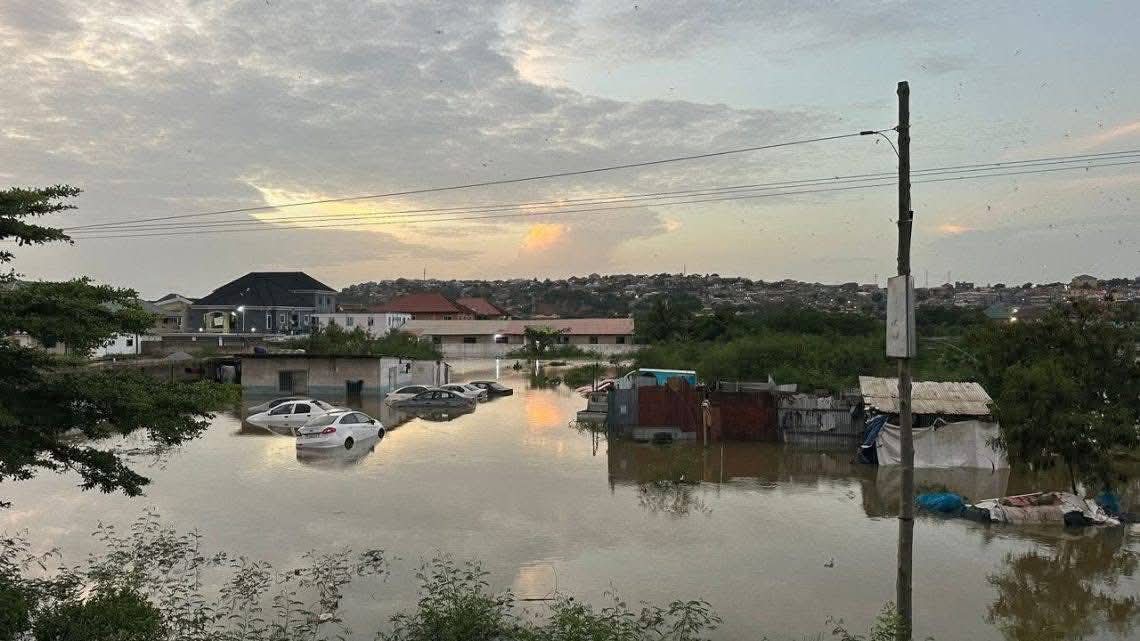
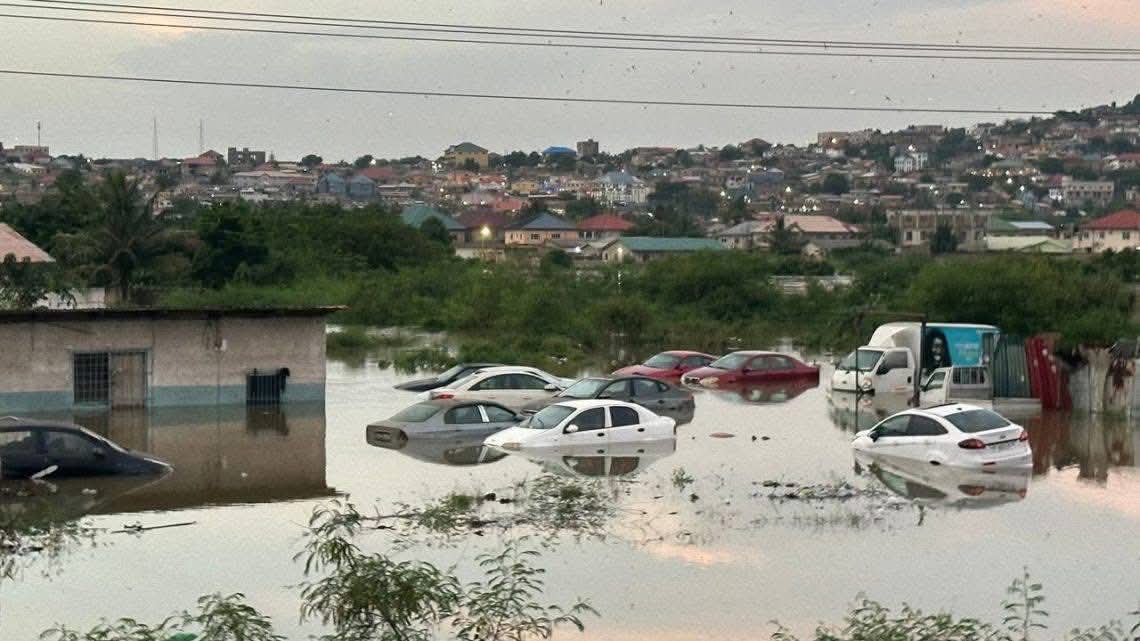
The latest floods that displaced hundreds of residents in communities downstream of the Weija Dam have once again exposed the vulnerabilities within the urban infrastructure. Following days of intense rainfall, Ghana Water Limited was forced to spill excess water from the dam to protect its structural integrity, leading to severe flooding in communities such as Weija, Tetegu, Oblogo and Ashalaja.
Similar flooding incidents were recorded across parts of Accra, including Christian Village, Kaneshie, Mallam, Dansoman and Tema, disrupting transportation, destroying property and forcing families from their homes.
While many residents attribute such disasters solely to heavy rains, climate experts and urban planners say the causes are far more complex. One of the most significant factors is the rapid and largely unregulated expansion of the cities.
As populations continue to grow, residential and commercial developments are increasingly encroaching on wetlands, floodplains and natural drainage corridors that historically absorbed excess rainwater and protected communities from flooding.
In Accra, large portions of wetlands surrounding the Odaw River basin and other natural waterways have been converted into housing estates, commercial centres and informal settlements.
These developments have replaced permeable surfaces with concrete and asphalt, preventing rainwater from naturally infiltrating the soil. As a result, rainfall that would previously have been absorbed now becomes rapid surface runoff, overwhelming drainage systems and inundating low-lying communities.
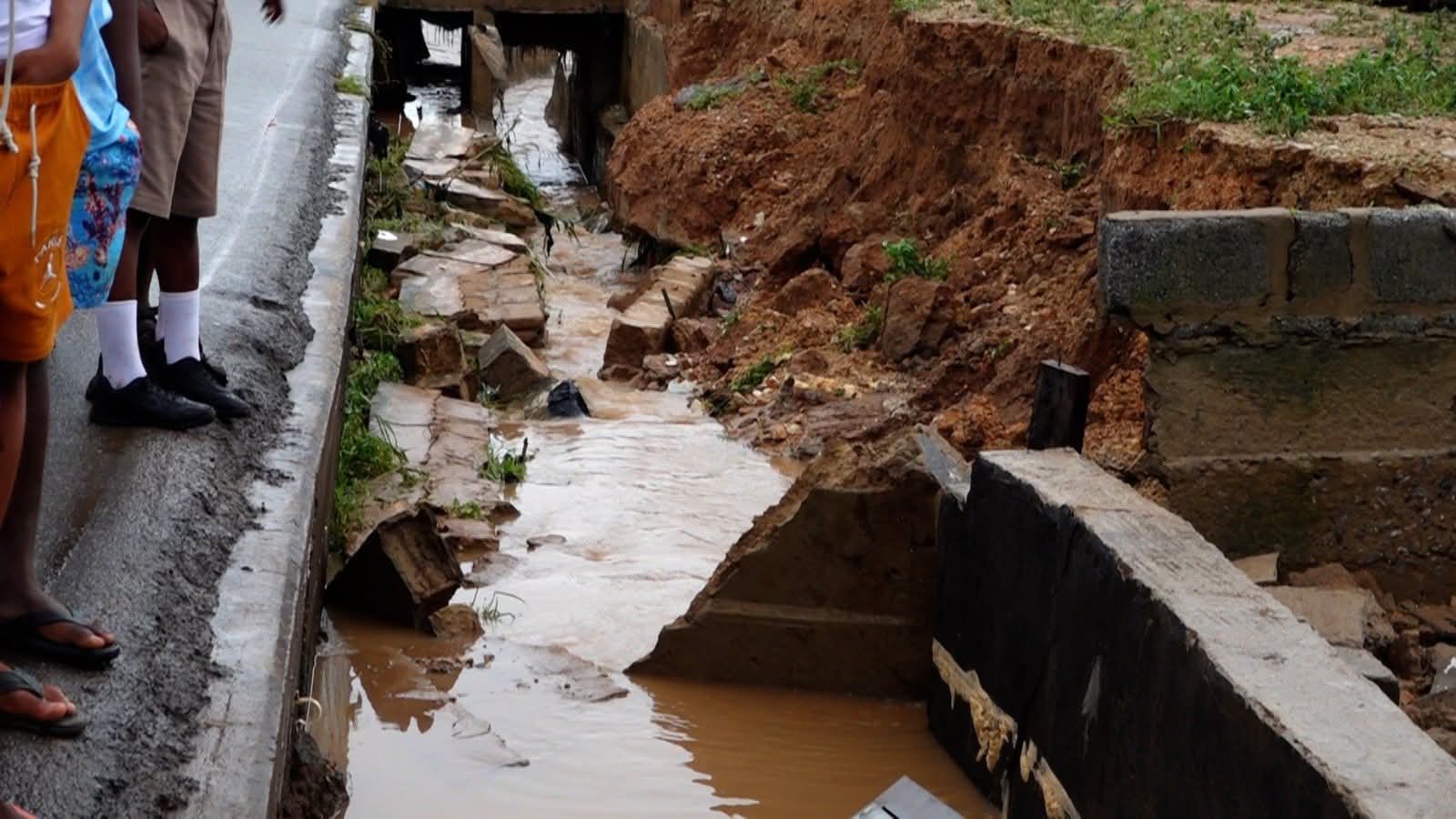
Poor waste management continues to compound the problem. Across many urban communities, drains and waterways are frequently clogged with plastic waste, food packaging and other non-biodegradable materials.
During periods of heavy rainfall, blocked drainage channels fail to carry stormwater efficiently, causing water to spill into streets, homes and businesses. Environmental advocates argue that indiscriminate dumping of waste has become one of the most visible contributors to urban flooding in Ghana.
Beyond physical infrastructure challenges, experts point to institutional weaknesses that hinder the country’s ability to build long-term resilience. Planning systems often fail to fully account for climate risks such as rising sea levels, changing rainfall patterns and increased storm intensity.
Metropolitan, Municipal and District Assemblies (MMDAs), alongside disaster management agencies, frequently find themselves responding to emergencies after floods occur rather than implementing preventive measures that reduce future risks.
This challenge is particularly significant because climate change is expected to increase pressure on the urban centres. Research institutions and climate specialists warn that coastal cities such as Accra could face greater risks from sea-level rise, while increasingly erratic rainfall patterns may lead to more frequent flash floods.
These projections suggest that flooding is no longer simply an environmental issue but a major development and governance challenge.
Recognising these risks, several initiatives have emerged to strengthen climate resilience in Ghana. Since 2019, the Climate and Development Knowledge Network (CDKN), working with the University of Ghana’s Institute for Environment and Sanitation Studies (IESS), has supported efforts to implement key aspects of Ghana’s National Climate Change Policy.
The programme identifies cities, climate finance, and the water-energy-food nexus as critical entry points for addressing climate vulnerabilities. Flooding in Accra has been highlighted as one of the most significant climate-related challenges facing the country.
The initiative has sought to improve collaboration among local governments, researchers and policymakers while supporting ecosystem-based approaches to flood management. It has also promoted knowledge sharing on climate finance and encouraged district-level cooperation in addressing flood risks. Among its outputs are policy briefs on flood mitigation, stakeholder workshops, and reports aimed at strengthening climate governance and disaster risk reduction.
Experts believe that building climate resilience will require a fundamental shift in how Ghana approaches urban development. Rather than relying exclusively on concrete drains and emergency interventions, planners are increasingly advocating hybrid solutions that combine engineered infrastructure with nature-based approaches.
These include restoring wetlands, protecting green spaces, improving waste management systems and preserving natural waterways that can absorb excess rainfall.
Equally important is the enforcement of zoning regulations. Urban planners argue that preventing construction on waterways and flood-prone lands remains one of the most effective ways to reduce future flood risks. Without stronger enforcement, they warn, development will continue to outpace adaptation efforts, leaving more communities exposed to disaster.
However, Ghana prepares for future climate challenges, the recurring floods serve as a stark reminder that resilience cannot be built through emergency responses alone. It requires coordinated planning, sustained investment, stronger institutions and active citizen participation.