
By Grace Zigah
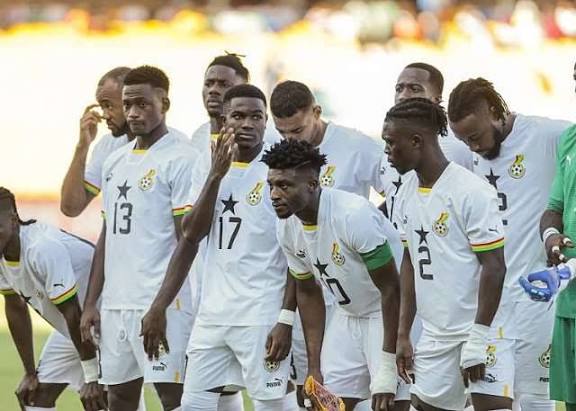
Ghana’s preparations for the 2026 FIFA World Cup have received a major financial boost, as Parliament moves to place the Black Stars on a solid footing ahead of the global showpiece in North America.
The Chairman of Parliament’s Select Committee on Sports, Ernest Norgbey, has disclosed that a total of GH¢150 million has been earmarked by government to fund the national team’s build-up to the tournament.
The allocation represents one of the most significant direct financial commitments ever made by the state towards the national team’s World Cup preparations and reflects a broader policy shift towards early planning and structured investment in the international football campaigns.
The 2026 tournament, to be jointly hosted by the United States, Canada and Mexico, will be the first 48-team World Cup in history, raising both the scale of competition and the demands on participating nations
Speaking on Citi Sports, Norgbey explained that the funds are intended to guarantee the Black Stars optimal preparation conditions, long before the tournament begins.
He noted that although FIFA is expected to provide financial support to qualified nations, those funds are not available early enough to meet the immediate logistical and technical demands of pre-tournament preparations.
According to him, early-stage funding is critical because preparation costs begin long before FIFA disbursements are made.
These include international travel, training camps, friendly matches, technical logistics, player welfare, accommodation, and support systems for the technical team and backroom staff. Without early domestic funding, national teams are often forced into rushed or poorly structured preparations, a challenge Ghana has faced in past tournament cycles.
Although specific budget lines have not yet been publicly detailed, the allocation comes at a time when Ghana is actively planning high-profile international engagements as part of its build-up.
The Black Stars are scheduled to face Germany and Austria in the next international friendly window, fixtures expected to test the squad’s readiness and tactical direction ahead of the World Cup.
The funding decision also reflects lessons drawn from recent history. Ghana’s failure to qualify for the 2025 Africa Cup of Nations exposed structural weaknesses in planning, player management, and long-term preparation, prompting renewed calls for reform in how the national team is supported institutionally and financially.
Since qualification for the 2026 World Cup, pressure has mounted on government, Parliament, and football authorities to avoid repeating past mistakes of late financing and reactive planning.


