By Grace Zigah
A United States federal jury has convicted former Goldman Sachs executive and former Tema Oil Refinery (TOR) Managing Director, Asante Kwaku Berko, on multiple corruption and money laundering charges linked to an alleged international bribery scheme involving a multi-million-dollar emergency power project in Ghana during the country’s prolonged electricity crisis.
The conviction, delivered on August 6, 2026, by a federal court in Brooklyn, New York, has reignited public scrutiny over the controversial AKSA Enerji power agreement signed during the height of Ghana’s “dumsor” crisis and renewed calls for accountability from officials connected to the transaction.
The case traces its origins to the severe nationwide electricity shortages that crippled Ghana’s economy during President John Dramani Mahama’s first administration. In response to the worsening power crisis, government established a separate Ministry of Power and appointed Dr. Kwabena Donkor, then Member of Parliament for Pru East, as the first Minister for Power to spearhead emergency interventions aimed at restoring electricity supply.
As part of those emergency measures, government pursued several independent power projects. Among them was a proposal by Turkish energy giant AKSA Enerji to construct a 370-megawatt power plant in Ghana.
According to evidence presented during the U.S. trial, the company retained global investment banking giant Goldman Sachs as its financial adviser to structure the transaction and secure international financing.
At the time, Asante Kwaku Berko served as an Executive Director at Goldman Sachs in London. Because of his extensive knowledge of Ghana and his position within the investment bank, he was assigned responsibility for managing the AKSA transaction and engaging with Ghanaian authorities on behalf of the Turkish company.
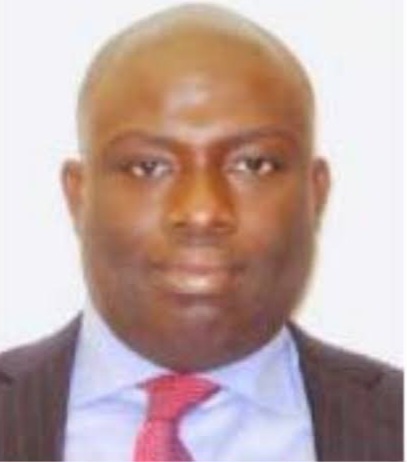
U.S. prosecutors told the court that instead of relying solely on legitimate commercial negotiations, Berko orchestrated an elaborate bribery scheme designed to ensure that the Ghanaian government approved the project.
According to prosecutors, more than one million dollars was secretly channelled through shell companies, sham consulting agreements, fake invoices and nominee bank accounts to influence public officials responsible for approving the project.
Evidence presented during the nine-day trial revealed that Berko deliberately concealed the scheme from Goldman Sachs’ internal compliance department by using his personal email account instead of his official corporate email.
Prosecutors said he also instructed collaborators to avoid company communication systems while using coded language to discuss payments. One message referred to a major payment as “holy rain,” a phrase prosecutors argued represented a disguised reference to bribery.
The suspicious activities eventually attracted the attention of Goldman Sachs’ compliance unit, prompting internal investigations.
The bank subsequently withdrew from financing the project, while Berko was forced to resign from the investment bank in 2016 after compliance officials detected significant irregularities.
Despite Goldman Sachs pulling out of the financing arrangement, Ghana proceeded with the project. The emergency power agreement was signed on May 12, 2015, by then Power Minister Dr. Kwabena Donkor before Parliament ratified the contract in July 2015 under a take-or-pay arrangement that also allowed AKSA to secure alternative private financing.
One of the most significant moments during the trial came when prosecutors played secretly recorded video evidence allegedly showing Berko discussing how business was conducted in Ghana.
According to the prosecution, Berko stated that cash payments were necessary to secure government business and was heard saying, “KD got one million.” Federal prosecutors identified “KD” as Dr. Kwabena Donkor, who served as Minister for Power at the time the agreement was negotiated.
The article provided does not indicate that Dr. Donkor has been charged or convicted in relation to these allegations.
The trial also heard evidence that emails exchanged in July 2015 allegedly discussed a $46,000 payment intended to be shared among certain Members of Parliament to facilitate smooth parliamentary ratification of the agreement.
Prosecutors further alleged that five Ghanaian government officials were flown to Turkey on an all-expenses-paid inspection tour during which each official allegedly received $5,000 in cash as pocket money.
At the time Parliament considered the agreement, the Parliamentary Select Committee on Mines and Energy was chaired by then Madina MP Alhaji Amadu Sorogho.
Court records further showed that Berko personally received a $2 million success fee from the Turkish energy company for his consulting work and for allegedly bypassing Goldman Sachs’ internal compliance procedures.
Following years of investigations, Berko first faced civil action by the U.S. Securities and Exchange Commission before being arrested at London’s Heathrow Airport on November 3, 2022, under an Interpol notice. After lengthy extradition proceedings in the United Kingdom, he was transferred to the United States in July 2024 to stand trial.
The Brooklyn federal jury eventually found him guilty on all counts, including conspiracy to violate the U.S. Foreign Corrupt Practices Act (FCPA), substantive violations of the FCPA and conspiracy to commit money laundering.
The court immediately ordered that he remain in custody after determining he posed a flight risk. He is scheduled to be sentenced on November 10, 2026, and faces a maximum prison sentence of up to 30 years.
During the prosecution, U.S. authorities disclosed that investigators worked closely with Ghana’s Attorney-General’s Department and the Office of the Special Prosecutor (OSP) in gathering evidence and pursuing the case.
The conviction has renewed debate in Ghana over accountability for major public contracts signed during the country’s energy crisis.
Attention has also turned to whether Ghanaian investigative agencies will initiate further investigations into individuals mentioned during the U.S. proceedings or await additional evidence from American authorities.
The U.S. conviction directly concerns Asante Kwaku Berko.
While prosecutors referred to evidence involving other Ghanaian officials during the trial, the article provided does not establish criminal liability or convictions against those individuals.