BY Issah Olegor
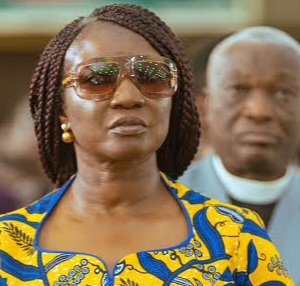
Comments by Presidential Adviser Joyce Bawa Mogtari suggesting that former President Nana Addo Dankwa Akufo-Addo should have exited office after his first term have sparked sharp public backlash, with many Ghanaians accusing her of misdirected criticism and urging government communicators to focus on delivering tangible results rather than attacking a past administration.
Bawa’s remarks, made on Joy FM’s Super Morning Show, were intended as a reflection on leadership, accountability and what she described as a loss of focus under the Akufo-Addo administration.
However, the comments quickly drew intense reactions on social media, where readers challenged her for concentrating on the former president instead of addressing current governance challenges under President John Dramani Mahama.
Several commenters argued that the Mahama administration, now close to a year in office, should be measured by its own performance rather than by comparisons with its predecessor.
Some suggested that she should have advised John Mahama not to have returned to power instead of lapping on Nana Akufo-Addo.
One commenter cautioned that the goodwill which returned the NDC to power is already wearing thin, warning that public patience is not limitless.
According to this view, President Akufo-Addo, at a similar stage in his first term, had already rolled out his flagship Free Senior High School (Free SHS) programme, a policy that significantly shaped public perception of his administration.
Others questioned why the much-touted 24-hour economy policy, which featured prominently in the NDC’s campaign messaging, has yet to be fully rolled out.
For these critics, the absence of visible progress on this flagship promise weakens the moral authority of government appointees to lecture the public on the failures of the past.
Another recurring theme in the reactions was the argument that even Akufo-Addo’s harshest critics largely agree that his first term enjoyed broad public approval, with major social interventions and relative economic stability.
Some commenters maintained that the former president’s problems became pronounced mainly in his second term, particularly following the economic shocks linked to COVID-19, global inflation and debt distress.
In contrast, critics of Bawa insisted that the Mahama administration should not behave as though it is governing Ghana for the first time.
They recalled President Mahama’s own first term between 2012 and 2016, which was marked by power crises, rising debt and public dissatisfaction that ultimately led to his electoral defeat.
To them, any suggestion that Akufo-Addo alone bears responsibility for Ghana’s economic challenges ignores this historical context.
Several readers accused government communicators of arrogance, arguing that political power often breeds complacency and excessive commentary.
Instead of focusing on improving living conditions, they said, officials appear more interested in revisiting old political battles, as if Ghanaians have forgotten the record of previous NDC administrations.
Some comments were very blunt, dismissing Ms Bawa Mogtari’s remarks as unnecessary provocation at a time when citizens are struggling with high living costs and expect solutions rather than political debates.
Others warned that constant attacks on Akufo-Addo risk backfiring, especially if current reforms fail to produce quick and measurable improvements.