By Grace Zigah
The Supreme Court’s decisive ruling to overturn the Tamale High Court judgment in the Kpandai parliamentary election dispute has ended months of uncertainty for the constituency, but it has also drawn renewed attention to one notable feature of the decision: the lone dissenting opinion delivered by Justice Gabriel Pwamang.
Justice Pwamang was the only member of the five-judge panel who held the view that the High Court ruling should stand, which would have allowed the Electoral Commission to proceed with a fresh by-election in Kpandai.
The majority, however, disagreed and quashed the High Court decision, citing jurisdictional defects in the original petition.
While dissenting judgments are a normal part of appellate jurisprudence, Justice Pwamang’s position has reignited public discussion about his earlier appointment to the apex court and the controversies that surrounded it.
Appointment
Justice Gabriel Pwamang was appointed to the Supreme Court in 2015 by President John Dramani Mahama, alongside Justice Yaw Appau. Both nominations sparked debate at the time—not over professional competence, but over the process and political perceptions attached to the appointments.
Justice Appau, prior to his nomination, had served as a sole commissioner investigating judgement debt payments. His work included high-profile findings that attempted to implicate individuals such as former deputy Energy Minister K.T. Hammond in matters relating to a drill ship sale.
After submitting his report, he was nominated to the Supreme Court, prompting criticism from some quarters that the appointment appeared to be a reward for service to government.
Justice Pwamang’s nomination also attracted scrutiny. A former General Secretary of the People’s National Convention (PNC), he was viewed by some political observers as ideologically closer to the National Democratic Congress (NDC).
Prominent New Patriotic Party (NPP) figures, including Gabby Asare Otchere-Darko, publicly raised concerns at the time about perceptions of neutrality, even though his legal qualifications were not disputed.
Legal Challenge By The Ghana Bar Association
The controversy deepened when the Ghana Bar Association (GBA) challenged the appointments, arguing that the President had nominated the judges without proper consultation with the Judicial Council, as required under constitutional convention.
Both nominees were subjected to parliamentary vetting.
Justice Appau was approved, pending the determination of the legal challenge. Justice Pwamang’s swearing-in, however, was temporarily stalled.
Madam Eva Oboshie Sai, a member of the Judicial Council, filed an additional challenge at the General Legal Council. In response, then-Chief Justice Georgina Theodora Wood constituted a Disciplinary Committee to investigate the matter.
The challenge was later withdrawn, clearing the way for Justice Pwamang to be sworn in.
In July 2016, the Supreme Court—then chaired by Justice William Atuguba—dismissed the case and upheld the President’s authority to appoint eligible persons to the Supreme Court, whether or not the Judicial Council had been consulted.
Chief Justice Removal Process
Justice Pwamang has again featured prominently in national constitutional matters in recent months. Under President John Mahama’s current administration, he was appointed to chair a committee tasked with investigating petitions seeking the removal of Chief Justice Gertrude Torkornoo.
The committee reportedly relied on one of three petitions—focusing on allowances received by the Chief Justice—in compiling its report recommending her removal.
President Mahama subsequently removed Justice Torkornoo and appointed Justice Paul Baffoe-Bonny as her replacement.
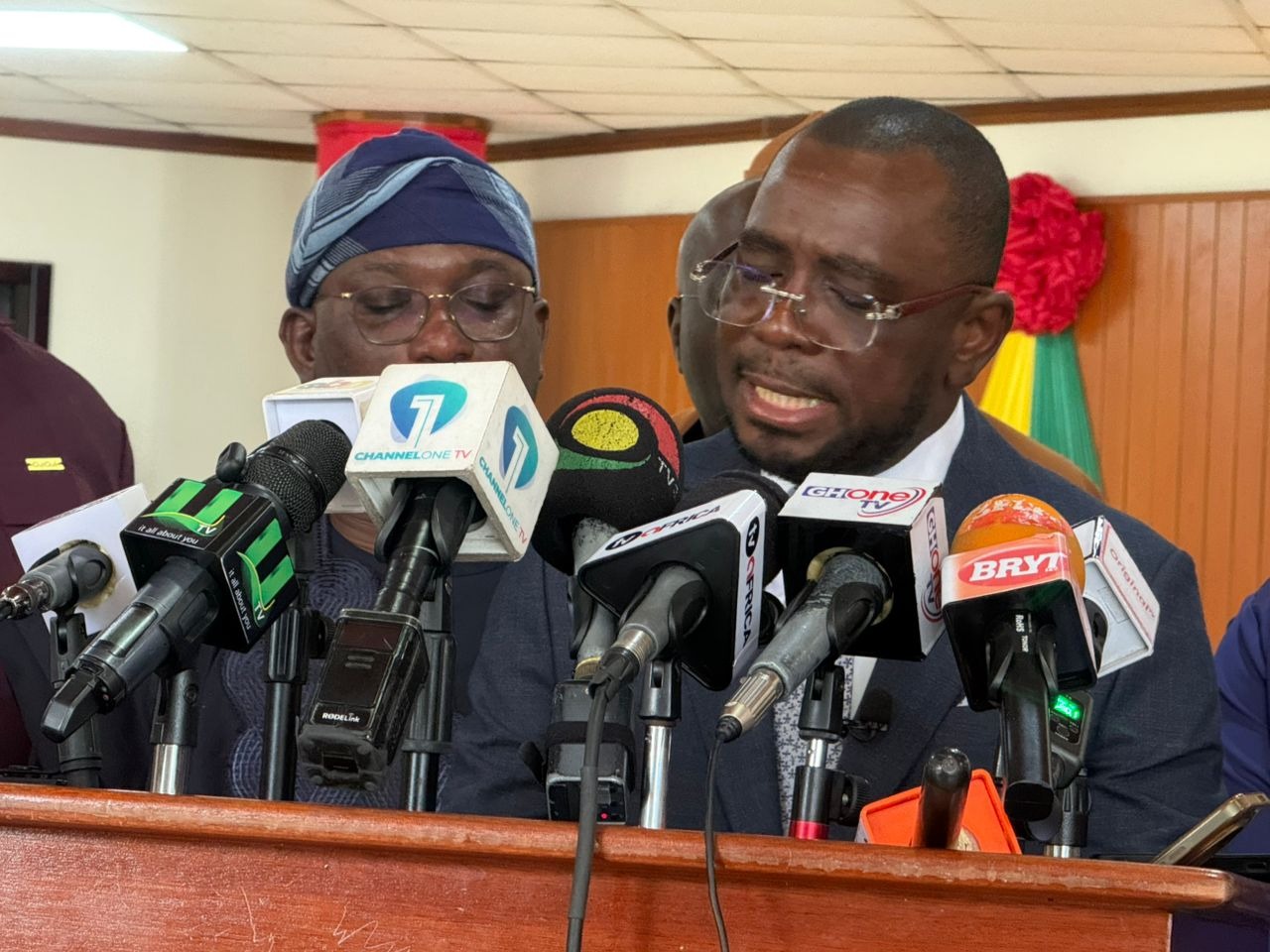
Photographs circulating publicly show Justice Pwamang presenting the committee’s report during that process, further placing him at the centre of a politically sensitive national conversation.