
By Daniel Bampoe
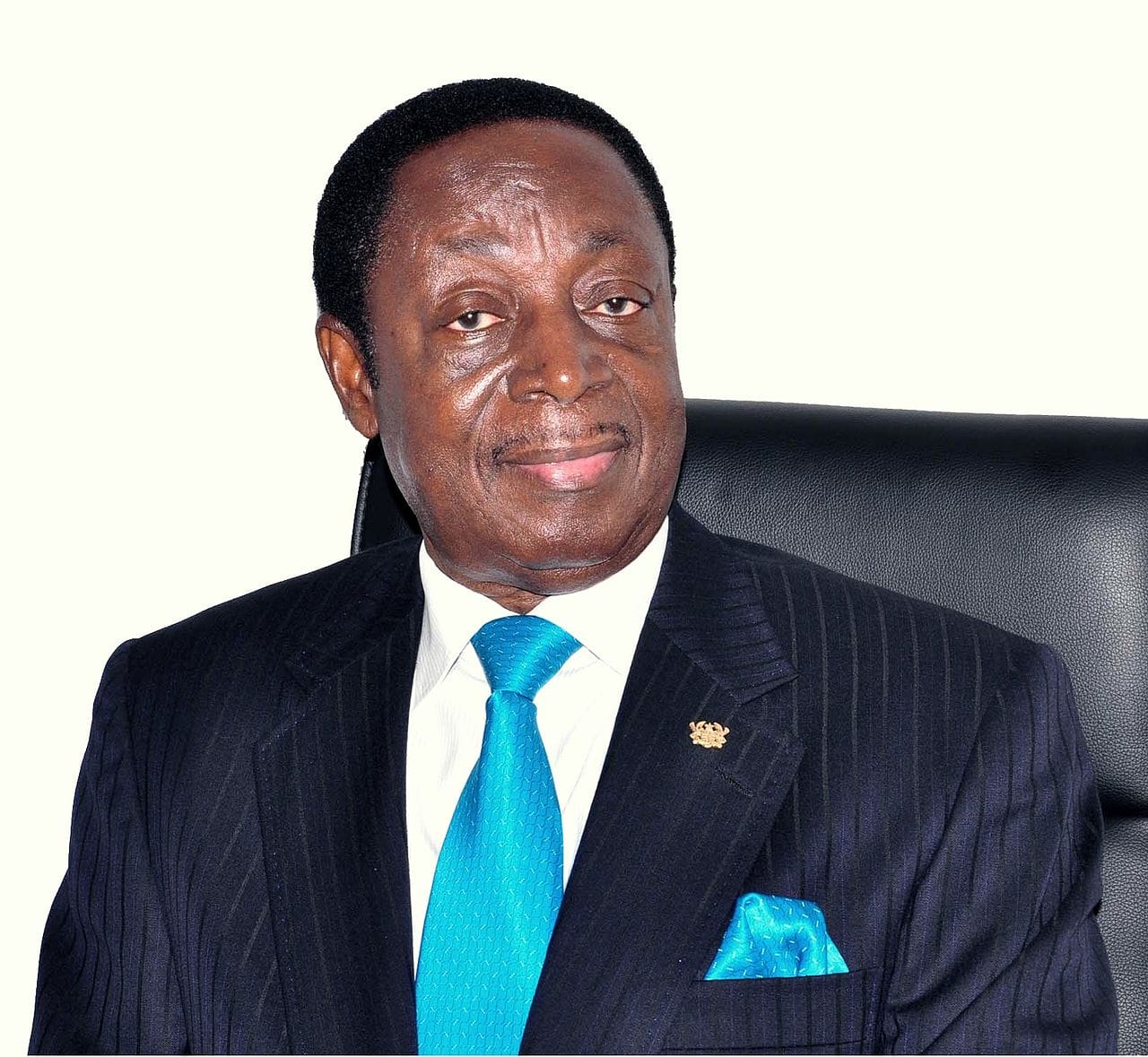
The Office of the Attorney-General and Ministry of Justice has formally entered a nolle prosequi in the high-profile financial sector prosecution involving former Finance Minister Dr. Kwabena Duffuor and seven others including his son, Kwabena Duffuor Jnr.
The move effectively discontinues criminal proceedings against the accused, five years after they were charged in connection with GHC5.7billion alleged financial malfeasance during Ghana’s banking sector clean-up.
The decision, announced in a press release dated July 22, 2025, and signed by Deputy Attorney-General, Dr. Justice Srem-Sai, marks a major development in one of the most closely watched prosecutions arising from the financial sector reforms initiated in 2018.
Background to the Case
The case, Republic v. Kwabena Duffuor & 7 Others (CR/0248/2020), was one of several criminal proceedings initiated following the collapse of several indigenous banks, which the state blamed on mismanagement, regulatory breaches, and alleged fraudulent practices.
Dr. Duffuor, a former Governor of the Bank of Ghana and founder of the now-defunct uniBank, along with his co-accused, were prosecuted for various charges including money laundering, fraudulent transactions, and causing financial loss to the state.
The state’s central aim in the financial sector clean-up was to ensure accountability, protect depositors’ funds, and restore confidence in the banking system, after several of the banks were ran down.
The prosecutions were also intended to serve as a deterrent against financial malpractice in public and private financial institutions.
Basis for Discontinuation
According to the statement from the Attorney-General’s office, the decision to file the nolle prosequi was informed by a broader policy directive anchored in two key goals: securing accountability for public funds and recovering financial losses suffered by the state.
To guide prosecutorial discretion, the Attorney-General’s office had established a threshold requiring at least 60% recovery of losses in specific cases before considering a withdrawal of charges.
Following what the statement described as “prolonged negotiations and engagements,” the accused parties in the Duffuor case reportedly satisfied this recovery benchmark.
“In furtherance of public interest, and considering the significant recoveries made for the State, the Attorney-General has satisfied himself that continuing with the prosecution will not serve any additional public purpose,” the statement noted.

Implications of the Decision
While the decision effectively ends the criminal trial, the Attorney-General was careful to clarify that it does not exonerate the accused persons from wrongdoing.
“This decision does not imply an absence of wrongdoing nor a vindication of any conduct,” the release emphasized, characterizing the withdrawal as a “pragmatic step” in line with the state’s broader goal of recovering misappropriated funds.
The government, through the Attorney-General’s office, reaffirmed its commitment to upholding the rule of law and safeguarding the public purse.
“The Attorney-General remains resolute in his commitment to pursuing justice in all matters of national importance,” the statement concluded.
Public Reaction and Political Context
The nolle prosequi is expected to generate mixed reactions across the political spectrum. Critics may view it as a retreat from accountability, particularly given the high-profile nature of the accused.
Others may see it as a realistic trade-off that prioritizes financial restitution over drawn-out legal battles with uncertain outcomes.
Kwaku Azar Raises Queries
Professor Stephen Kwaku Asare popularly referred to as Kwaku Azar has raised serious constitutional, legal, and public interest concerns following the decision byAttorney-General to enter a nolle prosequi in the high-profile criminal.
The move, Kwaku Azar argues demands transparency and critical scrutiny, especially in light of Ghana’s ongoing anti-corruption campaign.
Writing on behalf of the civic group GOGO (Governance and Good Order), he asked the Attorney-General’s office to clarify the legal foundation for this action.
He questions whether the nolle prosequi was initiated under Section 35 of the Courts Act, 1993 (Act 459), which allows for court-supervised settlements in cases involving restitution to the state.
If so, he asks, was there a court order approving such a settlement, and was the process transparent and legally compliant?
Alternatively, if the decision was solely based on the Attorney-General’s discretionary powers under Article 88 of the Constitution, Kwaku Azar stresses that even such powers must be exercised non-capriciously and in alignment with the public interest.
Among the most pressing concerns raised are:
Recovery Process Oversight: Who determined the 60% recovery threshold, and by what metrics? Were interest, inflation, and time value of money considered? And what form did the recoveries take — were they cash payments, asset transfers, or mere promises?
Transparency in Negotiations: Over what period did these negotiations occur? Were external auditors, the Auditor-General, civil society groups, or the victims of the alleged financial mismanagement involved in these discussions?
Parliamentary Accountability: Will the full terms of the settlement, including valuation documents, be submitted to Parliament? Will the Public Accounts Committee or other oversight bodies be allowed to scrutinise the deal?


