BY DANIEL BAMPOE
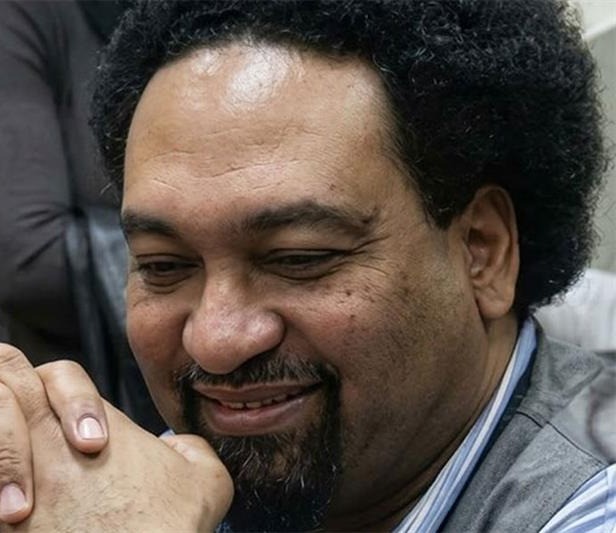
Gamal Gorkeh Nkrumah, the eldest son of Ghana’s founding president, Dr Kwame Nkrumah, and a journalist known for his writings on African affairs and international politics, has reportedly died in Cairo, the Egyptian capital.
His reported death has drawn attention to the life of a member of one of Ghana’s most historically significant political families, whose professional career took him beyond the country of his birth and into the international media landscape.
Nkrumah died on Wednesday, 14 October, after a prolonged illness, according to a statement from his sister, Samia Nkrumah. The family said he had been receiving care at a rehabilitation centre after suffering a stroke.
The family paid tribute to his commitment to justice, human dignity, African unity and international solidarity, saying his journalism examined the political, social, and cultural forces shaping Africa and the wider world.
It thanked the medical professionals and caregivers who supported him in Cairo, as well as the governments and people of Egypt and Ghana. The family said the memorial arrangements would be announced in due course. Gamal was born in Accra in 1958 to Kwame Nkrumah and his Egyptian wife, Fathia Nkrumah. His family background connected Ghana’s political history with Egypt and the wider Pan-African movement that defined much of his father’s political philosophy.
While Kwame Nkrumah became internationally recognised for his role in Ghana’s independence struggle and his campaign for African political unity, Gamal pursued a professional path centred on journalism, political analysis and international affairs.
A Journalism Career Rooted in African and Global Affairs
Gamal spent a significant part of his professional life in Cairo, Egypt, where he worked as a journalist and editor at Al-Ahram Weekly, the English-language publication associated with the Al-Ahram press organisation.
According to the reports, he spent more than 15 years with the publication, writing extensively on international affairs, African politics and the continent’s position in global developments.
His work placed him within a media environment that covered political developments across Africa and the Middle East, giving him a platform to examine the relationships between African states, international institutions and global powers.
Through his journalism, Gamal maintained an interest in the political and historical questions that shaped the African continent, including the continuing relevance of Pan-Africanism and the aspirations for greater cooperation among African countries.
His career also illustrated a different way of engaging with the legacy of his father. Rather than pursuing a prominent political position in Ghana, he built his professional reputation through writing, editorial work and commentary on political affairs.
His reported years at Al-Ahram Weekly made journalism the principal public arena in which he explored issues connected to African identity, governance and international relations.
Academic Journey in London
Before establishing himself professionally in Egypt, Gamal reportedly pursued higher education at the School of Oriental and African Studies (SOAS) in London.
Biographical accounts cited in the reports indicate that he earned a doctorate in political science. His academic background complemented his subsequent journalism career, particularly his engagement with political systems, international relations and the historical forces influencing African development.
His education in London, professional life in Cairo and birth in Accra reflected a life shaped by experiences across different countries and cultures.
However, Gamal’s professional identity was not confined to his family name. His years in journalism provided him with an independent platform through which to examine contemporary political developments and Africa’s place in the world.
The Nkrumah Family and Political History
Gamal was part of a family whose name remains closely associated with Ghana’s struggle for independence and the subsequent evolution of the country’s political system.
His father, Kwame Nkrumah, led Ghana to independence from British colonial rule on March 6, 1957, making the country the first sub-Saharan African nation to gain independence from colonial rule in the post-war era.
Nkrumah subsequently became the country’s first president and one of the most influential advocates of African unity. He championed the idea that political independence would be incomplete without economic cooperation and a collective effort by African states to shape their own future.
His presidency, however, was also marked by political controversy, growing authoritarianism and opposition to his government. He was overthrown in a military coup on February 24, 1966, while on a trip abroad, and spent the remainder of his life largely in exile. He died in Bucharest, Romania, on April 27, 1972.
Fathia Nkrumah, Gamal’s mother, was Egyptian and married Kwame Nkrumah in 1957. Their marriage became a notable symbol of the international outlook associated with the Ghanaian leader’s political vision, although the family later experienced the difficulties that accompanied political upheaval and exile.
Gamal’s upbringing and later career unfolded against this wider historical background, linking his personal story to the political developments that shaped Ghana and the African continent during the second half of the twentieth century.
Samia and Sekou Nkrumah’s Public Lives
Gamal’s siblings have also maintained public connections to Ghanaian political and intellectual life.His sister, Samia Nkrumah, became a politician and represented the Jomoro Constituency in Parliament. She also served as chairperson of the Convention People’s Party (CPP), the political party founded by their father and central to Ghana’s independence movement.
Samia’s involvement in the CPP placed her at the centre of continuing discussions about the party’s historical identity, political relevance and the preservation of Kwame Nkrumah’s legacy. Gamal’s younger brother, Sekou Nkrumah, has also been associated with writing and political activism and has lived in Ghana.
Although the siblings have pursued different professional and public paths, their family name has continued to attract attention because of its connection to independence history and the Pan-African movement.