BY Grace Zigah
The removal of the Chief Justice, Her Ladyship Justice Gertrude Araba Esaaba Sackey Torkornoo, has ignited fresh controversy over constitutional breaches and the future of judicial independence.
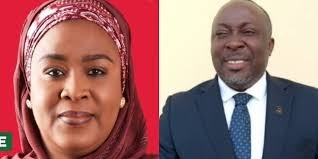
Her lead counsel, former Attorney General Ayikoi Otoo, has broken his silence, accusing the Presidency of subverting due process and setting a dangerous precedent that could erode the rule of law.
Background of the Case
Justice Torkornoo, who rose through the judicial ranks to become Chief Justice in June 2023, was suspended earlier this year after multiple petitions were filed seeking her removal from office.
President John Dramani Mahama, acting on the recommendations of an Article 146 Committee, signed a warrant dismissing her.
But the decision has been met with legal challenges, strong dissent from sections of the legal fraternity, and condemnation from civil society groups concerned about constitutional overreach.
Procedural Concerns and Due Process
According to Otoo, the process violated the explicit provisions of Article 146 of the 1992 Constitution. He stressed that the Chief Justice was never furnished with a copy of the prima facie determination by the Council of State, denying her the opportunity to respond fully to the allegations.
More strikingly, while the petitions were directed at her position as Chief Justice, the President’s warrant extended her removal to include her status as a Justice of the Supreme Court — a step Otoo described as unconstitutional and beyond the remit of the committee’s recommendation.
Furthermore, he revealed that addresses filed by her legal team were not considered before the final recommendation was made, undermining the fairness of the proceedings.
Exculpatory Evidence Ignored
The lead counsel also alleged that critical evidence that could have cleared the Chief Justice was disregarded.
Key among them was an audit management letter which, he said, validated the Judicial Secretary’s explanation regarding travel expenses and per diem payments for the Chief Justice’s family.
Witnesses, including the Director of Finance of the Judicial Service, reportedly confirmed that these expenses had long been sanctioned under existing policy since 2010.
Yet, Otoo argued, this was omitted from the committee’s final grounds for recommending her removal.
Unfinished Cases and Judicial Review
At the heart of Otoo’s concern is the fact that multiple petitions and judicial reviews remain pending.
At least five separate cases are before the Supreme Court, questioning the legality of the removal process, while two additional petitions are still awaiting a determination by the Article 146 Committee.
Despite these unresolved matters, the President proceeded with her removal and has already nominated Justice Paul Baffoe-Bonnie, the current Acting Chief Justice, for parliamentary approval as her replacement.
“This shows procedural incompleteness and judicial impropriety,” Otoo emphasized, urging the Supreme Court to expedite hearings on the substantive issues.
Regional and International Angle
Beyond Ghana’s borders, the case has reached the Community Court of Justice (ECOWAS), which is yet to rule on an application seeking Justice Torkornoo’s reinstatement pending the outcome of the substantive matter. Otoo noted that this international dimension underlines the gravity of the issue and the obligation to uphold constitutional justice.
A Question of Transparency
Another sticking point is the alleged suppression of the Article 146 Committee’s report.
According to Otoo, Justice Torkornoo has still not been served with a copy of the final report, raising questions about transparency and her right to fully understand the findings against her.
“As a citizen, she is entitled to know the reasons for her removal. Denying her this right makes the process a travesty of justice,” Otoo insisted.
Dangers of A Precedent
Otoo warned that the manner of Justice Torkornoo’s removal sets a perilous precedent where future governments could arbitrarily remove Chief Justices and other top judicial officers for political convenience.
“This taints the office of the Chief Justice and undermines the very foundation of our democracy,” he stated, cautioning that judicial independence — the last line of defense for citizens’ rights — could collapse if left unchecked.
A Call to Action
The legal team is urging Parliament, the Ghana Bar Association, civil society organizations, and the international community to intervene.
They are calling for respect for the Constitution, transparency in the process, and protection of judicial independence from executive interference.
“The Chief Justice is not desperate to cling to office,” Otoo stressed. “She is fighting for the rule of law, for justice, and for Ghana’s constitutional integrity.”