
BY ISSAH OLEGOR
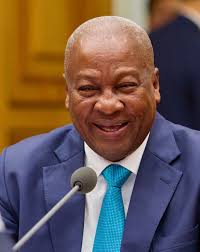
President John Dramani Mahama has announced plans to introduce a levy on raw cashew exports and temporarily restrict the export of the commodity during the first three months of the harvesting season as part of efforts to strengthen Ghana’s local cashew processing industry.
The proposed measures are expected to give domestic processors priority in purchasing raw cashew nuts, improve the supply of raw materials to factories and ensure that more value is retained within the Ghanaian economy.
Under the proposed arrangement, revenue generated from the export levy will be channelled into a dedicated fund to provide financial support to local processing companies, enabling them to purchase sufficient quantities of cashew nuts and compete more effectively with exporters.
President Mahama announced the policy direction on Monday, November 16, 2026, ahead of the commissioning of the EXIM Bank-funded NADKANSCO Cashew Processing Limited factory in Techiman.
He said Ghana intended to adopt aspects of the cashew industry development model implemented by neighbouring Côte d’Ivoire, which has introduced measures aimed at supporting its domestic processing sector and increasing the proportion of raw cashew nuts processed locally.
Explaining the proposed export restriction, the President said the first three months of the harvesting season would be reserved for local processors to purchase enough raw materials before exporters were permitted to ship excess supplies outside the country.
“So when the season opens, for the first three months of the season, nobody will be allowed to export cashew nuts from Ghana until our local processors have bought enough. When they have bought enough, then we’ll open the gates for the excess to go,” he said.
President Mahama explained that the restriction would address a major challenge confronting Ghanaian cashew processors, who often struggle to secure adequate supplies of raw nuts because of competition from exporters.
He indicated that the government would also introduce a levy on cashew nuts exported from Ghana, with the proceeds placed in a dedicated fund to support local factories.
“And so I think we’ll implement the same conditions that Ivory Coast is implementing, Côte d’Ivoire. And in addition, we intend to put a levy on any cashew that is exported, like Côte d’Ivoire is doing,” he said.
He added: “And so if we put a levy on any cashew that is going, that money will go back into a fund, and that fund will go back to the local processors to allow them to buy more cashew nuts.”
The President said the two measures were intended to work together by protecting the domestic supply of raw cashew nuts while providing processors with additional financial resources to acquire the commodity.
He argued that establishing processing factories alone would not be enough to develop the industry if companies could not obtain sufficient raw materials to operate consistently.
Using NADKANSCO as an example, President Mahama said the facility had the capacity to process approximately 30,000 to 31,000 metric tonnes of cashew nuts annually. However, its available working capital could only sustain operations for between 60 and 80 days.
He said the situation demonstrated the difficulties local processors faced in maintaining production throughout the year, despite having the machinery and technical capacity to process significantly larger quantities.
“We don’t want a factory that will run for 80 days, shut down for the rest of the year, until the next cashew season. NADCANSCO should be able to buy enough cashew and preserve it so that the young people here can have work all the year round,” he said.
The President stressed that the objective was to ensure that factories such as NADKANSCO operated for longer periods instead of remaining idle after exhausting their initial stocks of raw materials.
He said sustained production would create more stable employment opportunities, particularly for young people in cashew-producing communities, while supporting businesses connected to the processing industry.
Beyond the proposed levy and export restrictions, President Mahama announced that the government would provide additional financing to Ghana EXIM Bank to enable it to extend further support to NADKANSCO.
The financing is expected to help the company purchase and store sufficient quantities of raw cashew nuts during the harvesting season, allowing it to continue production when supplies become less readily available.
The proposed support reflects the government’s intention to address the financing challenges facing local agro-processing companies, especially those that require substantial working capital to purchase agricultural produce in bulk.
For cashew processors, access to raw materials is a critical part of maintaining production. Factories may have the capacity to process thousands of tonnes annually, but without adequate stocks and financing, their operations can be restricted to a relatively short period of the year.
President Mahama’s announcement therefore places emphasis not only on establishing processing facilities but also on ensuring that existing factories have the financial and logistical capacity to operate sustainably.
The proposed policy also highlights the government’s intention to retain a greater share of the economic benefits generated from Ghana’s agricultural commodities.
Raw cashew exports provide an important market for farmers and traders, but processing the nuts locally can create additional economic activity through manufacturing, packaging, transportation, storage and other related services.
By encouraging more domestic processing, the government hopes to expand opportunities for businesses operating along the cashew value chain and increase the contribution of agro-processing to national economic development.
The comparison with Côte d’Ivoire is particularly significant because the neighbouring country has been pursuing policies to strengthen its domestic cashew processing industry, including measures designed to improve access to raw nuts and support local processors.
President Mahama said Ghana intended to adopt similar conditions to help its factories compete for raw cashew supplies and expand their operations.
However, the success of the proposed measures will depend on how the export restriction and levy are implemented, the effectiveness of the dedicated fund and whether local processors receive adequate financing to purchase the quantities of raw nuts required.

