By Daniel Bampoe
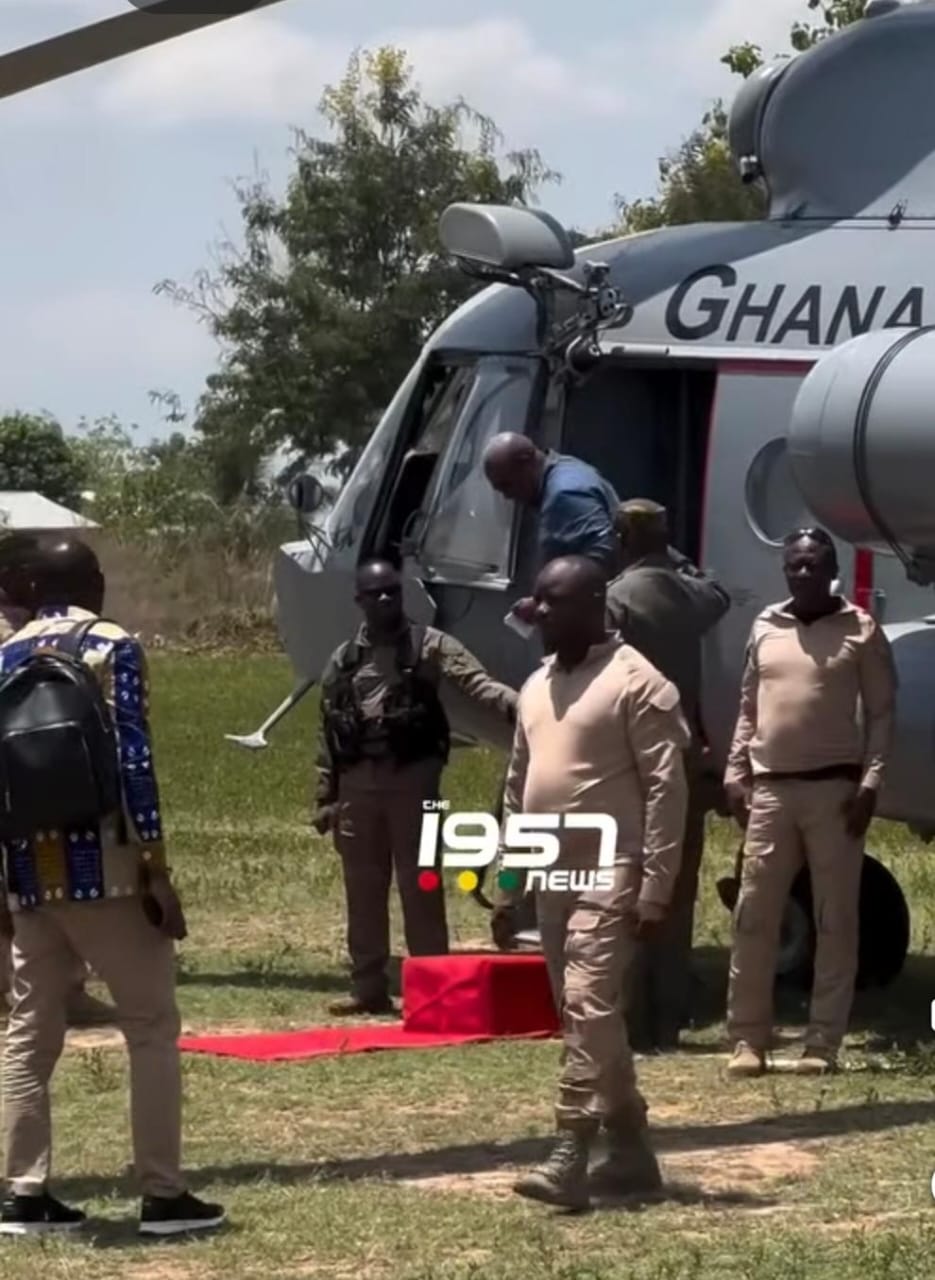
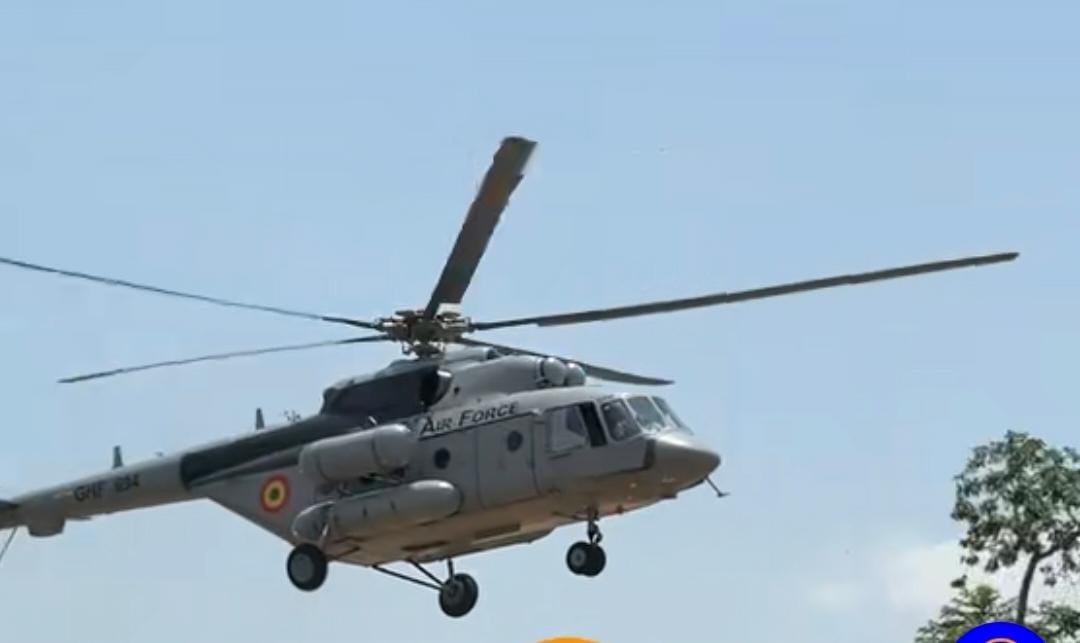
President John Dramani Mahama was forced to travel by helicopter to the Afram Plains after a major transport disruption on the Afram River left hundreds of passengers, vehicles, and goods stranded for hours, exposing once again the long-standing infrastructure challenges confronting residents of the area.
The incident occurred at the Kwahu Adawso crossing point, where the only operational single-engine ferry serving the Afram Plains developed a mechanical fault mid-operation.
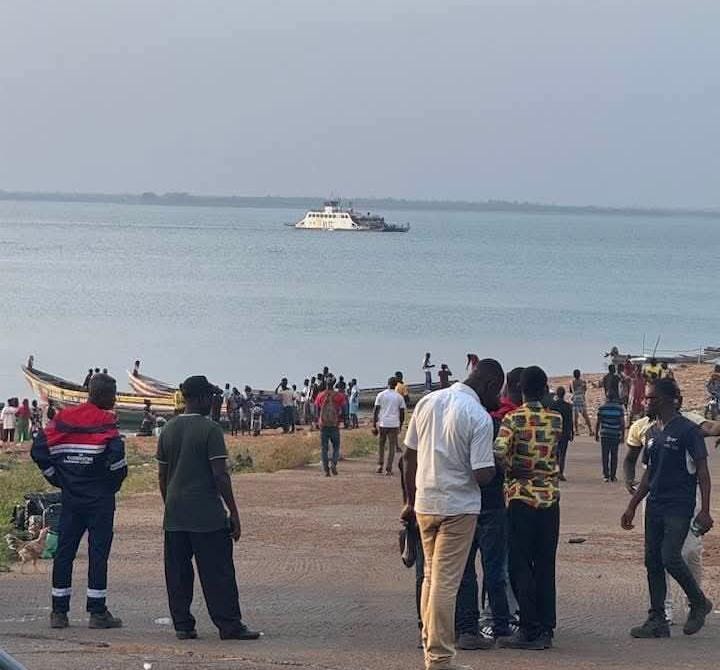
According to eyewitness accounts, the ferry—heavily loaded with passengers, goods, and vehicles—drifted uncontrollably before getting stuck in the mud, halting movement across the river for nearly 10 hours.
With no immediate alternative transport system in place, stranded passengers, including traders, commuters, and political party executives heading to Afram Plains South for an official government event, were left with limited options.
Some resorted to boarding locally operated canoes at significantly high fares, while others abandoned the route entirely and detoured through Asante Akyem Agogo to access the Afram Plains by road.
Local canoe operators were eventually mobilised to assist in rescue efforts and help bring the faulty ferry back to docking position, but the situation caused severe delays and heightened frustration among commuters.
Hundreds more remained stranded on both sides of the river, awaiting transport as authorities scrambled to restore operations.
The disruption came at a critical moment, as many of the affected passengers were en route to witness the sod-cutting ceremony for the first Farmer Services Centre in Takoratwene, part of the government’s flagship 24-hour economy policy aimed at modernising agriculture and improving farmer productivity.
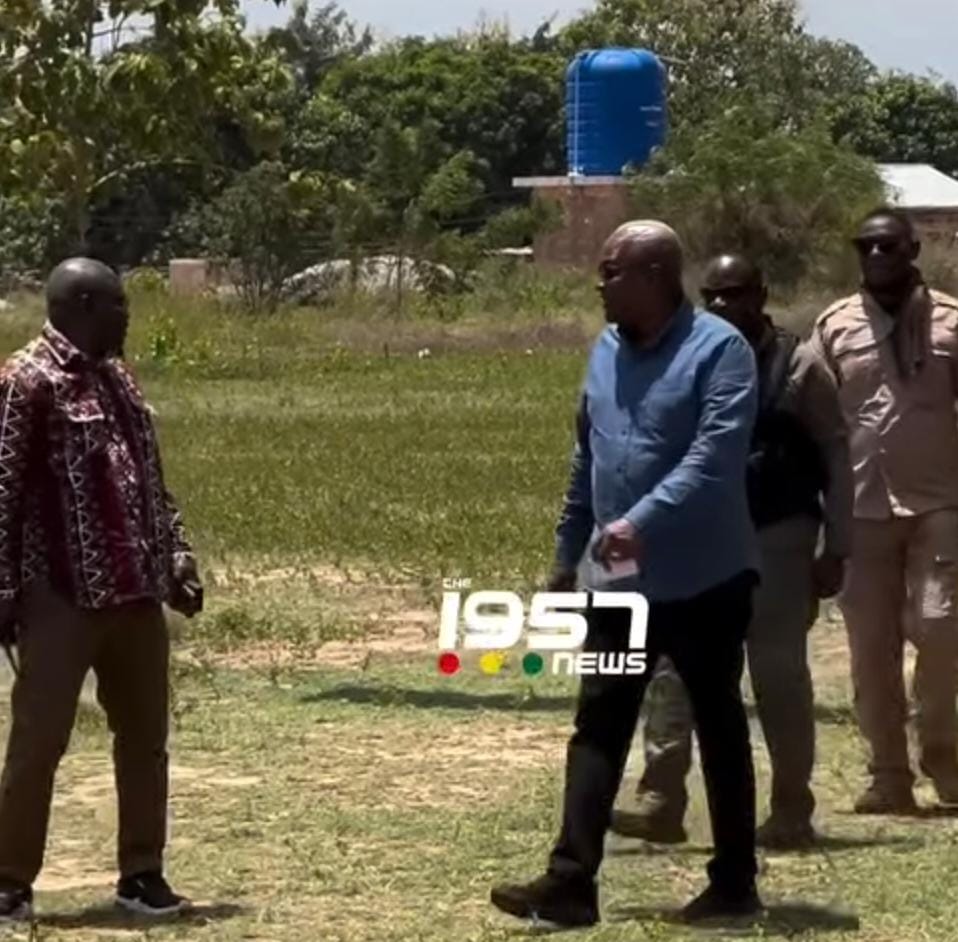
In response to the ferry breakdown and mounting delays, President Mahama was airlifted to the Afram Plains to honour his scheduled engagement. Upon arrival, he acknowledged the incident, expressing concern over the challenges residents continue to face due to the unreliable ferry system.
In a significant policy announcement, the President revealed that a contract has been awarded to a construction firm for the development of a major bridge over the Afram River—long considered a critical solution to the transportation difficulties in the region.
He further disclosed that key road networks linking the Afram Plains are also set to be upgraded under the same infrastructure drive.
The proposed bridge project has a long and politically sensitive history. Under the previous New Patriotic Party (NPP) administration led by former President Nana Addo Dankwa Akufo-Addo, feasibility studies were initiated, and preliminary works such as soil testing were reportedly undertaken.
However, the project did not progress beyond the planning stage, despite persistent appeals from residents for a permanent alternative to the unreliable ferry system.
Recent developments indicate that the bridge—expected to span between 3.0km and 3.6km from Adawso to Ekye Amanfrom—has now been incorporated into the National Democratic Congress (NDC) “Big Push” infrastructure agenda, with feasibility studies and designs reportedly completed.
At the sod-cutting ceremony, President Mahama emphasised the need to modernise agriculture, stating that farming must move beyond traditional tools such as cutlasses and hoes to embrace mechanisation and technology.
The Farmer Services Centre, he explained, will provide access to agricultural machinery, training, storage facilities such as silos, and technical expertise to support farmers in the district.
While the President’s announcement has generated optimism among residents, many remain cautiously hopeful, noting that similar promises in the past have not materialised. Community members and stakeholders are now calling for strict monitoring and accountability to ensure that the bridge project and associated road developments are executed as promised.
However, for residents of the Afram Plains, the ferry breakdown is not an isolated incident but a recurring challenge that continues to hinder economic activity, access to services, and overall development.