By Daniel Bampoe
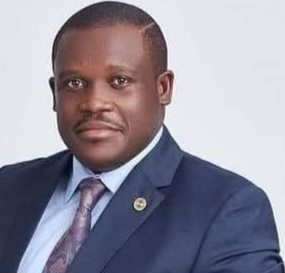
Former Roads Minister and Member of Parliament for Bantama, Francis Asenso-Boakye, has pushed back against claims that the Mahama administration is spearheading a new wave of infrastructure development under the so-called “Big Push” initiative.
According to him, many of the projects currently being promoted as part of President Mahama’s renewed agenda are not new, but were conceptualised, launched, and significantly advanced under successive New Patriotic Party (NPP) governments.
In a strongly worded statement, Asenso-Boakye argued that the dualisation of Ghana’s major roads—particularly the Accra–Kumasi corridor—has long been a strategic priority of the NPP, dating back to the era of President John Agyekum Kufuor.
NPP’s Long-Term Vision for Road Infrastructure
“The deliberate dualisation of Ghana’s major road corridors is not a recent idea,” Asenso-Boakye stated.
“It is a long-term vision championed by the NPP, beginning with the Kufuor administration.”
Under Kufuor’s leadership, key portions of the Accra–Kumasi highway were dualised, including Circle–Achimota, Nsawam, Nkawkaw, and Ejisu–Kumasi.
These road upgrades drastically reduced travel time and increased economic activity across the middle belt of the country.
However, the former Roads Minister contends that this progress was derailed during the NDC’s eight-year tenure.
“Projects stalled, others deteriorated, and the vision was abandoned,” he lamented.
NPP Rekindles the Vision Under Akufo-Addo
It was not until the NPP returned to power in 2017 under President Akufo-Addo that the dualisation strategy was revived.
Asenso-Boakye oversaw the launch of critical projects aimed at decongesting major corridors and improving connectivity nationwide.
Among these were:
Ofankor–Nsawam Dualisation (16.7km): 68% complete
Kasoa–Winneba Dualisation (30km): 53% complete
Adenta–Dodowa Dualisation (22km): 15% complete
Takoradi–Agona Nkwanta Dualisation (23km): 32% complete
Tema Roundabout–Aflao corridor: 26% complete
Ashaiman Roundabout–Akosombo Junction: Ongoing
“These are not isolated projects. They are part of a coordinated, national road strategy conceived and executed by the NPP,” Asenso-Boakye insisted.
The Four Key Bypasses on the Accra–Kumasi Highway
Also under the NPP, construction began on four strategic bypasses at Osino, Anyinam, Enyiresi, and Konongo.
These projects are designed to ease congestion on the Accra–Kumasi road by diverting traffic away from heavily populated towns.
According to Asenso-Boakye, these interventions demonstrate the foresight of the NPP in designing infrastructure that not only connects regions but also improves road safety and trade.
Regional and Rural Road Developments
Under the Transport Sector Improvement Project (TSIP), substantial work was done across various regions:
Bono East Region: 214km of feeder roads – 81% complete
Northern Region:
Tatale–Zabzugu–Yendi (66km) – 90% complete
Yendi–Tamale Road (106km) – 91% complete
Upper West Region: 670km of feeder roads – 53% complete
Western Corridor: Takoradi Revitalization
The Sekondi-Takoradi Phase I projects were also rolled out to support the oil and gas sector and modernise the Western Region’s transport infrastructure.
Key projects under this phase are about 60% complete, including:
Improvement of roads in Axim
Shippers Council and Harbour roads in Takoradi
Widening of Sekondi Road (Paa Grant to Effia Nkwanta)
Adiembra Roads (Effia Nkwanta to RCC)
Accra–Tema Motorway PPP: Still an NPP Initiative
Even the recently publicised Accra–Tema Motorway and Extension Project—now being promoted by the Mahama administration under the PPP framework—was initiated under the NPP and currently sits at 7% completion. The plan involves:
A 4-lane expressway and 6-lane urban highway
Interchanges at Old Lashibi, Community 18, and Teshie Link
Remodeling of the Tetteh Quarshie Interchange
“This project is another example of the NPP’s forward-thinking infrastructure policy,” Asenso-Boakye remarked.
Call for Continuity, Not Rebranding
While welcoming all genuine efforts to improve Ghana’s infrastructure, Asenso-Boakye cautioned against the rewriting of history.
“We’re not against development,” he said. “But let’s be truthful about where it all started. The NPP laid the foundation. The NPP pushed through the tough years—through a pandemic—and still moved Ghana’s infrastructure forward.”
He called on the current administration to focus on completing the projects rather than rebranding them.
“This isn’t about politics—it’s about Ghana. Let’s move forward with continuity, transparency, and results.”