BY Issah Olegor
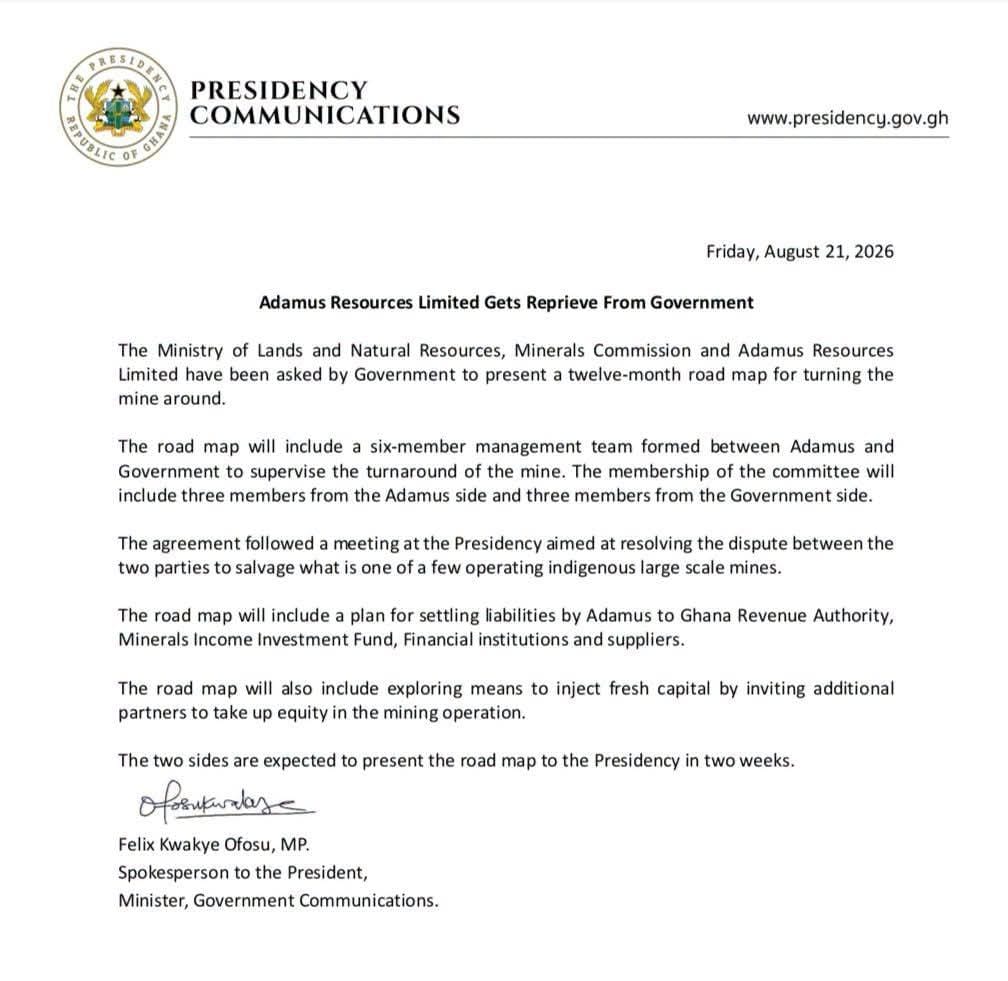
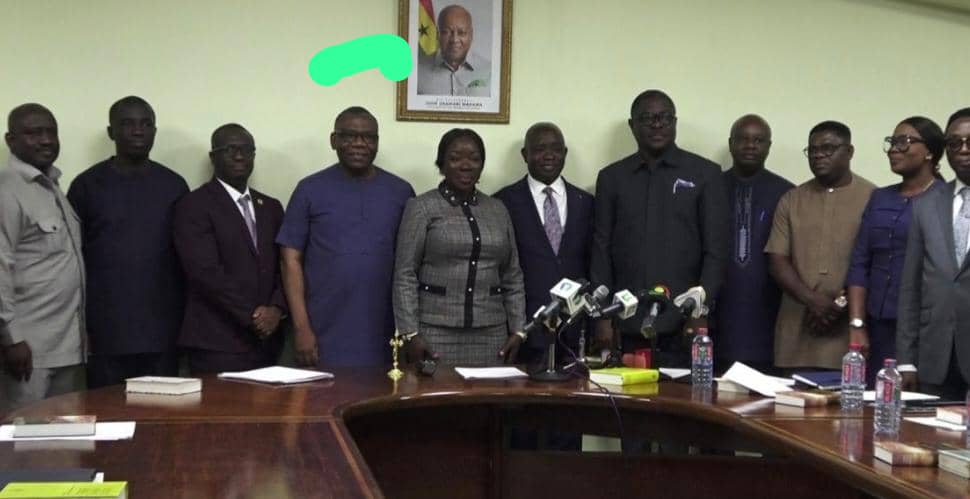
The government has offered Adamus Resources Limited a fresh opportunity to resolve its difficulties and preserve its operations, following a high-level meeting at the Presidency aimed at ending the dispute between the mining company and state authorities.
Under the arrangement announced by the Presidency on Friday, August 21, 2026, Adamus Resources, the Ministry of Lands and Natural Resources and the Minerals Commission have been directed to develop a 12-month roadmap to turn around the mining operation.
The intervention represents a significant reprieve for Adamus, one of the few indigenous large-scale mining companies currently operating in Ghana, after recent tensions surrounding its operations and obligations to the state and other creditors.
The government says the decision followed discussions at the Presidency intended to find a solution that would safeguard the future of the mine rather than allow the dispute to undermine its continued operation.
As part of the proposed rescue arrangement, a six-member management team will be established to oversee the turnaround programme.
The team will comprise three representatives from Adamus Resources and three representatives from the government, creating a joint structure through which both sides will participate in supervising the implementation of the recovery plan.
The arrangement is expected to place the struggling mining operation under closer oversight while giving the company an opportunity to address its financial and operational challenges.
The central feature of the agreement is the preparation of a comprehensive 12-month roadmap by Adamus Resources, the Ministry of Lands and Natural Resources and the Minerals Commission.
The roadmap is expected to identify the steps required to restore the mine and provide a structured framework for addressing the outstanding challenges facing the company.
According to the Presidency, the plan must also address Adamus Resources’ liabilities to several institutions and businesses.
These include the Ghana Revenue Authority (GRA), the Minerals Income Investment Fund (MIIF), financial institutions and suppliers.
The requirement is significant because settling those obligations forms part of the broader effort to stabilise the company and ensure that the mining operation can continue on a sustainable basis.
Rather than an immediate collapse of the arrangement between the state and the company, the government has therefore opted for a structured intervention under which the company’s liabilities and future financing needs will be examined as part of the 12-month recovery programme.
Another major component of the government’s proposed rescue strategy is the search for new capital.
The roadmap will explore options for injecting fresh funds into the mining operation, including the possibility of bringing in additional investors.
Under the arrangement, new partners could be invited to take equity in the mining business in an effort to provide the capital required to support its turnaround.
The proposal could potentially give Adamus access to additional financial resources while also broadening the ownership and investment base of the operation.
The Presidency, however, did not disclose the amount of fresh capital required or identify potential investors under consideration.
The government has given the parties a short timeline to produce the proposed recovery plan.
The Ministry of Lands and Natural Resources, the Minerals Commission and Adamus Resources are expected to present the completed roadmap to the Presidency within two weeks.
The submission will allow the government to assess the proposed measures and determine the next steps in the effort to restore the mine to stability.
The latest intervention follows growing concerns about the future of Adamus Resources and the broader implications of difficulties at a major indigenous mining operation.
The government’s decision to pursue a negotiated turnaround rather than allow the dispute to escalate underscores the importance it attaches to keeping the mine operational.
Although the announcement provides Adamus Resources with a lifeline, it does not mean the company’s challenges have been resolved.
Instead, the agreement establishes a framework within which the company and government are expected to work together to address the outstanding problems over the next 12 months.
The success of the arrangement will depend largely on the ability of the joint management team to implement the agreed roadmap, settle outstanding liabilities, attract fresh investment and restore the financial and operational health of the mine.
The government has not indicated that the liabilities owed by Adamus will be written off. Rather, the official statement specifically requires the turnaround plan to contain measures for settling the company’s obligations to the GRA, MIIF, financial institutions and suppliers.
The arrangement therefore places responsibility on both sides to find a sustainable solution while preserving the operation.
The Presidency described Adamus as one of the few operating indigenous large-scale mines, giving the dispute significance beyond the immediate interests of the company and its creditors.