BY Nadia Ntiamoah
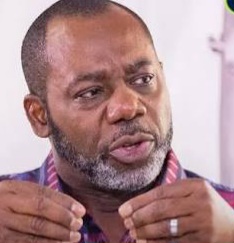
Former Minister of Education, Dr. Matthew Opoku Prempeh, widely known as NAPO, has pushed back against assertions that Ghana’s Free Senior High School (Free SHS) programme suffered financial strain during the period he supervised its implementation, insisting that government funding to schools remained steady and reliable throughout his tenure.
Speaking in an interview on GHOne TV on December 18, the former minister said claims of a funding crisis under his leadership were inaccurate and did not reflect the realities on the ground at the time.
According to him, the Ministry of Education, working with the Ministry of Finance, consistently honoured its financial commitments to senior high schools to ensure uninterrupted teaching and learning nationwide.
Dr. Opoku Prempeh, who oversaw the Free SHS policy during its formative and expansion stages under the previous New Patriotic Party (NPP) administration, explained that concerns about delayed payments and financial stress within the system only became prominent after he left office.
He maintained that while challenges may exist today, they should not be retroactively attributed to his period at the ministry.
Providing background to the policy, NAPO recalled that Free SHS was introduced in 2017 as a flagship social intervention aimed at removing cost barriers that had historically prevented many Ghanaian children from progressing beyond basic education.
At the time, critics questioned the sustainability of the policy, especially in light of rising enrolment numbers and the cost implications for government.
However, the former minister said prudent financial management allowed the programme to cover critical expenditure lines, including student feeding, the supply of textbooks and teaching and learning materials, as well as the payment of grants to schools.
He argued that these investments translated into improved access and better educational outcomes for thousands of students across the country.
Addressing the introduction of the double-track system in 2018, Dr. Opoku Prempeh clarified that the measure was not a response to a lack of funds, as often suggested, but rather a strategic policy choice necessitated by a sharp surge in enrolment following the implementation of Free SHS.
The system, he said, was designed to maximise existing infrastructure while government worked to expand school facilities nationwide.
Beyond infrastructure and financing, NAPO highlighted the broader social impact of the Free SHS policy, noting that increased access to secondary education helped keep more children in school who might otherwise have been engaged in child labour or domestic work.
He described this outcome as one of the programme’s most significant achievements.
His comments come at a time when the Free SHS programme remains a subject of intense public discussion, particularly around its long-term sustainability, quality of delivery, and financing under successive governments.