BY DANIEL BAMPOE
The National Democratic Congress (NDC) has emerged from its November 14, 2026 regional executive elections with a major shake-up in its internal political leadership, following the defeat of Greater Accra Regional Chairman Emmanuel Nii Ashie Moore, the re-election of Eastern Regional Chairman Dr Mark Oliver Kevor and the victory of Northern Region chairman-elect Godfred Apasinaba Wumbei, popularly known as Yellowman, amid allegations of pickup vehicle distribution to delegates.
The contests, part of the governing party’s reorganisation ahead of the 2028 general elections, were overshadowed by accusations of vote buying, distribution of household appliances, controversial campaign tactics, factional rivalries, violent confrontations, and disputes over election results. It was a race for the highest bidders.
What was expected to be an exercise for the party’s regional structures instead exposed deep divisions within the governing party, with several aspirants and party figures facing questions over the conduct of campaigns and increasing use of money and material inducements in internal elections.
The growing controversy over alleged vote-buying took a new turn after Roads and Highways Minister Kwame Governs Agbodza publicly questioned whether the party was abandoning the principles upon which it was founded.
In remarks that have added to the debate surrounding the party’s polls, the Adaklu Member of Parliament invoked the legacy of the late former President Jerry John Rawlings, declaring that the practices he had witnessed during the constituency and regional contests were inconsistent with the political tradition associated with the NDC’s founder.
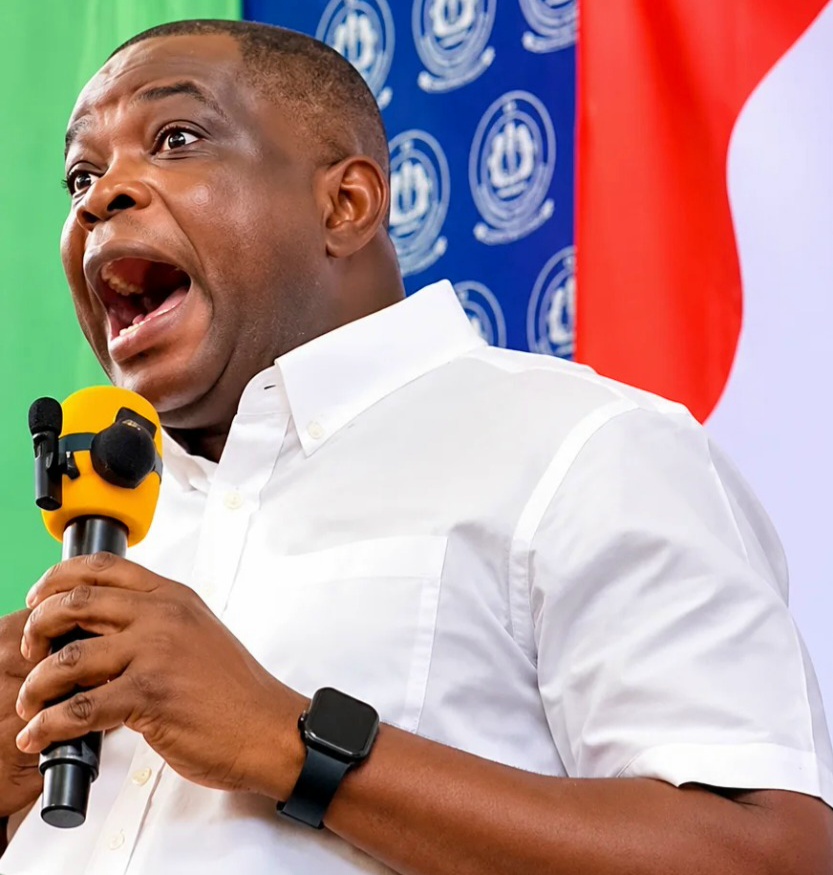
“This is not Jerry Rawlings’ party. I can’t say more; let’s keep it, let’s reflect on it and let’s make amendments,” Agbodza stated.
His comments, delivered at the NDC Volta Regional Delegates Conference at the Afetsi Auditorium of Ho Technical University on November 14, came amid allegations that aspirants were distributing cash and household items to delegates in attempts to secure support in the party’s elections.
The minister said he was disappointed by what he had observed in the Volta Region and other parts of the country, suggesting that the increasing monetisation of internal contests had become a matter the party could no longer ignore.
“I have never paid a cedi to anybody in Adaklu during the branch and constituency elections before. But in the past election, we saw things like that happen. We can say that it is good. Yesterday I saw things that I actually thought it was NPP people doing it,” he said.
The elections also produced significant casualties among incumbent chairmen, while some successful candidates secured renewed mandates despite controversies surrounding their leadership and campaign activities.
Ashie Moore’s Accra reign ends
One of the most significant outcomes was the defeat of Emmanuel Nii Ashie Moore, who lost the Greater Accra Regional Chairmanship to Benjamin Danso, bringing his tenure to an end after a fiercely contested election.
Ashie Moore had entered the race with confidence, insisting that delegates would assess his performance and refuse to surrender the party’s leadership to whoever had the deepest pockets.
In the build-up to the election, he maintained that his administration had contributed significantly to the NDC’s electoral fortunes in the region and expressed readiness to lead the party into the 2028 general elections.
The contest, however, ended differently from his expectations, as Danso secured the mandate of delegates in a result that represents a major setback for the outgoing chairman.
The Greater Accra contest attracted attention partly because of the controversies that had followed Ashie Moore’s leadership. In July 2024, more than 40 constituency women organisers reportedly petitioned the party’s Functional Executive Committee, accusing him of aggressive conduct, verbal abuse and alleged threats of assault. The allegations included claims of confrontations with senior female party officials over internal party matters. They were allegations submitted to the party and should not be treated as established findings.
His political difficulties were compounded in October 2026 when the Attorney-General reportedly recommended prosecution in connection with allegations that he removed the luggage and personal belongings of a Singaporean businessman from Fiesta Residences while the businessman was in police custody.
The case reportedly involved witness statements, CCTV footage and a cybercrime analysis report. The proposed charge related to stealing under the Criminal Offences Act, 1960 (Act 29). Ashie Moore has denied wrongdoing and described the matter as a politically motivated smear campaign. The recommendation for prosecution does not amount to a conviction.
The outgoing chairman had also publicly complained that his companies had not benefited from government contracts since the NDC returned to power, despite his contributions to the party. He further spoke of difficulties securing bank loans because of his political exposure, remarks that generated debate about the expectations of party financiers and the relationship between political loyalty and access to opportunities.
His defeat therefore comes against a backdrop of internal complaints, legal controversy and public disagreements over the treatment of party loyalists.
Kevor survives Eastern Region battle
In the Eastern delegates’ meeting. Dr Mark Oliver Kevor secured another term as Regional Chairman after defeating David Dakudzi and Bismark Tawiah Boateng at the delegates conference in Kwahu Mpraeso.
Kevor polled 678 votes, while Dakudzi obtained 195 and Boateng secured 137, giving the incumbent a decisive victory.
His retention of the position came after a campaign period marked by serious accusations from rival camps concerning his leadership, the management of party finances, and his relationship with political opponents.
Among the most politically damaging claims was an allegation that Kevor had compromised the NDC’s interests and effectively sold the party to NPP figure Bryan Acheampong. Kevor publicly rejected the accusation, insisting that he had not sold the party.
Yellowman wins Northern chairmanship amid pickup controversy
The Northern Region produced one of the most controversial stories of the election, following allegations that chairman aspirant Godfred Apasinaba Wumbei, popularly called Yellowman, arranged the distribution of 18 pickup vehicles to constituencies ahead of voting.
Reports alleged that one vehicle was allocated to each of the region’s 18 constituencies on Friday, November 13, in an arrangement suspected by critics to be an attempt to influence delegates.
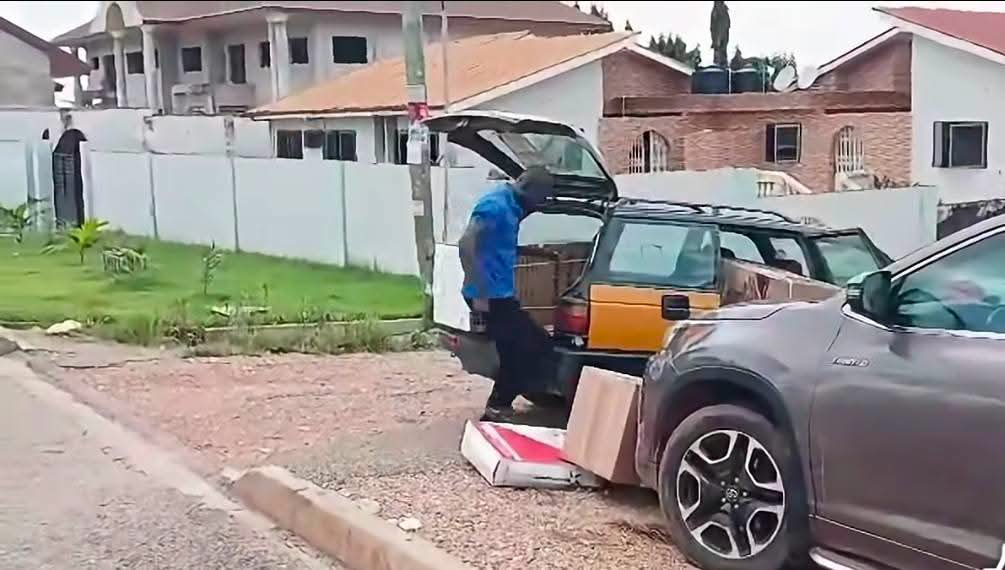
Video footage of pickup trucks reportedly lined up for distribution circulated on social media, intensifying questions about the role of material inducements in the contest.
Visit thedailygistonline.com for full story.
The allegation attracted attention because it emerged at a time when the NDC leadership had repeatedly cautioned aspirants against buying votes and undermining the party’s internal democratic processes.
Yellowman nevertheless emerged victorious, polling 328 votes to defeat Alhaji Tanko Maida, who obtained 236 votes, and Abdul-Hamid Alhassan Gbewaa, who secured 27.
His victory has left questions surrounding the alleged vehicle distribution at the centre of public discussion. The accusation, however, does not by itself establish that the vehicles were exchanged for votes or that delegates were compelled to support him.
Ashanti contest: Rice, juju speculation and another incumbent victory
The Ashanti Regional chairmanship election became another major attraction, particularly after aspirant Isham Alhassan Yaw Bonsu was captured on video scattering grains of rice as he arrived at the Baba Yara Sports Stadium in Kumasi.
The unusual entrance generated widespread reactions, with social media users speculating that the gesture was connected to spiritual practices or instructions from a spiritualist. Others mocked the spectacle and questioned the decision to scatter food at the election venue.
Alhassan did not publicly establish the reason for the action in the initial reports, meaning the claims linking it to juju remained speculation rather than verified fact.
Despite the attention generated by his arrival, he lost the chairmanship contest to incumbent Augustus Andrew Nana Kwasi, who retained the position for a third term with 814 votes.
The contest had pitted the incumbent against Alhassan, who argued that his experience as Regional Organiser and grassroots mobilisation work made him suitable to lead the region.
Andrews defended his record by pointing to the party’s improved electoral performance in the Ashanti Region. He cited the increase in the NDC’s parliamentary representation from four seats in 2020 to seven in 2024, as well as the rise in the party’s presidential votes from approximately 300,000 to about 800,000.
Alhassan, on the other hand, had promised to increase the party’s parliamentary seats in the region to between 10 and 15 in the 2028 elections.
The campaign was also accompanied by allegations of rice and other material inducements to delegates, alongside claims and counterclaims about attempts to influence the outcome. The full extent of those allegations remains unclear.
Voting at Baba Yara Sports Stadium was affected by logistical delays, with delegates and Electoral Commission officials present while the process was yet to commence in the early afternoon.
Central Region: Five-vote victory, recount dispute and legal threat
The Central Region delivered one of the closest chairmanship contests, with incumbent Dr Richard Kofi Asiedu losing to lawyer Charles Obeng Inkoom by just five votes.
Obeng Inkoom secured 372 votes against Asiedu’s 367, while Ibrahim Mohammed obtained 16 votes.
The narrow margin immediately triggered a dispute, as Asiedu rejected the outcome and demanded a recount. The disagreement reportedly created tension at the venue and required police intervention.
Asiedu subsequently raised allegations of irregularities in the delegates’ register and blamed former Regional Secretary Nii Commey Adams for allegedly introducing unrecognised names into the list.
He has threatened legal action in an attempt to have the results annulled.
Obeng Inkoom, however, maintained that the Electoral Commission’s declaration was valid and insisted that there was no basis for disputing his victory. He also pledged to unite the party across the region.
The defeat is politically significant for Asiedu, whose tenure had been marked by factional tensions and disagreements involving party figures in the region.
He had also attracted public criticism after describing US-based media personality Kevin Taylor as the most truthful journalist in Ghana, a comment that generated controversy among political commentators.
In the days leading to the regional elections, tensions escalated over the choice of conference venue. Regional Minister Eduamoah Okyere Ekow Panyin reportedly faced threats from individuals alleged to be associated with Asiedu during the disagreement, prompting police involvement.
On election day, clashes were reported at the conference entrance between police officers and supporters of the incumbent over accreditation tags. The confrontation was eventually contained by security personnel.
Police confrontations and unrest at voting centres
The regional elections were not without incidents involving party supporters and security officers.
At the Aliu Mahama Sports Stadium in Tamale, a dispute erupted following the declaration of the Northern Regional Treasurer results.
Aspirant Alhassan Osman Gomda polled 292 votes against winner Muhammad Suhuin Islana’s 298. Gomda and his supporters reportedly rejected the outcome despite a recount that returned the same figures.
The disagreement escalated into a confrontation with security personnel, resulting in the arrest of one individual.
At Baba Yara Sports Stadium in Kumasi, physical confrontations also broke out between party supporters and police officers. In one reported incident, a man accused of attacking a police officer was overpowered by people at the venue and taken away in an ambulance.
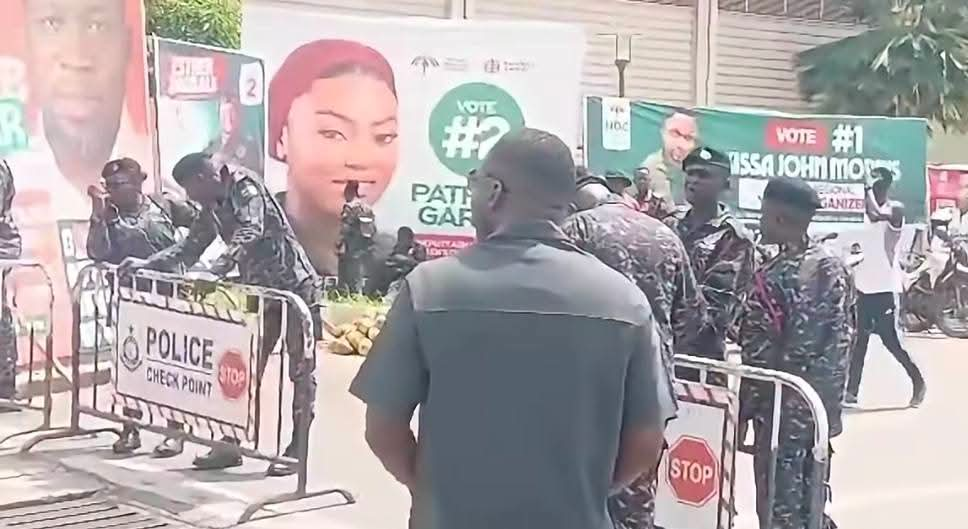
The Central Region also experienced clashes over accreditation, while the wider security operation included tactical police personnel, undercover officers and specially equipped officers.
Ahead of the polls, the Ghana Police Service had warned aspirants against bringing individuals described as macho men or land guards to election centres.
In the Northern Region, approximately 400 police officers were reportedly deployed, while more than 1,000 security personnel were said to have been assigned to the Ashanti Regional conference.
Money, household appliances and the growing vote-buying controversy
Beyond the individual victories and defeats, the most damaging issue confronting the NDC was the growing public perception that its internal elections were increasingly being determined by financial power and material inducements.
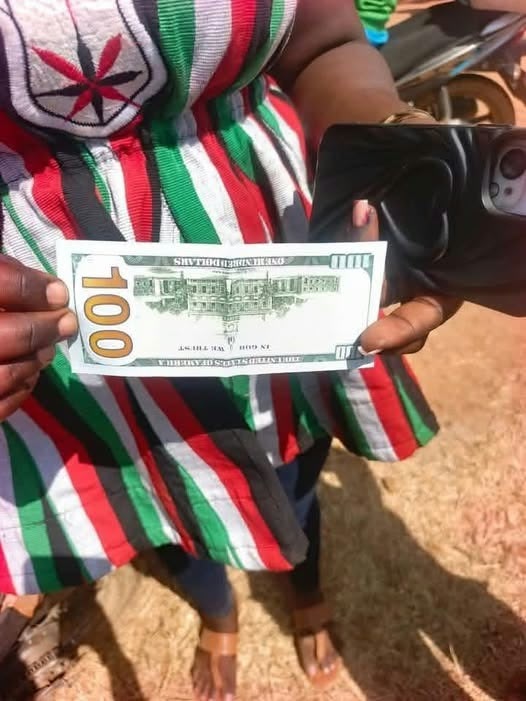
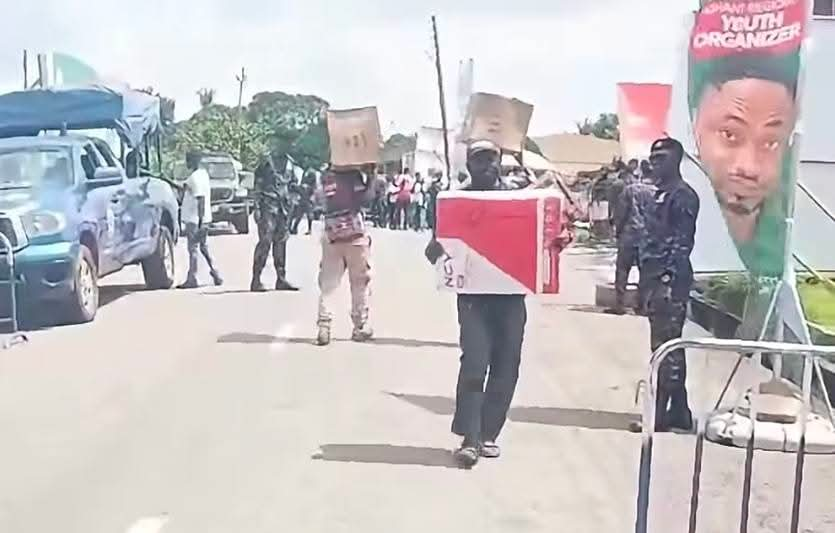
Videos and photographs circulated during the regional conferences showing cash and various items in the possession of delegates and individuals at voting centres.
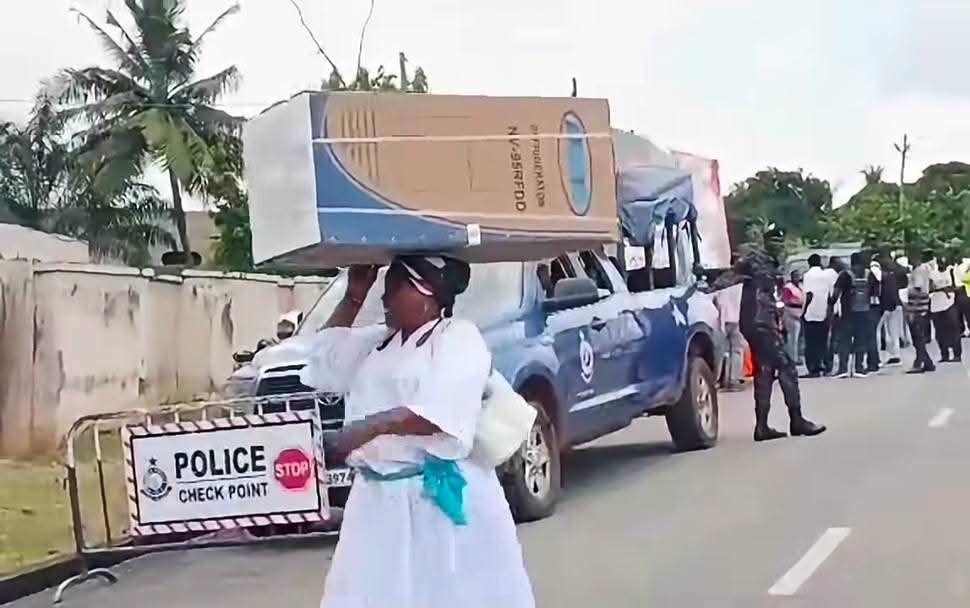
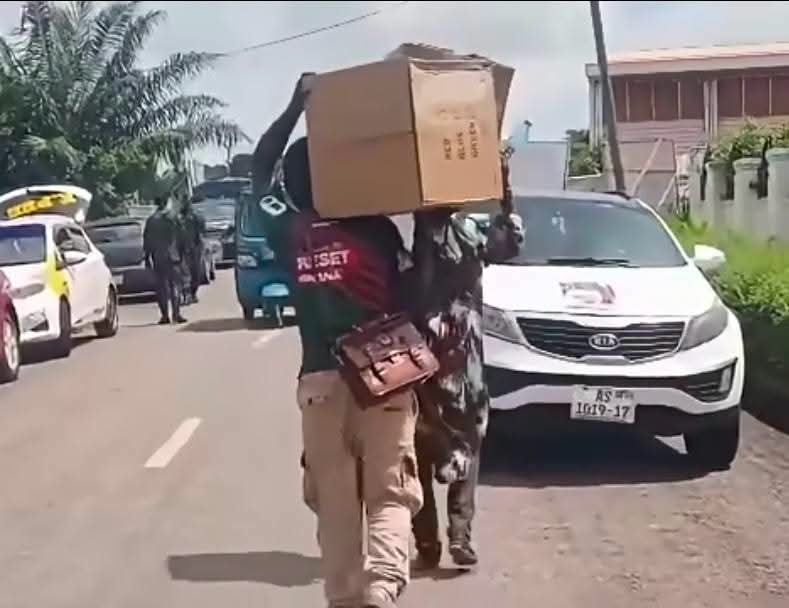
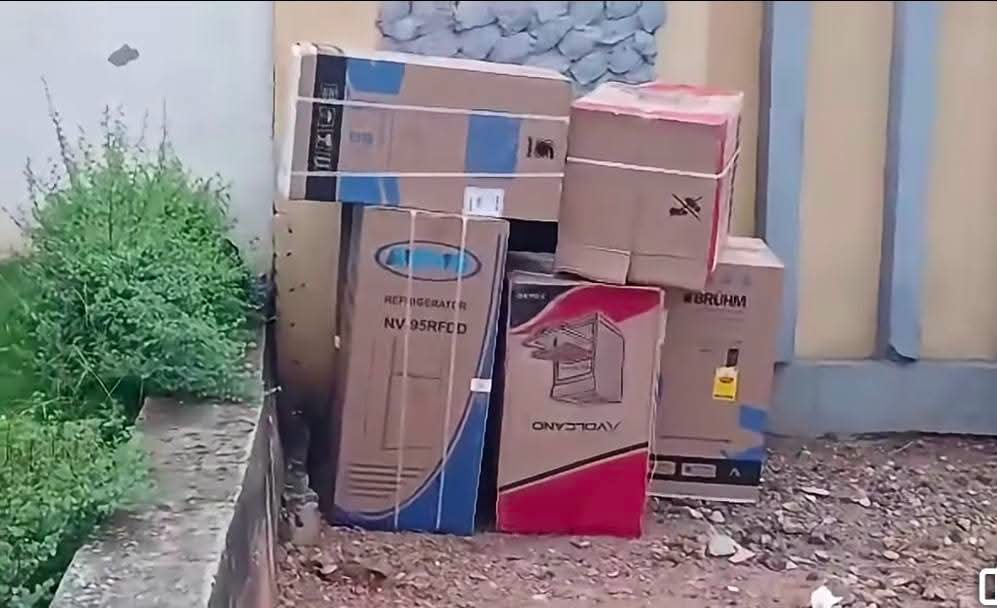
Reports also alleged that some delegates received household appliances, including television sets, fans, blenders and other electrical equipment. Other accounts referred to cash payments, with one delegate reportedly indicating that he had received approximately GH¢1,000.
The allegations revived concerns raised during the constituency executive elections on October 24, 2026, when claims of cash payments, mobile phones, televisions and other household items also emerged from different parts of the country.
The party’s Acting Director of Elections had earlier cautioned aspirants against buying delegates’ votes. However, the subsequent circulation of videos and reports of material distributions raised questions about whether the warnings had been sufficiently enforced.
Ketu North MP Edem Agbana publicly criticised the trend, arguing that the monetisation of internal party elections contradicted the NDC’s social democratic principles.
Roads and Highways Minister Kwame Governs Agbodza also expressed concern during the Volta Regional Delegates Conference at Ho Technical University.
Agbodza said he was shocked by the scale of the alleged inducements, remarking that some of the practices he had witnessed were things he had previously associated with the opposition New Patriotic Party.
He insisted that he had never paid anyone a cedi during branch or constituency elections in Adaklu and warned that the acceptance of cash and gifts could undermine the party’s founding values of probity, accountability and transparency.
His remarks added to the growing criticism from within the governing party, with questions emerging over how a party that campaigned on accountability and social democratic ideals could manage internal elections increasingly associated with allegations of vote buying.
The regional contests have now demonstrated that the internal divisions are not confined to individual constituencies but extend into the party’s regional leadership structures.
December national congress becomes next political battleground
The regional elections form part of the NDC’s broader preparations for the National Delegates Congress scheduled for December 19, 2026, when national officers, including the National Chairman, vice chairpersons and deputy general secretaries, are expected to be elected.
The results from the regions will shape the party’s internal political balance ahead of the national contest and could influence the alliances, endorsements and mobilisation strategies of aspirants seeking national positions