BY GRACE ZIGAH
President John Dramani Mahama has announced that Ghana’s newly commissioned National Human Identification Laboratory will provide families with scientific evidence to resolve long-standing disputes over paternity, inheritance and biological relationships.
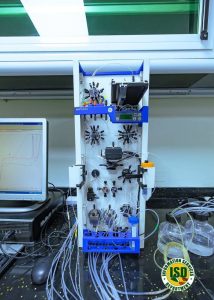
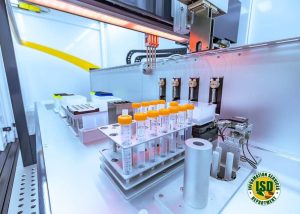
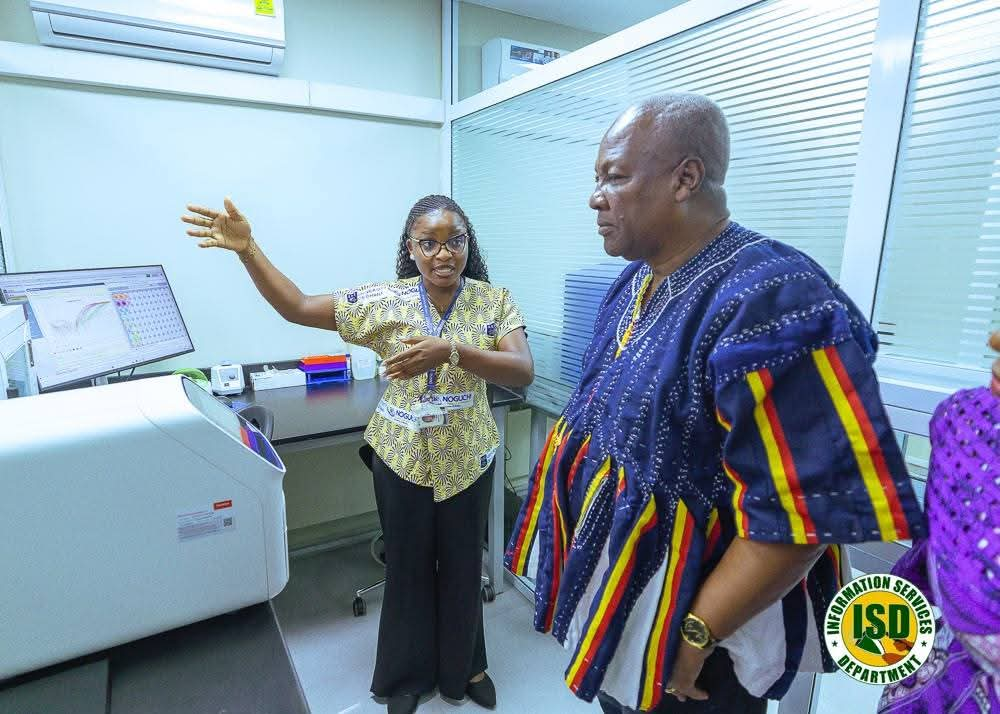
The facility, located at the Noguchi Memorial Institute for Medical Research (NMIMR), is expected to make DNA testing services more accessible to Ghanaians while strengthening the country’s capacity to conduct forensic investigations and identify victims during national emergencies.
Speaking at the commissioning ceremony on Wednesday, November 18, 2026, President Mahama said the laboratory would serve as an important national resource for families seeking clarity on biological relationships, particularly in situations where the paternity of a child is contested.
He explained that although maternity is generally established through childbirth, questions sometimes arise over the biological identity of a child’s father, resulting in disputes that can affect families and relationships.
“It will also determine paternity. Maternity, we all know, the woman gives birth to the child, so we know the mother. But sometimes the paternity of the father is in dispute, and the laboratory will settle once and for all the questions of who owns the child,” the President said.
The facility is expected to offer a scientific approach to resolving such disagreements, reducing reliance on assumptions and prolonged family disputes.
Inheritance disputes and family relationships
Beyond paternity testing, President Mahama said the laboratory would assist families involved in inheritance disputes by helping establish biological relationships where questions arise over the rightful beneficiaries of an estate.
Inheritance disagreements can become complicated when family members dispute the identity or relationship of individuals claiming to be children, relatives or successors of a deceased person.
The President indicated that DNA analysis could provide evidence to help establish biological links and support the resolution of such matters.
He also mentioned situations involving international travel, particularly where parents or guardians need to establish biological relationships with children accompanying them abroad.
According to him, the laboratory could help verify whether children travelling with adults are biologically related to them, thereby addressing questions that may arise during travel and other official processes.
“I am sure that families will also come for analysis to find out, in case of inheritance, who the right successor is, and in case of travel abroad, whether the children you are going with are your real children or they are some strangers from somewhere. And so this laboratory will also help us settle those issues,” he stated.
The comments highlight the potential use of DNA testing beyond criminal investigations, extending its application to family matters, civil disputes and identity verification.
August 6 tragedy exposed Ghana’s dependence on foreign laboratories
President Mahama also linked the establishment of the National Human Identification Laboratory to lessons from the August 6 tragedy, which exposed Ghana’s limited domestic capacity to undertake certain DNA examinations.
He recalled that samples recovered from the accident sites had to be transported to South Africa for analysis because the necessary testing facilities were not available locally.
The President said the new facility would help strengthen Ghana’s ability to conduct such examinations within the country, improving its capacity to respond to future emergencies.
The development is significant for disaster victim identification, where DNA analysis can help establish the identities of victims when conventional identification methods are insufficient.
Having a specialised facility in Ghana is expected to reduce the need to send samples abroad and strengthen the country’s forensic response capabilities.
A boost for forensic investigations
President Mahama said the laboratory would serve purposes beyond paternity and inheritance matters, including supporting forensic investigations.
DNA evidence is an important tool in modern criminal investigations because biological samples can help investigators establish links between individuals, crime scenes and other relevant evidence.
The availability of domestic testing capacity could therefore support law enforcement agencies and other institutions involved in investigations requiring scientific identification.
Noguchi Institute takes on expanded national responsibility
The location of the National Human Identification Laboratory at the Noguchi Memorial Institute for Medical Research places the facility within one of Ghana’s established medical research institutions.
The institute has played an important role in medical and scientific research in Ghana, including work relating to infectious diseases and public health.
The addition of the DNA laboratory expands the range of specialised scientific services that can be undertaken within the country’s research environment.