By Daniel Bampoe
The New Patriotic Party (NPP) has launched a scathing attack on the ruling National Democratic Congress (NDC), accusing the government of politicising the long-standing chieftaincy crisis in Bawku to gain electoral advantage, which the party claims has worsened the conflict.
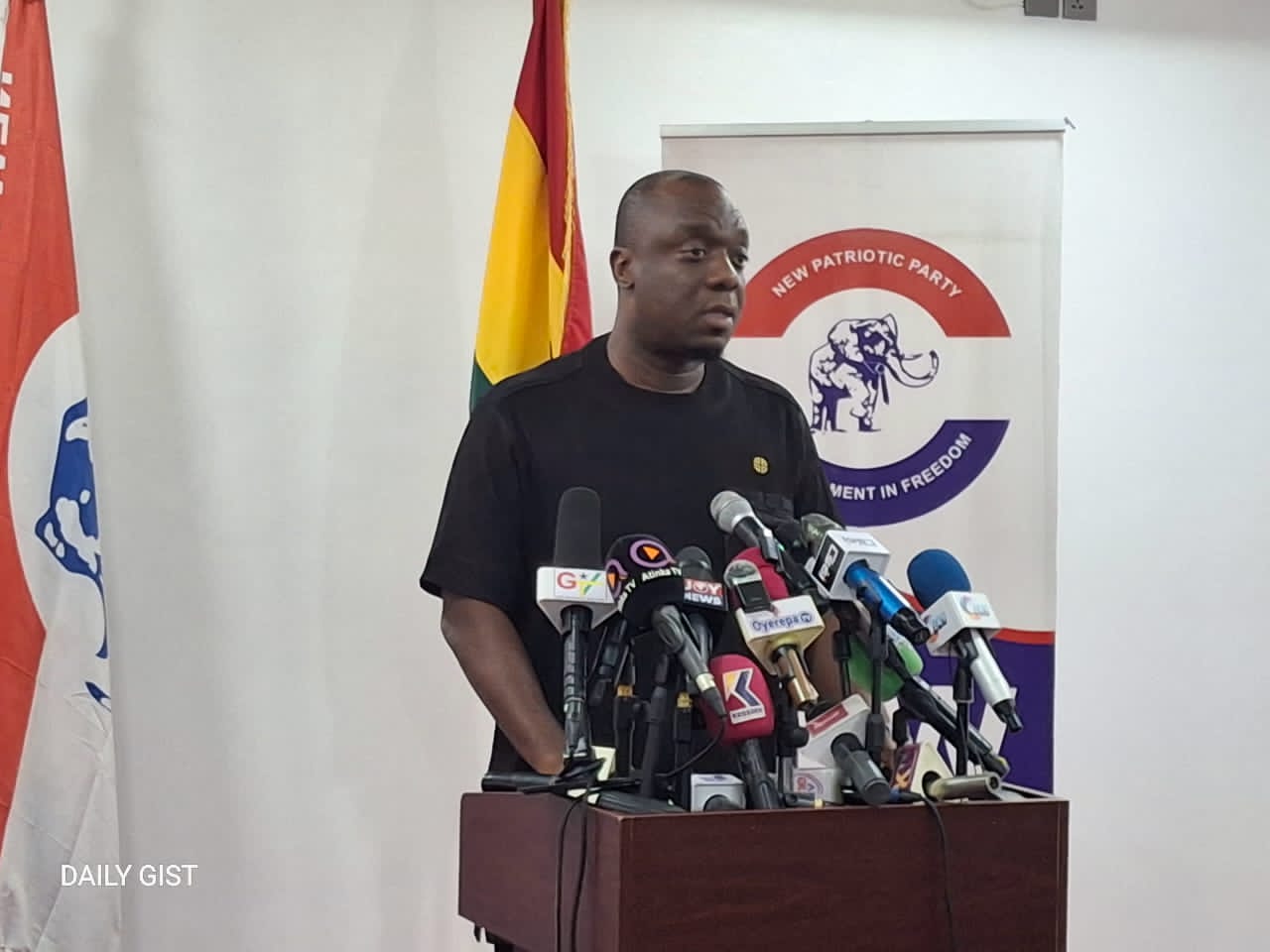
Speaking at a press conference at the NPP headquarters in Accra as part of activities marking the party’s 33rd anniversary, the General Secretary, Justin Kodua Frimpong, condemned the ongoing violence in Bawku and placed responsibility on what he described as “reckless political conduct” by the NDC before and after the 2024 elections.
“Innocent citizens, including students, are being killed daily—not because of any crime they’ve committed, but simply because of where they come from and the tribe they belong to,” Kodua stated.
Failure of Political Leadership
Kodua accused the NDC of deepening ethnic tensions in Bawku through divisive campaign rhetoric in the lead-up to the 2024 general elections.
He pointed to alleged statements by then-presidential candidate John Dramani Mahama, who reportedly promised to resolve the Bawku conflict upon winning power—an approach the NPP believes was calculated to exploit ethnic grievances for political gain.
“Prior to the 2024 elections, the NDC made several divisive statements, injecting tribal and religious tensions into our political discourse. These actions, we believe, contributed to the current escalation of the Bawku crisis,” he asserted.
The NPP General Secretary expressed concern that the NDC’s promises gave false hope to some factions while alienating others, thereby inflaming an already volatile situation.
National Unity
Despite the political blame game, the NPP reiterated its willingness to collaborate with the government to find a lasting solution to the Bawku impasse.
Kodua extended an open invitation to the Mahama-led administration for a roundtable dialogue involving all major political parties, traditional leaders, and civil society.
“We are calling on the NDC government to treat the Bawku conflict as a national emergency, not a political matter. The New Patriotic Party stands ready to join any effort to bring sustainable peace to the region,” he emphasized.
He also commended the Asantehene and other eminent chiefs for their continued mediation efforts but emphasized that traditional leaders cannot do it alone without united political support.
Drought
Shifting focus to other national concerns, Kodua raised alarm over the drought affecting farming communities in northern Ghana.
He described the situation as dire and called on the government to provide targeted relief to cushion affected farmers.
“We sympathize with our farmers. The drought is threatening the planting season and, by extension, national food security. The government must act swiftly with an appropriate support package,” he urged.
The NPP said the situation requires urgent attention, particularly in regions where agriculture is the primary source of livelihood.
The call adds pressure on the government as food inflation remains a persistent national challenge.
Galamsey: An Unfinished National Crisis
The press conference also reignited the ongoing conversation about illegal mining (galamsey).
Kodua noted that the devastation of Ghana’s forests, farmlands, and rivers continues under the current government, calling on President Mahama to renew efforts toward ending illegal mining.
“We are again calling on the government to decisively address the galamsey issue. It’s destroying our environment and endangering rural communities,” he stated.
NPP at 33
The press briefing formed part of week-long events to commemorate the NPP’s 33rd anniversary. Kodua said the party would use the occasion to engage the public on national issues, highlight its democratic legacy, and present a forward-looking agenda for national development.
“This is not just a celebration of our survival, but a recommitment to building a stronger, more united Ghana,” he said.
The NPP’s remarks come at a time of growing public scrutiny over the government’s handling of national security, economic hardship, and environmental degradation. With the 2028 elections on the horizon, political tensions continue to rise as parties seek to frame the narrative on key national issues.