
By Grace Zigah
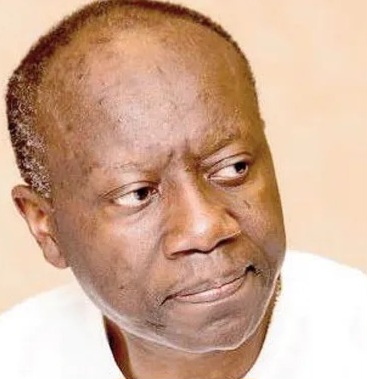
The detention of former Finance Minister Ken Ofori-Atta by United States Immigration and Customs Enforcement (ICE) has evolved into a multilayered legal and diplomatic episode, drawing together issues of U.S. immigration enforcement, the anti-corruption campaign, and questions about state coordination and due process.
What began as a quiet early-morning arrest in Washington, D.C., has since widened into a high-profile international matter with far-reaching implications.
Ofori-Atta was arrested on Tuesday, January 6, 2026, in what investigative journalist Manasseh Azure Awuni has described as a targeted ICE operation.
According to eyewitness accounts, ICE agents moved in as the former minister exited the Westlight apartment complex at 1111 24th Street NW, an exclusive residential building in Washington’s West End, barely a mile from the White House.
Unlike routine immigration sweeps often conducted at workplaces and public locations, the focused nature of the operation suggested that U.S. authorities were acting on specific information related to his immigration status.
Following his arrest, Ofori-Atta was transported approximately 89 miles to the Caroline Detention Facility in Bowling Green, Virginia, where he remains in ICE custody.
His lawyers have consistently maintained that the detention is administrative rather than criminal, stressing that it relates solely to immigration documentation and not to any criminal indictment in the United States.
Consular Service
As news of the arrest spread, the Embassy of Ghana in Washington, D.C., confirmed that it had been formally notified of the detention.
In a statement dated January 10, 2026, and signed by Ghana’s Ambassador to the United States, Victor Emmanuel Smith, the Embassy said it had immediately taken steps to verify the circumstances of Ofori-Atta’s arrest and requested access to him in line with international diplomatic conventions.
However, U.S. detention officials later informed the Embassy that the former finance minister declined to meet consular officers, indicating that he would only do so in the presence of his lawyers.
The Embassy nevertheless assured the public that it remains in contact with U.S. authorities and is closely monitoring the matter to ensure that his rights are protected.
The refusal of consular access has intensified public debate in Ghana, particularly given the broader legal context surrounding Ofori-Atta.
He is currently facing corruption and corruption-related charges in Ghana, arising from investigations into the Strategic Mobilisation Limited (SML) revenue assurance contract a deal that has generated widespread controversy and scrutiny.
The Office of the Special Prosecutor (OSP) formally charged him in November 2025 after months of investigations and public standoffs, including a period when he was declared a fugitive for failing to honour invitations to assist with inquiries.
Attorney General Steps In
In parallel, the Attorney-General, Dr. Dominic Ayine, has disclosed that Ofori-Atta’s U.S. visa was revoked in mid-2025 and that U.S. authorities had directed him to leave the country by a specified deadline, which he allegedly did not meet.
Read full story on the dailygistonline.com
According to the Attorney-General, the revocation of the visa effectively stripped him of lawful immigration status, creating the conditions for ICE to act.
Dispute Over Basis Of Arrest
The National Democratic Congress government has since confirmed that it has submitted an extradition request to the United States, seeking Ofori-Atta’s return to Ghana to face trial.
Ofori-Atta’s legal team, however, disputes the government’s account. In a public notice issued shortly after his detention, his lawyers explained that he has a pending petition for adjustment of status under U.S. immigration law, a process that allows individuals to remain in the country beyond the original validity of their visas while their applications are being reviewed.
They insist that he has been cooperating fully with U.S. immigration authorities and that the detention should not be conflated with Ghana’s criminal proceedings.
Adding further complexity to the narrative is Ofori-Atta’s medical history, which has previously been cited as a key reason for his extended stay in the United States.
The former finance minister travelled to the U.S. in January 2025 for medical treatment and later underwent a radical prostatectomy in June 2025 at the Mayo Clinic after being diagnosed with prostate cancer.
His lawyers have also indicated that he continues to manage other health complications, including post-COVID conditions, under medical supervision.
The unfolding saga has also exposed apparent inconsistencies in official communication from Ghanaian authorities.
While the Attorney-General and his deputy have linked the ICE detention to visa revocation and Ghana’s ongoing investigations, members of Ofori-Atta’s legal team have said they have not been formally contacted by the Office of the Special Prosecutor or the Attorney-General’s Department since the arrest.
This has fueled speculation about the extent of coordination between Ghanaian and U.S. authorities in the ICE operation.
Ken Ofori-Atta served as the former finance minister from 2017 to 2023, making him one of the longest-serving occupants of the office in the Fourth Republic.
His tenure spanned some of the most turbulent economic periods in recent history, including the COVID-19 pandemic, debt distress, and the return to the International Monetary Fund for a bailout programme.
While supporters credit him with steering the economy through unprecedented global shocks, critics argue that his policies contributed to ballooning debt and controversial contracts now under investigation.


