By Daniel Bampoe
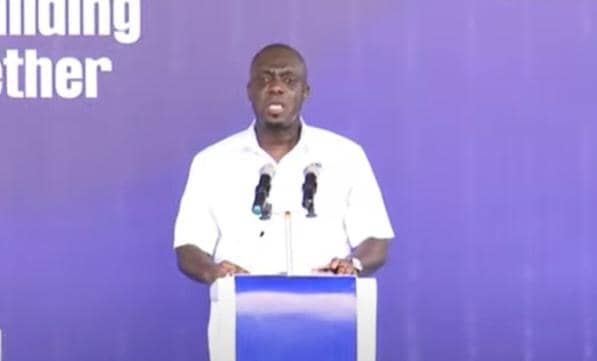
A fresh nationwide SIM card re-registration exercise proposed by the government has come under sharp scrutiny from former Deputy Minister for Communications and ex-Member of Parliament for Suhum, Frederick Opare Ansah, who argues that the existing legal framework is already robust enough to address challenges within the telecommunications sector.
In a detailed policy critique, Opare Ansah questioned the necessity of subjecting millions of Ghanaians to yet another re-registration process, insisting that the country’s current laws governing SIM registration are comprehensive, enforceable, and have already been tested in court.
Providing historical context, he noted that Ghana’s SIM registration regime is primarily anchored in the Subscriber Identity Module Registration Regulations, 2011 (L.I. 2006), and the Electronic Communications (Amendment) Act, 2016 (Act 920).
According to him, these laws clearly mandate the compulsory registration and verification of all SIM cards using a valid subscriber identity, while placing the burden of compliance squarely on telecommunications operators.
He explained that under these laws, telecom companies are required to ensure accurate data capture and prevent the activation of anonymous or improperly registered SIM cards.
Failure to comply, he stressed, attracts sanctions including fines and regulatory penalties, reinforcing the strength of the legal regime.
Opare Ansah further highlighted that the law explicitly criminalises the sale of pre-registered SIM cards, identifying this practice as a major source of fraud within the system.
He traced the evolution of the registration framework to the 2022 SIM registration exercise, which introduced stricter measures under the supervision of the National Communications Authority (NCA).
These included the mandatory use of the Ghana Card as the sole identification document, biometric verification through fingerprints and facial recognition, as well as a cap on the number of SIMs an individual can own.
According to him, the enforcement powers of the NCA during that exercise were not only effective but also received judicial backing, particularly in a court decision that upheld the regulator’s authority to enforce registration deadlines.
This, he argued, demonstrates that Ghana’s SIM registration laws are not only adequate but also legally validated.
However, he maintained that the persistence of SIM-related fraud cannot be attributed to gaps in legislation, but rather to weak enforcement of existing rules.
He pointed to instances of negligence and complicity among telecom agents and operators, as well as internal breaches within telecom systems, as the real drivers of the problem.
“These are already offences under the law,” he emphasised, adding that failures in enforcing Know Your Customer (KYC) requirements and addressing insider abuses have allowed fraudulent practices to persist.
Against this backdrop, Opare Ansah raised a critical policy question: whether it is justifiable to repeatedly subject the entire population to re-registration exercises whenever regulatory enforcement falls short.
From a governance perspective, he argued that re-registration is not the primary enforcement mechanism envisioned under the telecommunications laws.
Instead, the law provides for targeted sanctions, including penalties against non-compliant operators, suspension or revocation of licenses, and criminal prosecution of offenders.
He warned that resorting to blanket re-registration risks shifting responsibility away from those directly accountable, while placing unnecessary burdens on law-abiding citizens.
As an alternative, the former lawmaker proposed a series of measures that align more closely with existing legal provisions.
These include strict enforcement actions against telecom operators who fail to comply with registration requirements, comprehensive audits of telecom databases to identify irregularities, and targeted engagement with affected subscribers to rectify data discrepancies.
He also advocated for incentivised and seamless digital platforms that would allow users to voluntarily update their registration details, rather than being compelled through a nationwide exercise.
Additionally, he called for intensified criminal investigations into fraud syndicates and prosecution of telecom employees and agents found to be complicit in illegal SIM registration practices.
In his concluding remarks, Opare Ansah cautioned that a new nationwide SIM re-registration exercise could undermine public confidence in regulatory institutions, particularly if it is perceived as a substitute for enforcing existing laws.
“The framework is already strong and comprehensive,” he stressed, adding that the real priority should be consistent enforcement, regulatory discipline, and accountability within the telecommunications ecosystem.
His intervention adds a new dimension to the ongoing national debate over SIM card registration, as policymakers grapple with balancing security concerns, technological reforms, and public convenience in the rapidly evolving digital landscape.
Below is Opare Ansah’s post on his Facebook page:
PROPOSED SIM RE-REGISTRATION EXERCISE IN GHANA
The recent announcement by the Ministry of Communications, Digital Technology, and Innovations proposing another nationwide SIM re-registration exercise raises important legal, policy, and operational concerns that must be addressed within the framework of existing laws.
1. Existing Legal Framework is Already Sufficient
Ghana’s SIM registration regime is governed primarily by:
– Subscriber Identity Module Registration Regulations, 2011 (L.I. 2006)
– Electronic Communications (Amendment) Act, 2016 (Act 920)
These laws clearly establish:
a. Mandatory Registration and Verification
– Every SIM card must be registered with valid subscriber identity information (L.I. 2006).
– Telecommunications operators are required to verify identity before activation.
b. Responsibility of Telecom Operators
– Telecom operators (TELCOS) are legally responsible for:
– Ensuring accurate data capture
– Preventing anonymous or improperly registered SIMs
– Failure to comply attracts sanctions, including fines and regulatory penalties under Act 920.
c. Prohibition of Pre-registered SIM Cards
– It is an offence for agents or operators to pre-register SIM cards for sale, a key source of fraud.
2. Strengthened Regime Under the 2022 SIM Registration Exercise
In 2022, the State through the NCA implemented enhanced measures, including:
– Mandatory use of the Ghana Card as the sole identification document
– Biometric verification (fingerprints and facial capture)
– Limitation of SIM ownership (maximum of 10 per individual)
– Sanctions such as the blocking of unregistered SIMs
The authority of the NCA to enforce these directives was upheld by the courts, notably in a case where the regulator successfully defended its SIM registration deadline enforcement.
(Reference: NCA public communication on court victory, November 2022)
This confirms that:
– The legal regime is firm, enforceable, and judicially validated
3. The Core Problem is Enforcement, Not Absence of Law
The persistence of fraud linked to SIM cards does not arise from a lack of legislation but rather from:
a. Weak Enforcement Against TELCOS and Agents
– Instances of:
– Improper verification
– Complicity or negligence by agents
– These are already offences under L.I. 2006 and Act 920
b. Internal Breaches Within Telecom Systems
– Fraudulent SIM acquisition is often linked to:
– Insider abuse
– Failure to enforce KYC (Know Your Customer) standards
4. Re-registration Should Not Become a Default Policy Response
A fundamental policy question arises:
Should the entire population be subjected to repeated re-registration exercises each time regulatory enforcement fails?
From a legal and governance perspective:
– Re-registration is not the primary enforcement tool contemplated by law
– The law instead provides for:
– Sanctions against non-compliant operators
– Revocation or suspension of licenses
– Criminal liability for fraudulent registration practices
5. Alternative, Law-Compliant Solutions
Rather than imposing another nationwide exercise, the following measures are more consistent with the law:
a. Strict Enforcement Against TELCOS
– Apply sanctions under Act 920 for:
– Failure to properly register SIMs
– Allowing compromised databases
b. Targeted Data Rectification
– Require TELCOS to:
– Audit their databases
– Identify incomplete or suspicious records
– Engage affected subscribers directly
c. Incentivized Data Update Mechanisms
– Encourage voluntary compliance through:
– Service incentives
– Seamless digital update platforms
d. Criminal Investigations and Prosecution
– Focus on:
– Fraud syndicates
– Complicit telecom employees and agents
6. Conclusion
The legal framework governing SIM registration in Ghana is robust, comprehensive, and already tested in court. The challenge lies not in the absence of law, but in consistent enforcement and regulatory discipline.
A blanket re-registration exercise risks:
(a) Imposing unnecessary burdens on law-abiding citizens
(b) Undermining confidence in regulatory systems
(c) Avoiding accountability of those directly responsible for breaches
The priority must therefore be to enforce existing laws rigorously, hold TELCOS accountable, and deploy targeted, intelligence-driven interventions rather than resorting to repetitive nationwide exercises.