BY Daniel Bampoe
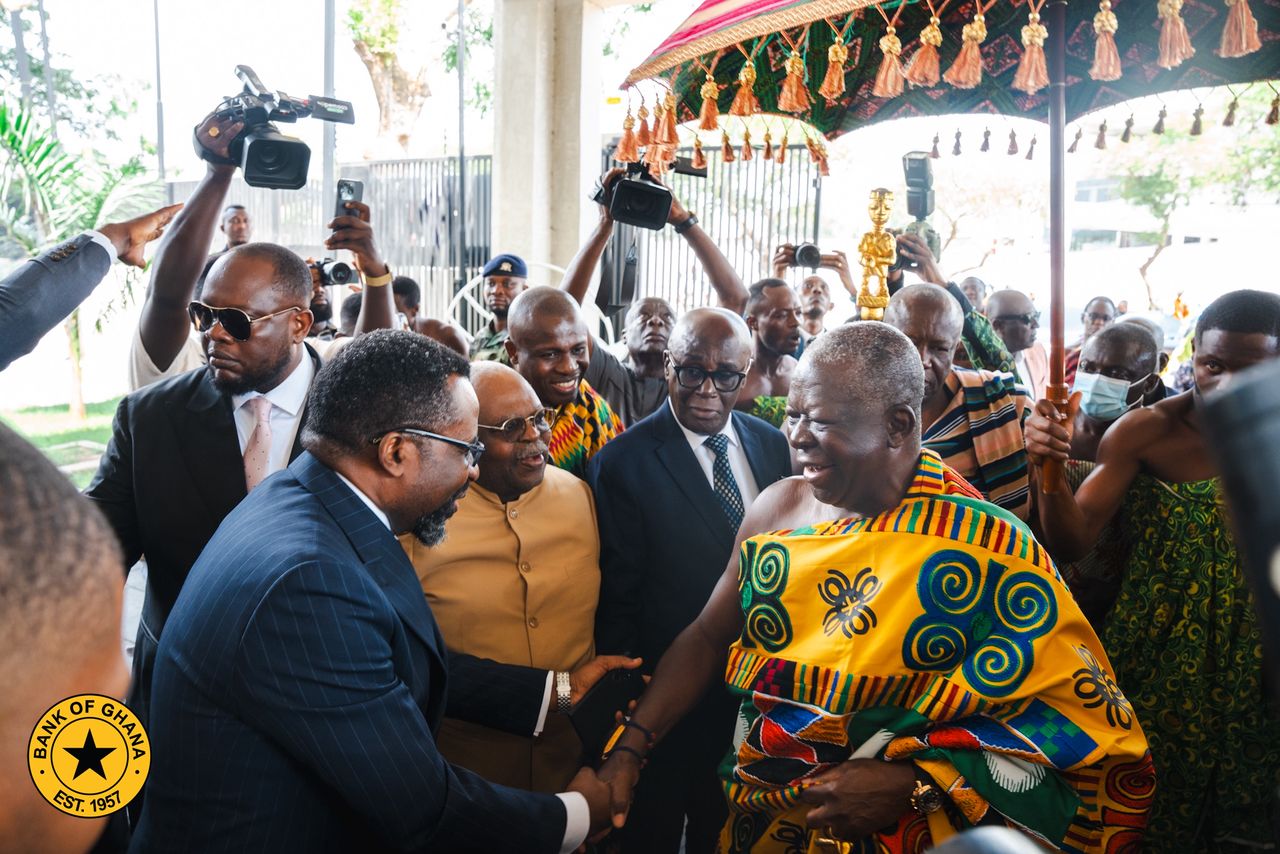
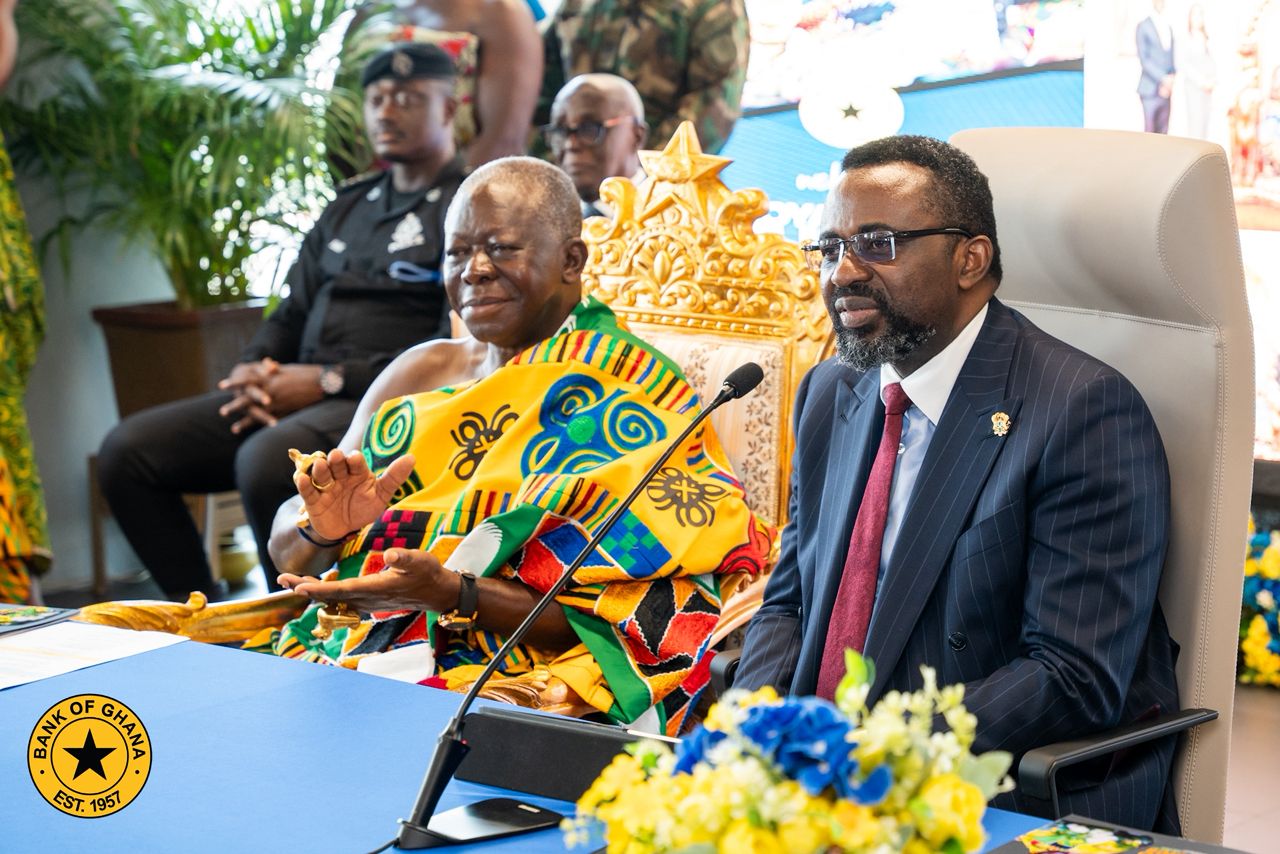
The Asantehene, Otumfuo Osei Tutu II, on Tuesday, January 7, 2026, paid a courtesy visit to the Bank of Ghana in Accra, using the occasion to deepen national reflection on economic stability, leadership discipline and Ghana’s long-term path to sustainable prosperity.
The visit, held at the Bank Square, brought together traditional authorities from the Asante Kingdom, senior officials of the central bank, and members of its board and management.
Welcoming the Asantehene, the Governor of the Bank of Ghana, Dr Johnson Pandit Asiama, described Otumfuo’s leadership as a stabilising force in Ghana’s national life, noting that his influence has consistently extended beyond chieftaincy matters into broader questions of governance, development and social cohesion.
He said the Asantehene’s calm and principled interventions during periods of national tension have helped shape public discourse around discipline, restraint and credibility in leadership.
Dr Asiama recalled a previous engagement at Manhyia Palace, where the Bank of Ghana delegation paid homage to Otumfuo and the Asantehene raised concerns about the sustainability of the cedi’s appreciation against the US dollar at the time.
According to the Governor, that question reflected a wider public anxiety among Ghanaians about whether recent improvements in the economy were real or merely temporary.
Providing an update, the Governor said Ghana’s macroeconomic fundamentals have since strengthened significantly.
Inflation, which stood at 23.8 per cent in December 2024, declined sharply throughout 2025, falling to 8.0 per cent by October, 6.3 per cent in November, and further to 5.4 per cent in December.
He attributed the sustained disinflation to tighter monetary discipline, improved food supply conditions and stronger coordination between the Bank of Ghana and the Ministry of Finance.
With inflation easing and expectations stabilising, the central bank adjusted its policy stance to support economic recovery without undermining price stability.
Dr Asiama disclosed that the Monetary Policy Rate was gradually reduced from 27.0 per cent to 18.0 per cent by November 2025, a move that has also led to a decline in market interest rates while maintaining financial prudence.
On the external sector, the Governor reported that the gross international reserves had been rebuilt to about US$13.83 billion by the end of December 2025, providing nearly six months of import cover.
He noted that improved trade performance and restored confidence in macroeconomic management have contributed to the stronger reserve position.
Addressing the cedi directly, Dr Asiama said the local currency ended 2025 in a stronger position than many analysts had predicted a year earlier.
He cited international assessments indicating that the cedi’s year-end rate of approximately GH¢10.67 to the US dollar ranked it among the better-performing currencies on the African continent.
He stressed, however, that the improvement should not be mistaken for permanence.
According to the Governor, exchange rate stability must be earned continuously through disciplined fiscal management, productivity, competitiveness and policy credibility.
He warned that sustainability depends on deeper national choices, including prioritising production over consumption, exports over imports, fiscal restraint over excess spending, and long-term planning over short-term political comfort.
Dr Asiama linked these economic principles to Otumfuo’s long-standing public advocacy, noting that the Asantehene has consistently urged leaders to curb waste, protect public resources and focus on development that directly improves the lives of ordinary Ghanaians.
He said Otumfuo’s emphasis on education, local enterprise and value creation mirrors the lessons of economic history, where lasting prosperity is built on discipline and credibility.
The Governor concluded by stating that Ghana’s recovery must now translate from improved macroeconomic indicators into better livelihoods, including jobs for the youth, stronger domestic industries, affordable but responsible credit, and a financial system that supports long-term investment.
He reaffirmed the Bank of Ghana’s commitment to safeguarding price stability and financial sector soundness in support of inclusive and durable growth.
Expressing gratitude for the visit, Dr Asiama described Otumfuo’s presence at the central bank as both symbolic and timely, underscoring the shared national responsibility required to protect economic stability and sustain the development gains.