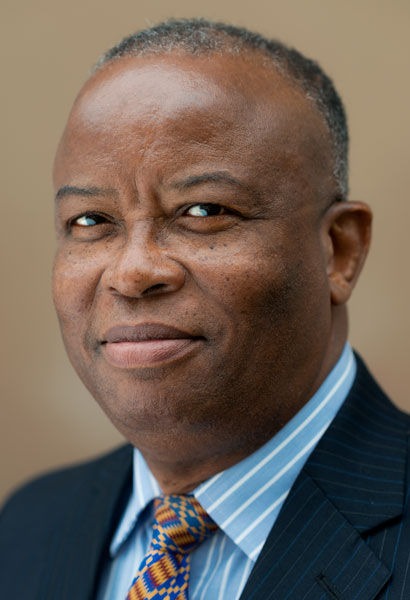
By Grace Zigah
Ghana’s public health and scientific communities have been thrown into mourning following the death of Professor Fred Newton Binka, a distinguished epidemiologist, pioneering malaria researcher and Chairperson of the Ghana Health Service (GHS) Governing Council.
Professor Binka, who also served as the founding Vice-Chancellor of the University of Health and Allied Sciences (UHAS), died after a career spanning several decades in medical research, health education, disease prevention and the development of public health institutions in Ghana and beyond.
The International Vaccine Institute (IVI) announced his death on Tuesday, November 17, 2026, through a statement published on its official social media platform. The institute described him as a pioneering malaria researcher, dedicated educator and former member of its Board of Trustees.
Although reports of his death began circulating on social media on Monday, November 16, the circumstances surrounding his passing had not been made public as of the announcement. The IVI expressed its condolences to his family, friends, colleagues, students and the many people whose lives were touched by his work.
His death represents a significant loss to Ghana’s public health research community, particularly at a time when the country continues to depend on scientific research, professional training and institutional capacity to address infectious diseases and improve healthcare delivery.
Professor Binka devoted much of his professional life to public health, with particular attention to malaria, one of the major infectious diseases affecting Ghana and several other countries across sub-Saharan Africa.
His work went beyond academic research. He was associated with efforts to understand how diseases spread, assess the effectiveness of health interventions and develop practical approaches that could improve the health of communities, particularly those in rural and underserved areas.
He combined scientific investigation with community-based interventions, helping to strengthen the connection between research findings and healthcare policies.
His academic qualifications reflected the international dimension of his professional development. He obtained an MBChB degree in Ghana before pursuing a Master of Public Health at the Hebrew University of Jerusalem. He later earned a PhD in Epidemiology from the University of Basel in Switzerland, graduating with the highest distinction.
These qualifications provided the foundation for a career that took him into national health administration, university leadership and international public health organisations.
The Navrongo research legacy
One of Professor Binka’s notable contributions to Ghana’s public health sector was his involvement in the establishment of the Navrongo Health Research Centre in northern Ghana.
The centre became an important platform for conducting large-scale public health research in real community settings. Rather than limiting investigations to laboratories and academic institutions, the research approach allowed scientists to examine health challenges among ordinary people and assess interventions under actual living conditions.
This helped create opportunities for researchers to generate evidence that could inform decisions on healthcare delivery and national health policy.
Professor Binka’s involvement in the development of the centre formed part of his wider contribution to building Ghana’s capacity for locally driven health research.
His work also covered malaria transmission, mosquito control, child health, disease prevention and the effectiveness of medicines and vaccines used against tropical diseases.
Through these areas of research, he contributed to efforts aimed at reducing the burden of infectious diseases and improving the quality of healthcare interventions.
International role in malaria control
Beyond Ghana, Professor Binka became associated with international efforts to combat malaria and strengthen disease prevention programmes.
He was involved in the early development of the Roll Back Malaria initiative at the World Health Organisation (WHO), a global effort focused on reducing the burden of malaria through coordinated interventions and improved access to prevention and treatment.
His international assignments also included serving as coordinator of the WHO Emergency Response to Artemisinin Resistance in the Greater Mekong sub-region of Asia.
Artemisinin-based medicines are central to the treatment of malaria, making the emergence of resistance a major public health concern. His involvement in the WHO response placed him within international efforts to address a threat that could undermine progress made in malaria treatment.
He also served on several WHO expert committees and panels, contributing scientific and professional expertise to discussions on public health interventions.
His experience extended to vaccine policy and global health governance. He chaired the GAVI Independent Review Committee, an important responsibility within the international vaccine and immunisation community.
From public health research to university leadership
In Ghana, Professor Binka’s influence was also felt in the development of health education and professional training.
He became the founding Vice-Chancellor of the University of Health and Allied Sciences, an institution established by the Government of Ghana in 2012 to strengthen the training of health professionals and advance research in health-related disciplines.
His appointment placed him at the centre of the university’s early development, including the task of establishing an institutional foundation for training future healthcare professionals, researchers and scientists.
As founding Vice-Chancellor, he helped lead an institution whose mandate was closely connected to Ghana’s need for skilled personnel across the health sector.
The university’s establishment reflected broader efforts to expand health education and improve the country’s capacity to train professionals for an increasingly demanding healthcare system.
His leadership at UHAS therefore added another dimension to a career that had already included scientific research, international assignments and public health administration.