–BY Issah Olegor
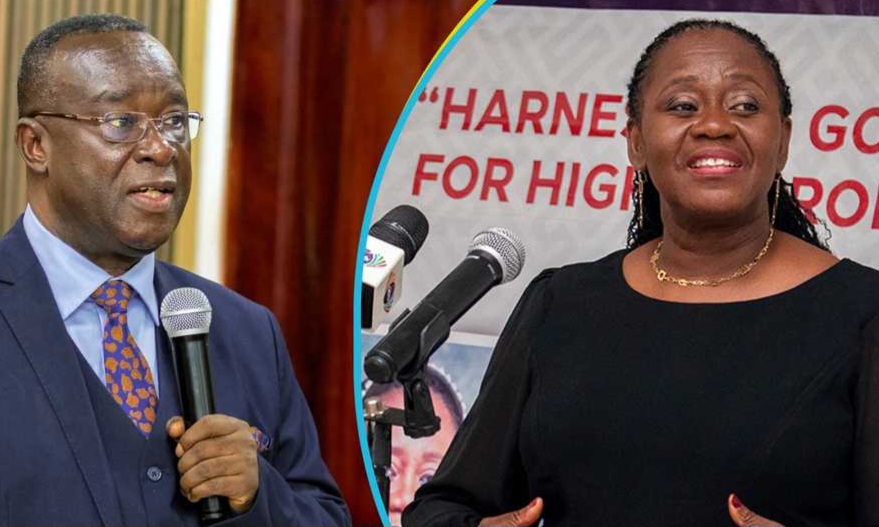
A fierce public backlash has emerged following Professor Ransford Gyampo’s admission that he sent a cautionary message to the Special Prosecutor, Kissi Agyebeng, in the midst of a legally sanctioned search at the premises of Strategic Mobilisation Ltd. (SML).
Critics argue that Gyampo’s actions amount to interference in an ongoing anti-corruption probe, with many questioning his authority and motives.
Background of the Controversy
The Office of th e Special Prosecutor (OSP), in collaboration with National Security operatives, conducted a search at SML’s offices as part of a wide-ranging investigation into corruption and abuse of office involving former Finance Minister Ken Ofori-Atta.
The investigation focuses on the controversial multi-year contract awarded to SML to provide revenue assurance services in the petroleum and port sectors — a contract that has drawn widespread public and political scrutiny.
In response to comments made by Professor Gyampo on TV3’s Key Points, the OSP issued a sharp public notice, clarifying that its actions were based on concrete allegations, not personal vendettas.
The OSP also disclosed that Ransford Gyampo had made contact during the active operation, raising eyebrows about possible attempts to influence the process.
Gyampo Admits Sending Text
In his public response, Professor Gyampo admitted he sent a message directly to Kissi Agyebeng during the operation.
He claimed he only sought to “caution” the Special Prosecutor not to cause “financial loss to the state” in the course of his investigations.
“I didn’t call your office, I called YOU,” Gyampo clarified. “I only expressed the hope that your intentions are patriotic and not personal.”
However, this self-proclaimed caution has sparked wider criticism and opened the floodgates to damning questions about Gyampo’s understanding of the facts and his possible interests in SML.
Observers have questioned the basis of Gyampo’s financial loss warning.
According to the July 2024 press statement by GRA Board Chairman, Joe Ghartey, Ghana exceeded its revenue targets in the first half of 2024 — a period when SML’s operations were suspended by President Akufo-Addo.
That statement contradicts the narrative that disrupting SML would lead to revenue losses.
Further, the KPMG audit report, specifically pages 157 and 158, concludes that SML’s work had no direct impact on petroleum volumes or revenue collection.
It further notes that the 400 million litres monthly gain SML touted had already been achieved in 2019 — before the company began operations in June 2020.
False Claims and Deleted Data
SML initially claimed it was curbing under-declaration, diversion, and dilution of petroleum products.
However, during investigations, both SML and the GRA admitted that other entities were responsible for those functions, and not SML.
Following that confrontation, SML deleted those claims from its official website — a move critics cite as an implicit admission of misrepresentation.
Even more damning, SML’s own Managing Director admitted during an investigation that the company had never detected any anomalies or wrongdoing by oil firms, insisting that wasn’t within their mandate.
Moreover, GRA officials themselves confirmed that SML’s data was not used for revenue assessment.
They continued to rely on the existing meters — the same systems in place before SML entered the picture.
Shaky Justification for a $141m Payout
By the end of 2023, SML had reportedly received over $141 million in payments from the Ghana Revenue Authority for services many now argue were redundant or falsely advertised.
With the company failing to demonstrate tangible value-added functions, public outrage has been mounting.
“If SML doesn’t check under-declaration, doesn’t detect wrongdoing, and GRA doesn’t use their data, then how can Gyampo claim Ghana would lose revenue if their servers are seized?” one anti-corruption analyst asked.
This is not the first time Gyampo and some of his academic peers have stepped in to defend SML.
Critics point out that Gyampo, now acting CEO of the Ghana Shippers Authority, has no direct link to the contract between GRA and SML — raising further questions about his unsolicited involvement.
“If Gyampo really cared about Ghana’s revenue,” one commentator argued, “he would be calling for the termination of SML’s contract, prosecution of those involved, and recovery of the $141 million — not interfering with the OSP’s work.”
Stay Off
The OSP in its statement reiterated that while public scrutiny is welcomed, interference in ongoing investigations — especially through baseless or misleading claims — undermines the fight against corruption.
The debate over the controversial SML contract and the state’s anti-corruption efforts continues to intensify, but for many, the latest episode marks a turning point — one that exposes not only a flawed contract but also those defending it under questionable pretenses.