BY DANIEL BAMPOE
The reported return to profitability by the Tema Oil Refinery (TOR) has triggered a fresh political debate, with the New Patriotic Party (NPP) claiming that key decisions taken under its previous administration laid the foundation for the state-owned refinery’s financial recovery.
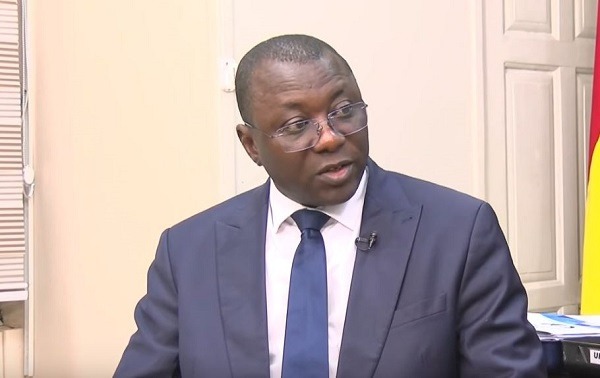
Kwadwo Nsafoah Poku, Co-chair of the NPP’s Energy Committee, has challenged the narrative surrounding TOR’s reported GH¢1.24 billion profit before tax in 2025, arguing that the current management must acknowledge the contribution of policies and commercial arrangements introduced before the National Democratic Congress (NDC) government assumed office in 2025.
According to him, a storage agreement between TOR and Sentuo Oil Refinery, established under the previous NPP administration in 2024, generated revenue that supported rehabilitation works at the refinery and contributed to the operational improvements being celebrated today.
His comments come after TOR Managing Director Edmond Kombat announced that the refinery had recorded its first profit in a decade, attributing the performance to macroeconomic stability and prudent financial management.
However, Poku insists that presenting the achievement without acknowledging the groundwork laid by the previous administration risks giving an incomplete account of the refinery’s recovery.
Speaking on Citi Fm’s Eyewitness News, he said the storage arrangement had provided TOR with an important revenue stream that helped finance some of the rehabilitation activities.
“Most of the revenue that they generated in TOR was because of an agreement for storage that was put in place in 2024 between the previous administration and Sentuo, which enabled them to get their revenue, which they did get, and aided them in some of the rehabilitation that they did,” he stated.
NPP Challenges Credit for TOR’s Financial Turnaround
Poku acknowledged that the refinery had made progress in its operations and maintenance, describing the improvements as positive developments. However, he argued that the recovery should not be presented as though it began entirely under the current management.
He maintained that the storage agreement with Sentuo was among the initiatives inherited by the present administration and should form part of any comprehensive assessment of TOR’s financial performance.
“Government is continuous. And my only problem with when some people try to tell a success story and don’t try to tell the story from where it started and from where it got into,” he said.
His remarks have brought renewed attention to the respective contributions of the previous and current administrations to the refinery’s recovery, particularly as both sides seek to establish their records in the energy sector.
The central issue is whether TOR’s improved financial performance should be attributed primarily to the measures introduced by its current management or viewed as the outcome of a series of decisions and interventions spanning different administrations.
While Poku credited the previous NPP government with establishing the storage arrangement, he did not dismiss the maintenance and operational improvements undertaken under the current management.
Instead, he argued that the refinery’s progress should be assessed within the broader history of its financial and operational challenges.
GH¢1.24bn Profit Does Not Mean TOR Is Debt-Free
Beyond the debate over political credit, the NPP Energy Committee co-chair cautioned against interpreting TOR’s reported GH¢1.24 billion profit before tax as evidence that the refinery has cleared its accumulated debts.
He said the company continued to face substantial outstanding liabilities despite settling some obligations, including debts owed to the Ghana Revenue Authority (GRA) and the Electricity Company of Ghana (ECG).
According to Poku, most of the refinery’s indebtedness remained unpaid, making it necessary to distinguish between recording a profit in a particular financial year and achieving a complete financial recovery.
He argued that TOR’s outstanding liabilities should be examined carefully before conclusions are drawn about the extent of its turnaround.
Poku maintained that a proper assessment of TOR’s financial position must therefore consider both its reported earnings and its remaining liabilities.
Old Debts Should Not Be Blamed on One Administration
He also argued that some of TOR’s outstanding debts predated the immediate previous NPP administration, with certain liabilities reportedly stretching back 10 to 15 years or more.
He cautioned against attributing the refinery’s entire debt burden to one government, insisting that the historical circumstances surrounding the accumulation of the liabilities must be considered.
He urged journalists to seek a detailed breakdown of the outstanding debts, including when they were incurred, to provide a clearer picture of the refinery’s financial position.