By Issah Olegor
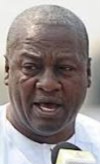
In a politically charged development, Speaker of Parliament Alban Bagbin has formally referred seven new Supreme Court nominees, appointed by President John Mahama, to Parliament’s Appointments Committee for vetting.
The move comes just weeks after President Mahama controversially suspended Chief Justice Gertrude Torkornoo—a decision that has already raised concerns over judicial independence and executive overreach.
The nominees are all currently serving Justices of the Court of Appeal: Justice Sir Dennis Dennis Adjei, Justice Gbiel Simon Suurbaareh, Justice Senyo Dzamefe, Justice Kweku Tawiah Ackaah-Boafo, Justice Philip Bright Mensah, Justice Janapare Bartels-Kodwo, and Justice Hafisata Amaleboba.
Speaker Bagbin, in accordance with Article 144(2) of the 1992 Constitution, tasked the leadership of Parliament’s Judiciary Committee and the Constitutional, Legal and Parliamentary Affairs Committee to support the Appointments Committee in conducting the vetting process.
The nominations, announced in Parliament on Tuesday, May 27, come against the backdrop of increasing tension between the Executive and the Judiciary.
Critics, particularly from the opposition New Patriotic Party (NPP), have described the move as part of a broader political agenda.
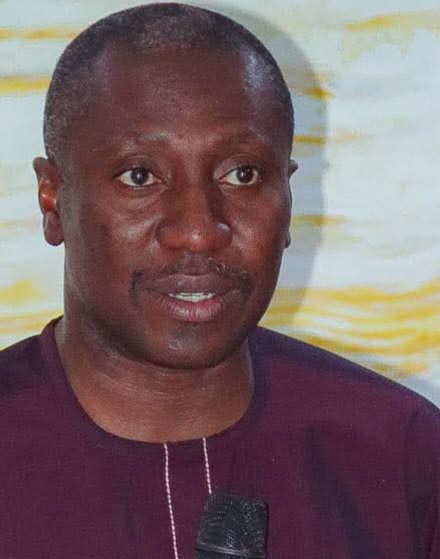
At a press conference on May 1, Minority Leader Alexander Afenyo-Markin condemned the appointments as a calculated attempt by President Mahama to “pack” the highest court with loyalists.
He alleged that this is part of a covert plan to secure a “third-term agenda” for Mahama, who is serving a second comeback term after previously leading Ghana from 2012 to 2017.
“This is not a routine judicial appointment. What we are witnessing is a strategic and deliberate effort to pack the Supreme Court with loyalists,” Afenyo-Markin declared.
“The nomination of seven Appeals Court judges immediately after suspending the Chief Justice reveals a deeper, more dangerous political ambition—a third-term agenda in disguise.”
According to the NPP’s Minority Leader, the decision threatens the delicate balance of power enshrined in Ghana’s democratic framework and could compromise the independence of the judiciary.
He warned that such actions risk eroding public confidence in the justice system and undermining constitutional governance.
“This is not how a responsible government strengthens the rule of law. This is how a government tightens its grip on power through the backdoor,” he added.
Afenyo-Markin urged civil society, religious leaders, and the broader Ghanaian public to resist what he described as an “assault on the judiciary.”
“We must not be silent. This is a national issue that transcends partisan lines. The integrity of our justice system is at stake,” he cautioned.
The nominations have stirred public debate, with many recalling similar tensions in the political history where judicial appointments became flashpoints for political controversy.
The timing of the nominations—following the Chief Justice’s suspension—has only intensified scrutiny.
The Mahama administration has not publicly responded to the allegations of politicizing the judiciary.
However, sources within the presidency insist the nominations were made to address vacancies and ensure the efficient functioning of the apex court.