Daniel Bampoe
The Bank of Ghana (BoG) has called on the banking sector to seize the momentum of recent macroeconomic stability by expanding credit to productive sectors while maintaining prudent risk management.
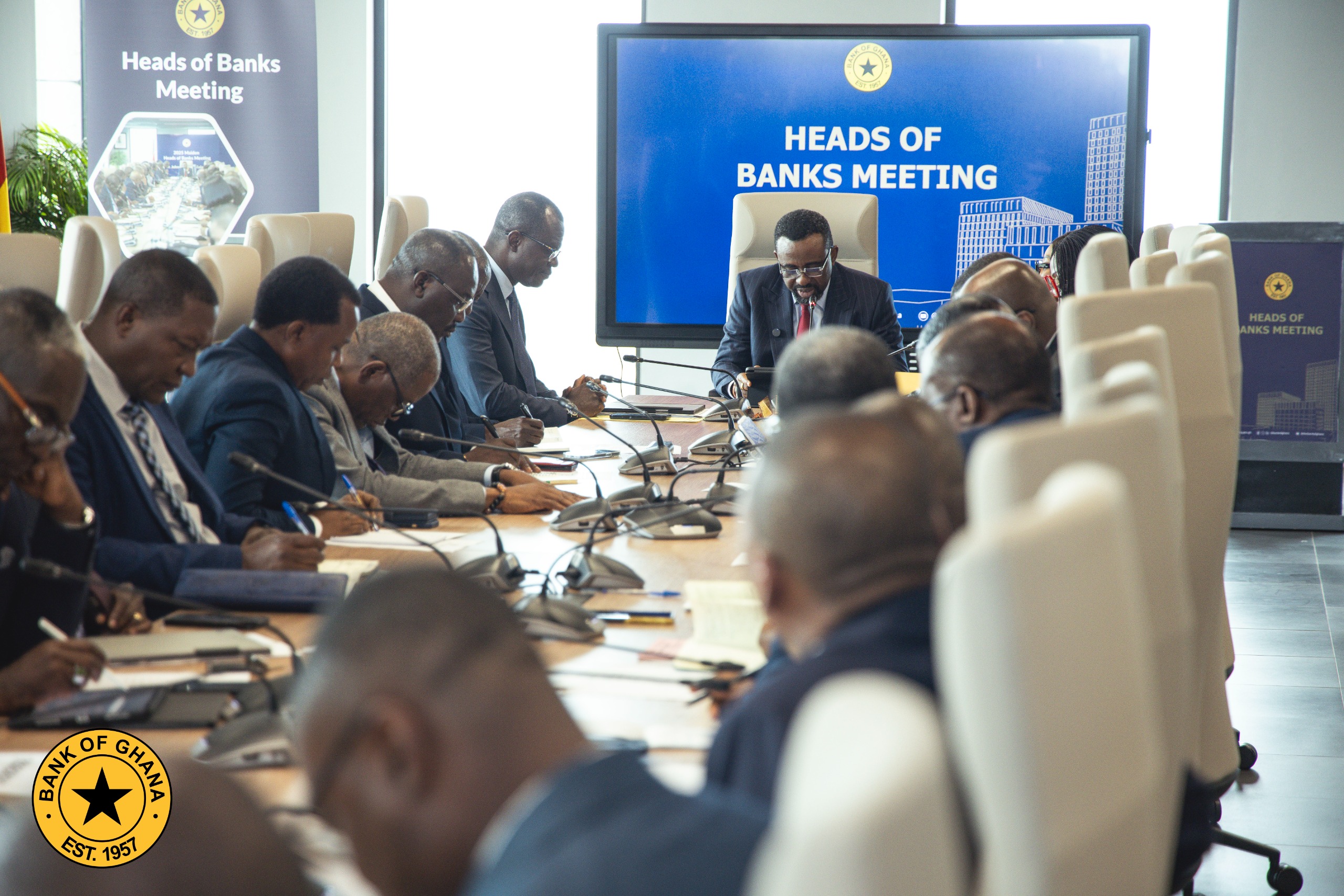
Speaking at a post-Monetary Policy Committee (MPC) engagement with heads of banks, BoG Governor, Dr. Johnson P. Asiama stressed that the current economic gains must be translated into long-term, inclusive growth.
The July MPC meeting, held against the backdrop of a slowing global economy (projected by the IMF to grow at 3.0% in 2025), concluded with a 300 basis points cut in the policy rate to 25.0%.
This, Dr. Asiama explained, signals a gradual transition from a purely defensive monetary stance to one that cautiously supports growth.
“With inflation firmly on a downward path and confidence improving, the environment is right for banks to broaden access to credit and support private-sector-led growth,” the Governor said, adding that such credit expansion must be matched with strong risk controls.
Banking Sector Performance
According to the BoG, Ghana’s banking sector remains well-capitalised, liquid, and profitable. Non-performing loans have been declining, aided by both improved macroeconomic conditions and strengthened credit underwriting standards.
The sector’s recapitalisation efforts—through retained earnings and new capital injections—have bolstered balance sheets, enhancing resilience to potential shocks.
However, Dr. Asiama cautioned that with resilience comes responsibility: “Our monetary policy stance is shifting to support growth. Banks must align by stimulating credit to the private sector, especially productive areas of the economy, without compromising loan quality.”
New Regulatory Measures
The Governor outlined an ambitious regulatory and compliance agenda aimed at aligning the banking system with the highest international standards while addressing existing compliance gaps. Key measures include:
Credit & Risk Governance: A new Credit Risk Management Directive based on Basel principles; directives on bancassurance governance; limits on large exposures; and diversification requirements for loan portfolios.
Liquidity & Capital Resilience: A Liquidity Risk Management Directive requiring banks to hold High-Quality Liquid Assets sufficient to cover 30-day stress scenarios, alongside enhanced stress testing and capital planning under the Internal Capital Adequacy Assessment Process.
Foreign Exchange Compliance: Tighter enforcement of the Foreign Exchange Act, including bans on unapproved remittance terminations, FX swaps within remittance operations, and unapproved exchange rates.
Weekly reporting of inward remittance transactions will be mandatory.
Strategic Business Model Review: A forward-looking assessment of banks’ operational sustainability, involving full board and senior management participation.
Call to Action
Dr. Asiama stressed that the current macroeconomic stability offers a rare opportunity for banks to expand financial inclusion, support small and medium-sized enterprises (SMEs), finance infrastructure, and embrace digital innovation.
“The stability we enjoy today was hard-won,” he said. “It is now our joint responsibility to ensure it is not only preserved but leveraged for sustainable and inclusive prosperity.”
The Governor urged banks to view the post-MPC dialogue not as a compliance checklist but as a strategic conversation about the future of Ghana’s banking sector—one that balances innovation, profitability, and national development goals.