By Daniel Bampoe
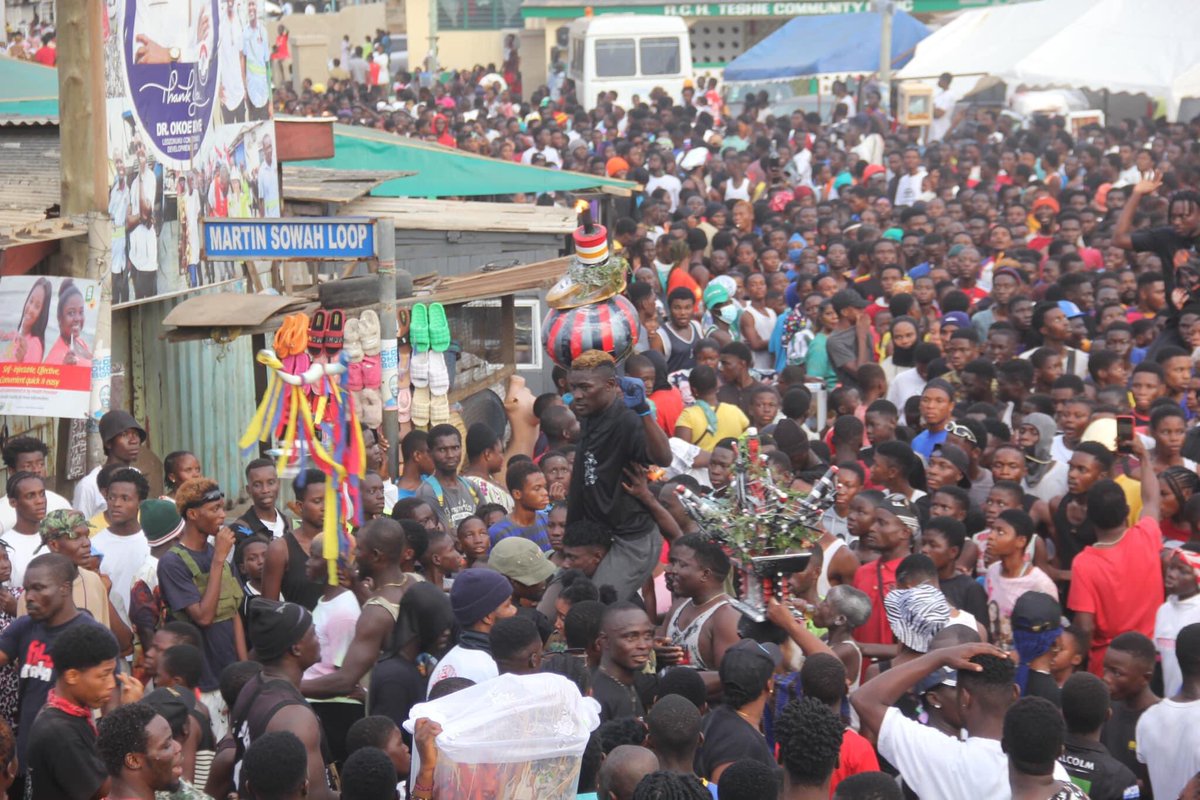
The annual Homowo festival, which is supposed to symbolize peace, abundance, and thanksgiving among the Ga people, turned into a scene of violence and tragedy in the Accra suburbs of Omanjor and Sowutuom over the weekend.
What began as a dispute over traditional rites escalated into bloody clashes, leaving at least two confirmed dead, with eyewitnesses suggesting casualties could be higher.
The incident occurred on Saturday, August 30, 2025, when residents of Omanjor Dwenewoho attempted to sprinkle Kpokpoi, the sacred traditional dish, in parts of Sowutuom as part of the Homowo celebrations.
According to eyewitness accounts, leaders in Sowutuom resisted the move, insisting the Omanjor faction had no traditional authority to perform the sprinkling on their land. The disagreement over territory quickly spiraled into open confrontation.
Within minutes, the festive atmosphere gave way to panic as gunfire erupted.
Residents reported hearing sustained shooting for close to half an hour. “After the Chelsea game, we suddenly heard heavy gunshots. Bullets were flying everywhere,” one eyewitness recounted, describing how people fled for their lives as armed men stormed the community.
Among the dead is reported to be the Obrafor of Sowutuom as well as the son of the Sowutuom chief.
Several others sustained injuries, though the exact number has not been confirmed by authorities.
Eyewitnesses also described chilling scenes of men being chased through homes and shops, with some victims shot after seeking refuge in nearby compounds.
By Sunday, Omanjor Dwenewoho had fallen under heavy police presence.
Shops remained shuttered, and residents stayed indoors out of fear of reprisals.
“The place is like a ghost town. Everyone is scared the violence could start again,” a local trader told reporters.
A Festival Overshadowed By Conflict
The Homowo festival is central to Ga identity, commemorating the end of a historic famine and celebrating the harvest season.
Communities celebrate by sprinkling Kpokpoi in homes, on streets, and at sacred grounds, invoking blessings of abundance and thanksgiving.
But over the years, disputes over the performance of these rites have often sparked violent clashes.
This year has been particularly bloody. Just last week, two people lost their lives at Teshie during another Kpokpoi sprinkling ceremony, raising concerns about growing tensions within Ga communities during the festival.
In the case of Omanjor and Sowutuom, the clashes are tied to a long-standing boundary dispute.
Both communities have laid claims to lands that lie between them, and traditional leaders have on several occasions disagreed over jurisdiction.
The Homowo celebration appears to have reignited those tensions, with the symbolic act of sprinkling food becoming a trigger point for deeper rivalries.
Calls for Calm and Mediation
The Ghana Police Service has moved in to maintain law and order, though residents remain uneasy. Community leaders and peace advocates are calling for urgent dialogue between the traditional authorities of Sowutuom and Omanjor to prevent further bloodshed.
The Interior Ministry is also under pressure to act swiftly. With recent tribal clashes in Sawla-Bole already displacing thousands, the government is wary of another cycle of violence in Accra’s growing suburbs.
For now, the once festive Homowo season in Sowutuom has been overshadowed by grief and fear, with the smell of gunpowder replacing the aroma of Kpokpoi.