BY Grace Zigah
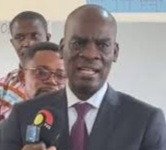
The Minister of Education, Haruna Iddrisu, has reaffirmed the National Democratic Congress government’s position against elaborate hairstyles and long hair among students in Ghana’s pre-tertiary schools, stressing that such practices undermine discipline and the core values of education.
His remarks come amid a renewed national debate over grooming policies in senior high schools (SHSs) that have sparked heated discussions on social media.
Speaking at the 75th Anniversary celebration of Mawuli School in Ho, Volta Region, on Saturday, Iddrisu said the Ghana Education Service (GES) and heads of second-cycle institutions have the full backing of his ministry to enforce existing codes of conduct on student appearance and discipline.
According to him, the purpose of education is to mould character, not to promote fashion or beauty competitions.
“There is an ongoing debate on social media about haircuts and the size and length of hair in secondary schools. We will not tolerate it today or tomorrow. Insofar as we are moulding character, the rules must stand,” the Minister declared.
“If we give in to hair today, tomorrow it will be shoes, and the next day it will be the way they dress,” he cautioned.
The directive follows months of public criticism from some civil society groups and parents who argue that existing grooming policies are outdated and discriminatory, especially against female students and those of certain religious backgrounds. However, school authorities have maintained that uniformity in appearance helps to instill discipline and equality among students, preventing social divisions based on class or style.
The debate gained national attention earlier this year when videos of students being punished or sent home for wearing braids and dreadlocks circulated online, prompting activists to demand reforms.
Some have also cited the 2021 Achimota School controversy—in which two Rastafarian students were initially denied admission over their dreadlocks—as evidence of ongoing tensions between institutional discipline and individual rights in the educational system.
Iddrisu, however, insists that discipline must remain at the heart of the country’s educational philosophy.
“Schools are institutions for nurturing future leaders. No parent should expect their child to walk into a learning environment as if they were attending a beauty contest,” he said. “Headmasters and the GES are empowered to take full control of student behaviour on campuses.”
At the same time, the Education Minister urged fairness and professionalism in the enforcement of school rules. He warned teachers and administrators against abusing their authority, noting that any staff member found to have mistreated or exploited students under the guise of discipline would face sanctions.
“We will not tolerate indiscipline in our schools, including cases where teachers abuse learners,” he emphasized.
Mr. Iddrisu’s firm stance aligns with his broader education reform agenda since assuming office earlier in 2025.
The minister has promised to review the Computerized School Selection and Placement System (CSSPS), address teacher salary arrears, and upgrade several Category B schools to Category A to improve educational equity and standards.
The renewed focus on discipline and character formation, according to observers, reflects the Ministry’s efforts to balance modernization with moral and social values in Ghana’s education system.
While critics continue to argue for greater flexibility and respect for personal expression, the government maintains that maintaining order in schools is essential to preserving academic focus and institutional integrity.