By Daniel Bampoe
The Ranking Member on Parliament’s Economic Committee and Member of Parliament (MP) for Ofoase-Ayirebi, Kojo Oppong Nkrumah, has called for a sustainable policy framework to protect the Ghana cedi from future depreciation, warning that the current appreciation is being driven largely by temporary market interventions.
Speaking on the floor of Parliament on Tuesday during a debate to mark 60 years of the Ghana cedi, Mr. Oppong Nkrumah traced the performance of the local currency through various economic cycles, emphasizing that Ghana’s history shows the cedi performs well when the country has adequate foreign exchange reserves, but struggles whenever reserves decline.
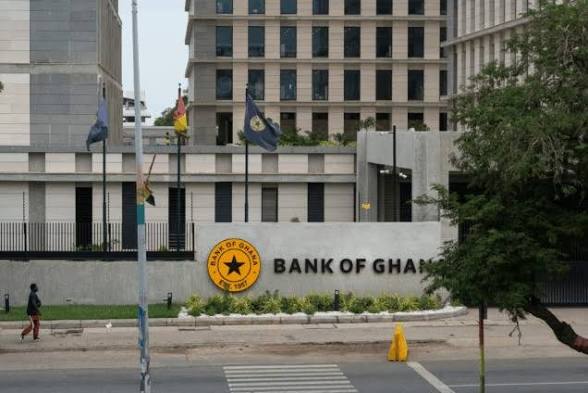
He cited instances in the economic past where strong reserves allowed the government to defend the cedi through what is commonly known as “market intervention” — the injection of foreign exchange by the Bank of Ghana (BoG) to stabilize the currency.
“The cedi performs very well at some points and very poorly at others,” he said. “Whenever a government has access to large volumes of forex reserves to intervene in the market, the cedi stands its ground. But when we run short of hard currency, depreciation becomes dire.”
Mr. Oppong Nkrumah referred to recent comments by the Minister for Education, who noted that the cedi had appreciated by 37.4% year-to-date.
He questioned the sustainability of this appreciation, explaining that it was primarily the result of significant dollar injections by the BoG.
“This month alone, the Bank of Ghana is dumping about $1.3 billion onto the market,” he said, adding, “That is the reason for the appreciation. So where are they getting these dollars from?”
According to him, the answer lies in the government’s gold purchase programme, which was introduced in 2021 to boost the foreign reserves through gold accumulation by the BoG and the Precious Minerals Marketing Company (PMMC). The initiative, he noted, had increased the country’s gold reserves from eight tons to 30 tons.
“At that time, gold prices were around $1,700 per ounce. Today, they are averaging $4,000,” the Ofoase-Ayirebi legislator explained.
“Because of this programme, we are now able to mobilize a lot of forex, which is being used for market intervention.”
Mr. Oppong Nkrumah, however, cautioned that while this intervention has temporarily stabilized the cedi, it does not reflect real market strength.
He likened the situation to a patient relying on blood pressure medication.
“It’s like someone with high blood pressure taking medication to stay normal. The day they stop taking it, their true condition will show,” he said.
The MP further questioned the framework guiding the current interventions, urging policymakers to clarify how much of the windfall from gold revenues is being used to support the cedi.
“Are we dumping all of the windfall on the market just to suppress the real rate?” he asked. “If we do that, what happens when it runs out?”
He recalled that the International Monetary Fund (IMF) had previously cautioned the government to establish a clear framework for its market interventions, after which the currency began depreciating again once the BoG halted dollar injections.
Mr. Oppong Nkrumah urged the government to strengthen structural measures rather than rely solely on interventions.
He proposed that the BoG focus on ensuring forex repatriation, reducing the tendency of banks to hold foreign exchange in offshore accounts, and enforcing de-dollarization in domestic transactions.
“As we celebrate 60 years of the Ghana cedi, let us focus on sustainability,” he said. “We must ensure that when gold prices fall or reserves dip, we do not see another round of sharp depreciation.”
He concluded by commending all those who have contributed to Ghana’s monetary evolution since 1965 but insisted that without a sustainable framework, the cedi’s current stability would be short-lived.
“We must prepare for the day when gold prices are no longer at record highs,” he warned. “That is the only way to safeguard the future of our currency.”