BY Daniel Bampoe
Tanzania’s National Electoral Commission has declared President Samia Suluhu Hassan the winner of the country’s general elections, securing a staggering 97.66 percent of the vote.
However, what should have been a moment of triumph for East Africa’s first female head of state has instead been overshadowed by violent protests, opposition outrage, and growing international concern over the credibility of the electoral process.
According to official results announced on Saturday, November 1, 2025, the commission said Hassan received 31.9 million votes out of an estimated 37.6 million registered voters, with voter turnout pegged at 87 percent.
Yet, eyewitness accounts and independent reports paint a far more chaotic picture, suggesting widespread voter intimidation, suppression, and violent clashes between demonstrators and security forces across several Tanzanian cities.
Background: From Hope to Division
Samia Suluhu Hassan, who assumed office in March 2021 following the sudden death of President John Pombe Magufuli, initially entered the political scene as a symbol of unity and reform. Her leadership marked a historical milestone, as she became Tanzania’s first female president and one of the few women to hold such a position in Africa.
Her early presidency was characterized by efforts to reopen civic space, restore international ties, and revive the country’s battered economy after years of Magufuli’s isolationist and authoritarian rule. However, as the 2025 elections approached, critics say her government gradually reverted to repressive tactics reminiscent of her predecessor — tightening control over the media, harassing opposition figures, and curbing political freedoms.
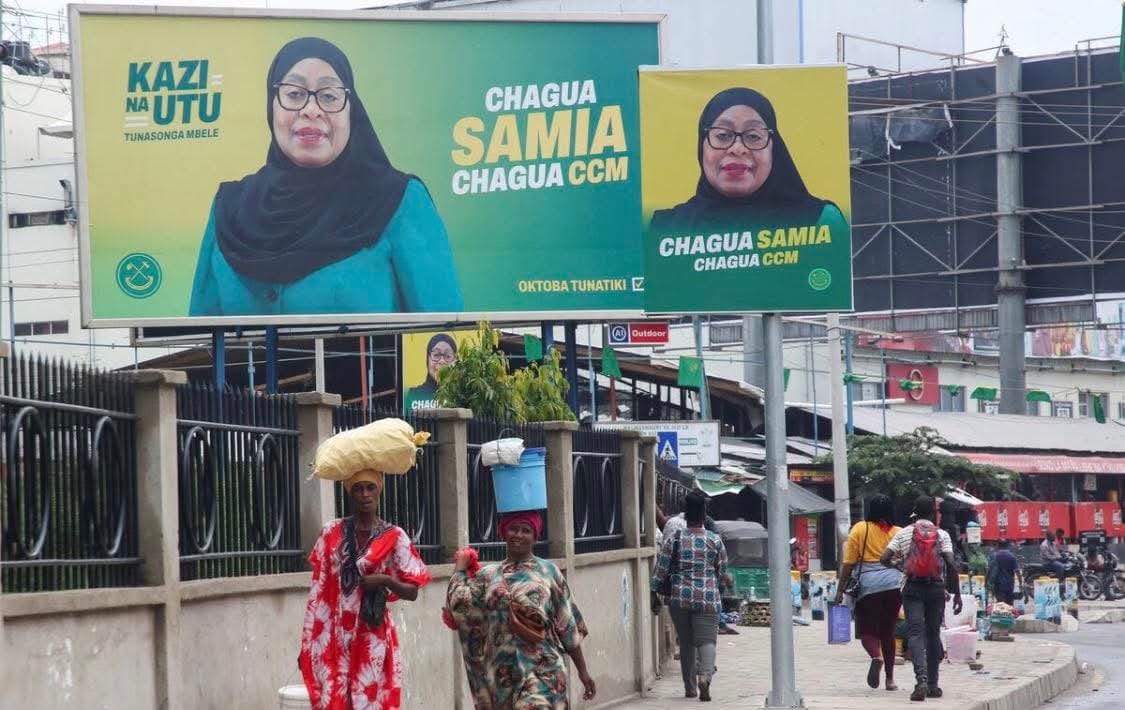
Election Day Unrest
Wednesday’s polls for both presidential and parliamentary seats quickly descended into violence. Reports from Dar es Salaam, Arusha, and Zanzibar indicated that protesters clashed with police, tore down campaign posters bearing Hassan’s image, and set government buildings ablaze. Security forces responded with tear gas, gunfire, and mass arrests.
The main opposition party accused the electoral commission of deliberately excluding the president’s two biggest challengers, effectively handing Hassan a near-uncontested victory. Witnesses and local activists claim the protests were triggered by what many saw as a “rigged” election, where opposition candidates were either disqualified, detained, or blocked from campaigning.
Mounting Casualties and International Condemnation
While the Tanzanian government insists that “only isolated incidents” occurred, the opposition has alleged that hundreds of people have been killed during the post-election crackdown. The United Nations Human Rights Office, citing “credible reports,” confirmed that at least 10 people had died in three cities, though independent observers and media outlets, including the BBC, suggest the toll could be significantly higher — possibly exceeding 500 deaths within just three days.
In response to the growing unrest, authorities have imposed a nationwide curfew for three consecutive nights and restricted internet access, making independent verification of reports increasingly difficult. Social media users across the country have complained of disrupted communications, while journalists say they face intimidation from security agencies.
Foreign Affairs Minister Mahmoud Thabit Kombo rejected accusations of excessive force, claiming that the unrest was “orchestrated by criminal elements” rather than political protesters. But his statement did little to ease tensions or reassure the international community.
UN Calls for Investigation
In a statement issued Friday, UN Secretary-General António Guterres called for a “thorough and impartial investigation” into the reported human rights abuses and expressed deep concern over the loss of life. Human rights organizations, including Amnesty International and Human Rights Watch, have urged the Tanzanian government to lift restrictions on media and allow independent observers to assess the situation.
A Polarized Nation
The 2025 election was seen as a defining moment for Tanzania’s young democracy. Since independence in 1961, the ruling party, Chama Cha Mapinduzi (CCM), has maintained near-total control over political power, often winning by overwhelming margins.
Hassan’s 97.66 percent victory has therefore reignited debates over whether Tanzania’s elections genuinely reflect the will of its 68 million citizens.