BY Daniel Bampoe
Veteran Kumawood actor Agya Koo has publicly dismissed growing speculation linking outspoken politician Kennedy Agyapong to the newly launched political movement, The Base, amid widening debate over the viability of a third political force in Ghana.
The clarification follows a wave of rumours that emerged shortly after the actor unveiled what he described as a new political alternative aimed at challenging the long-standing dominance of the New Patriotic Party (NPP) and the National Democratic Congress (NDC).
The development has injected fresh energy into discussions about political reform, grassroots mobilisation, and the prospects of breaking the entrenched two-party system.
Agya Koo and some key members of The Base such as businessman George Oti Bonsu were part of Kennedy Agyapong team during the NPP flagbearership race. Agyapong’s defeat caused some of his supporters to nurse the quest to form a new party.
In a viral video circulating online and widely shared across social media platforms, Agya Koo announced the formation of the Ghana First Party (GFP), positioning it as a movement designed to prioritise the needs of ordinary citizens, particularly traders and small-scale entrepreneurs.
He argued that dissatisfaction with the performance of both major parties has created an opening for a new political direction.
According to the actor, the initiative has already attracted interest from individuals across all sixteen regions, signalling what he described as a growing appetite for political change.
His message centred on economic empowerment, tourism development, and citizen-focused governance, themes he believes have been inadequately addressed under successive administrations.
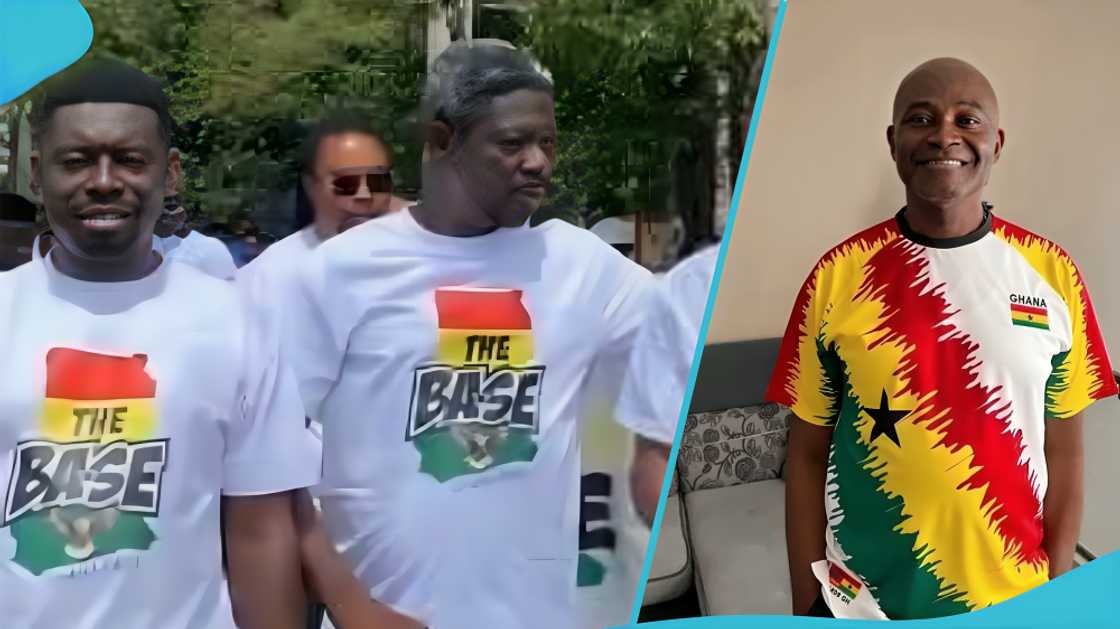
Shortly after the announcement, Agya Koo was seen in Accra with a group of supporters clad in party-branded attire, reportedly taking steps toward formal registration of the movement.
He later visited the busy Kantamanto market, where he engaged traders in what appeared to be early-stage grassroots campaigning—an effort that further amplified public attention around the new political project.
However, the visibility of the movement quickly gave rise to speculation that Kennedy Agyapong, a former Member of Parliament for Asin Central and a known figure within the NPP, was secretly backing or influencing the initiative.
The rumours gained traction partly due to Agyapong’s political ambitions and his ongoing efforts to reposition himself within the party ahead of future elections.
Responding in an interview, Agya Koo firmly rejected these claims, stating unequivocally that Agyapong has no involvement in the formation or operations of the Ghana First Party.
He stressed that the politician has neither expressed interest nor provided any form of support to the movement.
The actor further explained that the party is still in its formative stages, with a long-term vision of building a strong political base capable of eventually fielding a presidential candidate.
According to him, the immediate focus is on organisation and mobilisation rather than leadership contests.
The controversy has sparked intense reactions across social media, with many Ghanaians questioning whether a new political party can realistically disrupt the dominance of the NPP and NDC.
Some commentators argued that any meaningful political breakthrough would still require alignment with one of the established parties, while others cautioned against moves that could fragment existing political support bases.
The debate has also drawn in political analysts, including broadcaster Okatakyie Kwame Afrifa Mensah, who recently warned that emerging movements like “The Base” could mirror historical splits within Ghana’s political tradition.
He referenced past divisions that weakened party structures and influenced electoral outcomes, suggesting that similar patterns could re-emerge if internal tensions are not addressed.
Meanwhile, Kennedy Agyapong himself has embarked on a unity tour within the NPP, aimed at healing internal divisions and rebuilding grassroots confidence following grievances tied to the party’s recent governance period.
His efforts are widely seen as part of a broader strategy to strengthen his standing ahead of future leadership contests.