BY Issah Olegor
The Minister for Finance, Dr Cassiel Ato Forson has announced the abolition of the COVID-19 Health Recovery Levy and a set of five major Value Added Tax (VAT) reforms designed to ease the cost of doing business, stimulate private sector growth, and boost household income.
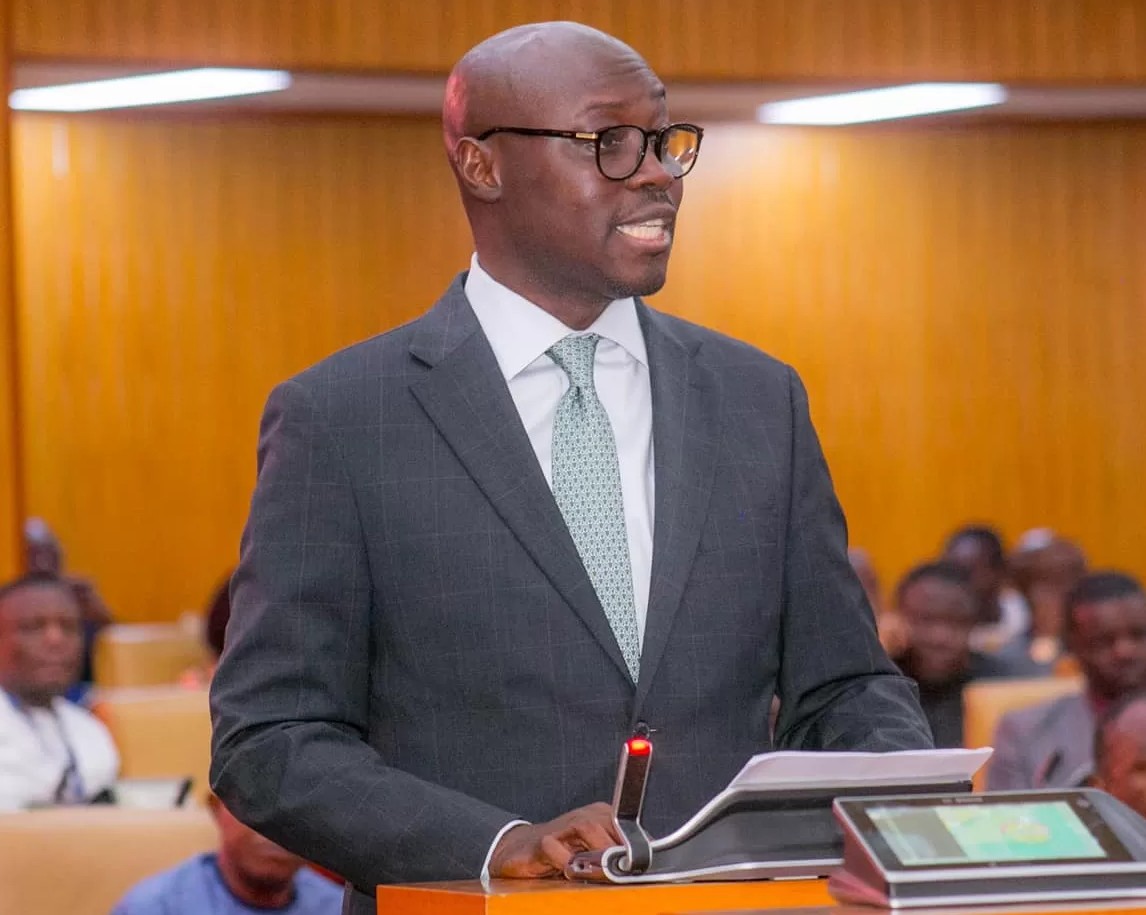
Presenting the 2026 Budget Statement and Economic Policy to Parliament on Thursday, November 13, Dr. Forson declared that the move signals a decisive shift from austerity to growth, marking a new chapter in the post-crisis economic rebuilding efforts.
GH₵3.7 Billion Relief for Ghanaians
The Minister’s most headline-grabbing announcement was the scrapping of the COVID-19 Health Recovery Levy, a pandemic-era tax introduced in 2021 to raise funds for health sector recovery and pandemic response.
The levy, charged at 1% on VAT and National Health Insurance contributions, had long been criticized by businesses and consumers as an extra burden amid rising inflation and cost of living.
Dr. Forson told Parliament that the removal of the levy would directly inject GH₵3.7 billion into the economy in 2026 alone.
“Mr. Speaker, by abolishing the COVID-19 levy, Government is putting GH₵3.7 billion in the pockets of individuals and businesses in 2026 alone,” he declared.
He added that the measure was aimed at stimulating demand, reducing production costs, and strengthening job creation across key sectors. “This is not just tax relief—it is an economic stimulus designed to put money back into the hands of Ghanaians,” Forson explained.
Comprehensive VAT Overhaul Worth GH₵5.7 Billion
The abolition of the levy forms part of a broader VAT reform agenda intended to simplify the tax regime and improve the competitiveness of Ghanaian businesses.
In total, the reforms are projected to return GH₵5.7 billion to the private sector and households through direct tax reliefs and compliance incentives.
The reforms include:
1. Abolition of the COVID-19 Health Recovery Levy – putting GH₵3.7 billion back into the economy.
2. Input Tax Deductions on Levies – allowing businesses to claim input tax deductions on the GETFund and NHIL levies, a move expected to reduce operational costs by up to 5%.
3. Reduction of Effective VAT Rate – lowering the overall effective rate from 21.9% to 20%, easing the price burden on goods and services.
4. Raised VAT Registration Threshold – increasing the registration requirement from GH₵200,000 to GH₵750,000, exempting thousands of small enterprises and encouraging formalization.
5. Targeted Industry Reliefs – including the abolition of VAT on reconnaissance and prospecting activities in the mining sector and an extension of the zero-rated VAT policy for locally manufactured textiles until 2028.
“These reforms represent a turning point for our tax administration. They simplify compliance, reduce inefficiencies, and provide the breathing space our private sector needs to thrive,” Forson emphasized.
Fiscal Discipline Amid Growth-Oriented Reforms
Despite the tax cuts, the Finance Minister assured that government remains committed to fiscal discipline, announcing a plan to reduce Ghana’s fiscal deficit from 2.8% of GDP in 2025 to 2% in 2026.
He noted that this will be achieved not through higher taxes but by expanding the tax net and tightening expenditure controls.
“Our focus is on expanding the tax net, not overburdening existing taxpayers,” he stressed.
Government expenditure, he said, will rise modestly from 15% of GDP in 2025 to 15.4% in 2026, while the primary shortfall is projected to narrow to 1.5% of GDP. On a commitment basis, the overall deficit is pegged at 2.2% of GDP and 4% on a cash basis.
“This fiscal stance balances consolidation with growth—maintaining discipline while safeguarding resources for productive investment,” Forson told lawmakers.
From Crisis To Recovery
The economy has undergone a turbulent journey since the COVID-19 pandemic and debt crisis of 2022–2023, which forced the country to seek an IMF bailout and restructure both domestic and external debts. The economic turbulence saw inflation surge above 40 percent, the cedi depreciate sharply, and public debt soar beyond sustainable limits.
The new administration under President John Dramani Mahama, which took office in 2025, pledged to rebuild the economy through targeted reforms emphasizing fiscal prudence, private sector recovery, and social relief.
Ato Forson’s 2026 Budget is widely seen as a fulfillment of that promise—shifting focus from crisis management to economic renewal.
The Big Push Infrastructure Programme
In addition to tax reforms, the Minister reaffirmed government’s commitment to the “Big Push Infrastructure Programme,” an ambitious initiative designed to channel investments into key infrastructure sectors such as roads, healthcare, education, and energy.
The programme aims to create jobs, enhance productivity, and sustain growth while maintaining fiscal balance.