
BY Daniel Bampoe
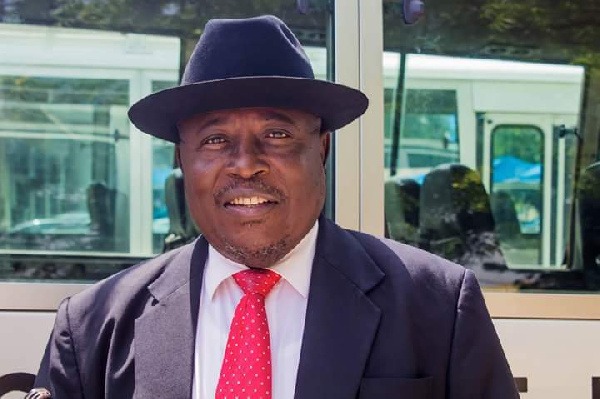
Former Special Prosecutor Martin A.B.K. Amidu has delivered a scathing critique of both the Attorney-General and ongoing legal challenges to the Office of the Special Prosecutor (OSP) mandate, warning that the relationship between the two institutions has “broken down beyond repair.”
In a detailed legal analysis dated April 16, 2026, Amidu examined the ongoing Supreme Court case challenging the constitutionality of the Office of the Special Prosecutor Act, 2017 (Act 959), arguing that recent developments expose deep structural and constitutional tensions at the heart of the anti-corruption architecture.
The case in question was initiated on December 8, 2025, by one Noah Ephraem Tetteh Adamtey against the Attorney-General, seeking several reliefs including declarations that key provisions of Act 959—particularly Sections 3(3) and 4—are inconsistent with Article 88 of the 1992 Constitution.
The plaintiff contends that the law unlawfully grants the OSP independence in prosecutorial functions, a role constitutionally reserved for the Attorney-General.
Amidu notes that this is not the first attempt to challenge the legality of the OSP. An earlier case filed in 2023 by Ken Agyei Kuranchie was dismissed in 2024 due to lack of prosecution.
However, the current case has gained traction, particularly after the Attorney-General filed, in April 2026, an application seeking extension of time to submit its statement of case—one that Martin Amidu claims substantially agrees with the plaintiff’s arguments.
The former Special Prosecutor expressed concern over what he describes as an apparent alignment between the Attorney-General and the plaintiff, suggesting that the state’s legal response does not adequately defend the constitutionality of Act 959.
He argues that the Attorney-General, as an officer of the court, is expected to present a neutral and objective case to assist the judiciary in arriving at a fair determination, rather than appearing to endorse the plaintiff’s position.
Central to the dispute is Article 88 of the Constitution, which vests the power to initiate and conduct criminal prosecutions in the Attorney-General.
He acknowledges that this provision has long been at the center of debates about the legality of granting prosecutorial authority to the OSP.
He revealed that even during the drafting of the OSP Bill in 2017, concerns were raised about reconciling the law with constitutional provisions—a matter he personally addressed in a memorandum submitted to Parliament at the time.
The situation has been further complicated by procedural developments at the Supreme Court of Ghana.
The OSP had sought to join the case as a second defendant, but the Court unanimously rejected the application, ruling that the matter could be determined without the OSP as a party.
This decision, Martin Amidu argues, aligns with Article 88(5), which requires that all civil actions against the state be instituted against the Attorney-General.
Amidu also criticized civil society organizations, particularly the Centre for Democratic Development, for reacting to the Supreme Court’s decision through public commentary rather than seeking to formally join the case as interested parties.
He suggested that such organizations should engage the legal process directly if they wish to influence the outcome of the constitutional interpretation.
Beyond procedural concerns, the former Special Prosecutor raised substantive issues about the legal arguments presented by both the plaintiff and the Attorney-General.
He pointed out contradictions in the reliefs sought by the plaintiff and questioned aspects of the Attorney-General’s proposed legal position, describing it as inconsistent and lacking the impartiality expected of the state’s chief legal advisor.
Amidu further clarified that the prosecutorial powers under Act 959 are vested in the individual Special Prosecutor, not the Office as a juridical entity, emphasizing that both the Attorney-General and the Special Prosecutor function as embodiments of their respective offices rather than separate legal persons.
Drawing on historical context, Amidu disclosed that he had anticipated constitutional challenges to Act 959 during his tenure as the country’s first Special Prosecutor but noted that none materialized at the time.
He also recounted discussions with former President Nana Addo Dankwa Akufo-Addo prior to his appointment, where both acknowledged that the courts would ultimately determine any constitutional questions surrounding the law.
In his concluding remarks, Amidu painted a bleak picture of the current institutional dynamics, stating that the working relationship between the Attorney-General and the OSP has deteriorated to the point where effective collaboration is no longer possible.
He warned that this breakdown could undermine the broader fight against corruption if not addressed through clear constitutional guidance.
However, as the Supreme Court prepares to hear the substantive arguments, the case is expected to deliver a landmark ruling that could redefine the legal boundaries of the anti-corruption regime and determine whether the OSP can operate as an independent prosecutorial body or must remain subordinate to the Attorney-General.